








LOS ANGELES, CA – The Los Angeles City Council voted 10-3 to eliminate 12 designated enforcement zones under the city’s Section 41.18 homelessness ordinance in Council District 13, intensifying a broader debate over whether restrictions on street camping help move people indoors or simply relocate homelessness.
The council approved the action on Aug. 18 after Councilmember Hugo Soto-Martínez, who represents District 13, moved to rescind previously approved designations covering locations in Hollywood, Silver Lake and Echo Park.
The official City Clerk record for the action shows the measure passed 10-3, with two council members absent.
Councilmembers Imelda Padilla, Traci Park and Monica Rodriguez voted against the removal. John Lee and Curren Price were absent.
The vote does not repeal Los Angeles Municipal Code Section 41.18 citywide.
Instead, it reverses specific discretionary designations that had allowed additional enforcement at certain locations within District 13.
Section 41.18 regulates sitting, lying, sleeping and storing personal property in portions of the public right-of-way.
The ordinance itself separately prohibits obstructing sidewalks, streets and other public rights-of-way in ways that impede passage, including access protected under the Americans with Disabilities Act.
It also contains restrictions involving driveways, loading docks and designated sensitive locations.
Additional zones can be created by City Council action when council members identify locations where public health, safety or access concerns warrant expanded enforcement.
The 12 locations removed Tuesday had previously been designated through that process.
One of the council files involved locations including the Mayra Avenue and Sunset Avenue underpass area. The City Clerk file shows the original District 13 restrictions dated to 2021 before Soto-Martínez took office and were formally reversed by Tuesday’s vote.
Another related District 13 council file covered locations including Silver Lake Boulevard and Sunset Boulevard and was likewise changed Aug. 18.
Soto-Martínez argued that the designated zones had become counterproductive to his office’s homelessness strategy.
“This is an important moment for my office and me,” he told the council, saying he was not aware of another instance in which a 41.18 zone had been removed.
Soto-Martínez said his office has spent the past three years emphasizing outreach, housing placements and services rather than location-based enforcement.
He said the district’s experience led his staff to conclude that some existing zones interfered with efforts to maintain contact with unhoused residents and move them toward housing.
The council member characterized the decision as a data-driven change rather than a withdrawal from addressing street homelessness.
His position reflects a recurring criticism of 41.18: that forcing people to move from one restricted location can disrupt outreach relationships without necessarily providing housing.
Opponents of the rollback argue that the ordinance remains an important tool for protecting parks, sidewalks and other shared public spaces.
Padilla, one of the three council members who voted no, said she has requested 41.18 designations in her own district and believes the city should retain the ability to use them where local conditions warrant.
She specifically defended enforcement near parks and areas used by children.
“When I put up a 41.18 zone to protect the parks and to protect kids, it’s for a reason,” Padilla said during the meeting.
Her concern extends beyond the 12 District 13 locations.
Padilla said she worries Tuesday’s action could encourage other council members to seek removal of existing designations elsewhere in Los Angeles.
The ordinance allows the council to designate areas for enforcement when officials make findings that restrictions serve public health, safety or welfare.
An example of that process can be seen in other council districts, where resolutions have identified locations near public parks, libraries, freeway underpasses and sites associated with documented safety concerns.
A City Clerk resolution involving Council District 11, for example, states that designated zones can be established where council members determine that sitting, lying, sleeping or storing property is incompatible with safe passage or creates an ongoing public-safety concern.
The disagreement is therefore not simply over whether homelessness should be addressed.
Council members differ over whether enforcement restrictions should remain part of the city’s strategy and under what conditions they should be used.
At street level, the effects of the District 13 change may take time to become clear.
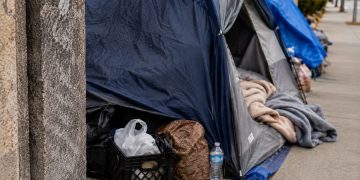
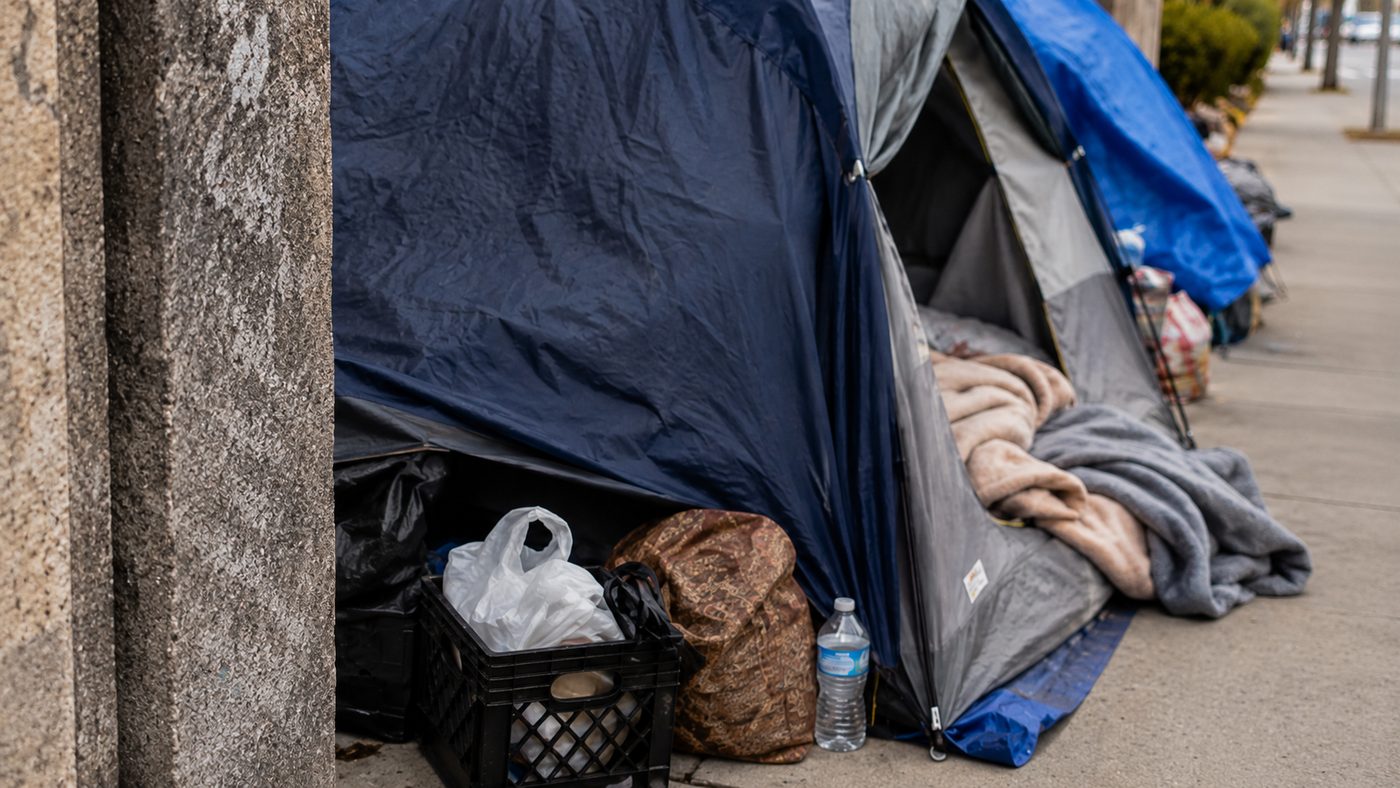
At one previously designated location near the 101 Freeway in Silver Lake, people were already camping near a posted 41.18 sign before the council action.
Workers in the surrounding area questioned whether the restriction had been consistently enforced even before it was rescinded.
Some expressed concern about nighttime conditions and whether removing the designation would result in larger encampments.
People experiencing homelessness in the area also expressed mixed reactions, illustrating that the policy debate does not break neatly between housed and unhoused residents.
The vote comes as Los Angeles restructures how the council oversees homelessness policy.
Councilmember Ysabel Jurado was recently appointed chair of the newly created Homelessness and Health Committee, effective Aug. 31.
In announcing the appointment, Jurado said Los Angeles needs a housing-led, public-health response while also confronting questions of accountability, service delivery and whether existing programs are producing measurable results.
Her official Council District 14 announcement says the committee will examine the city’s broader homelessness system, including questions surrounding Los Angeles’ relationship with the Los Angeles Homeless Services Authority and how public funds translate into housing outcomes.
Jurado supported Tuesday’s removal of the District 13 zones.
She has said Section 41.18 should be evaluated as only one component of a much larger homelessness strategy rather than treated as a substitute for housing, outreach or public-health services.
“Our backs are against the wall,” Jurado said in discussing the committee’s broader mission, adding that city leaders will need to identify what is working, what is failing and who is responsible for results.
The new committee structure could provide a forum for a wider reassessment of Section 41.18.
That review could examine how often designated zones lead to housing placements, whether people simply relocate to nearby blocks, how enforcement affects pedestrian access and businesses, and what happens when shelter or housing is unavailable.
Los Angeles adopted the current framework of Section 41.18 during an earlier stage of the city’s homelessness crisis.
The ordinance states both that the city has an obligation to keep public rights-of-way accessible and that homelessness should be addressed through a trauma-informed strategy involving outreach, interim and permanent housing, storage and specialized services.
Those dual goals have produced years of political disagreement over implementation.
Supporters of enforcement argue that sidewalks, parks, libraries and other public spaces must remain accessible and that the city needs a mechanism to address persistent encampments in particularly sensitive locations.
Critics argue that enforcement without an available housing destination can result in repeated displacement, loss of belongings and movement from one block to another without reducing homelessness.
Tuesday’s vote does not settle that argument.
Nor does it prevent enforcement of other generally applicable laws or the obstruction provisions that remain within Section 41.18.
The council action is limited to rescinding the additional location-specific designations contained in the District 13 files.
The City Clerk record shows that the item was formally adopted Aug. 18 and that the underlying council file remains publicly accessible along with motions, public communications and voting information.
The removal marks a significant policy change within Soto-Martínez’s district and could become a test of whether a reduced reliance on 41.18 enforcement produces different homelessness outcomes.
Other council districts remain free to retain existing zones or seek new designations under the ordinance.
With Jurado preparing to lead the Homelessness and Health Committee, however, the future of Section 41.18 is likely to receive broader scrutiny.
For now, the law remains in effect across Los Angeles, but the 12 additional District 13 enforcement zones approved under previous council actions have been removed.