










LOS ANGELES, CA – California has approved the nation’s first energy-efficiency standards for replacement tires, setting new rolling-resistance requirements that will begin phasing in in 2029.
The California Energy Commission unanimously approved the Replacement Tire Efficiency Program on Aug. 17.
The rules apply to replacement tires sold for passenger vehicles and light-duty trucks and are intended to bring aftermarket tires closer to the efficiency levels already common on new vehicles.
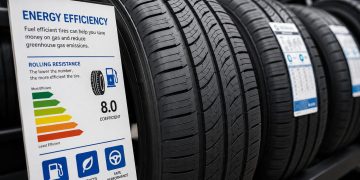
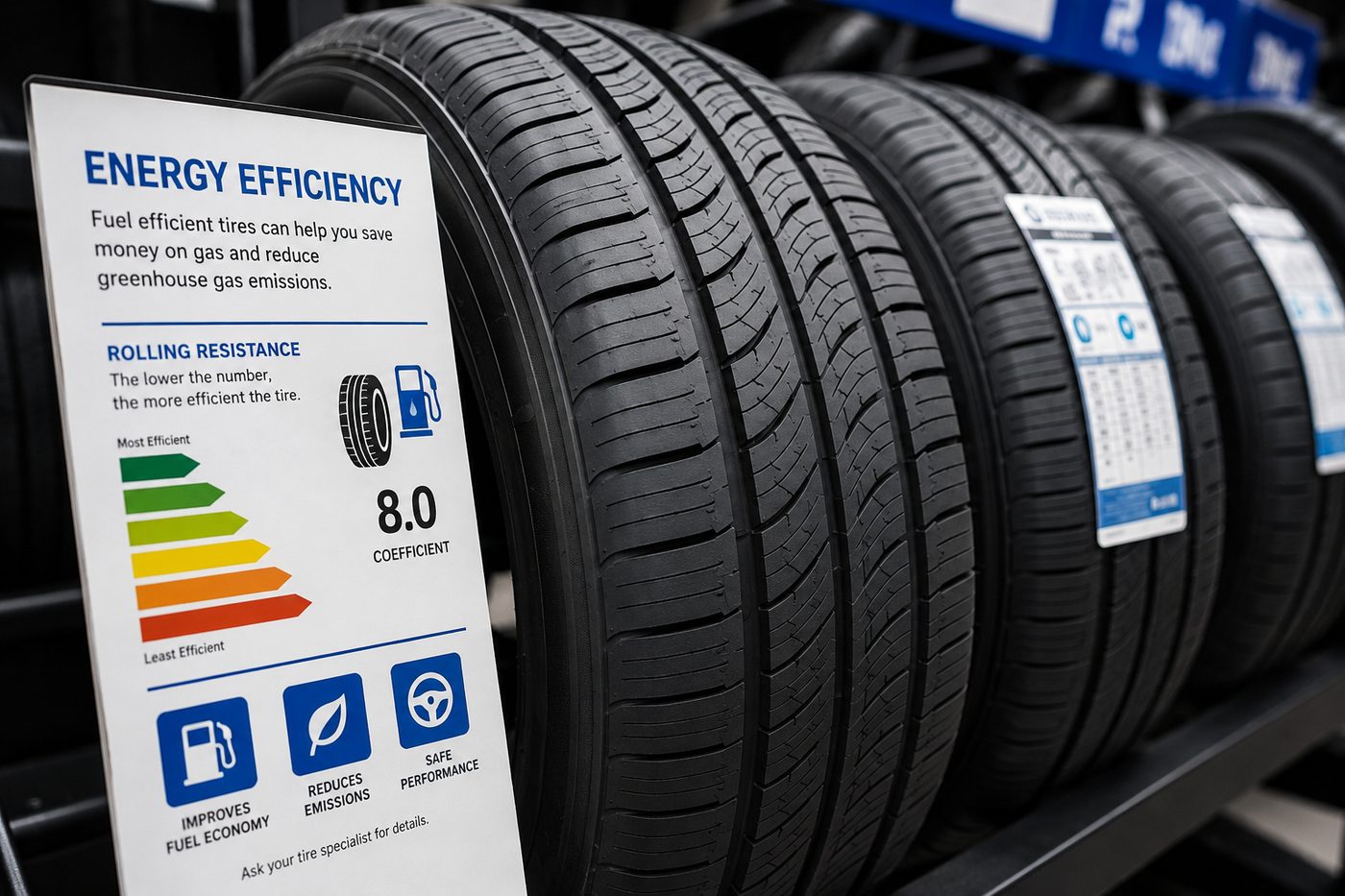
The program focuses on rolling resistance, a measurement of how much energy a tire requires to keep moving.
Lower rolling resistance means a vehicle needs less energy to travel the same distance.
For gasoline vehicles, that can reduce fuel consumption. For electric vehicles, it can lower electricity use and potentially improve range.
The CEC says many tires installed as original equipment on new vehicles are already more efficient than replacement tires purchased later.
Its Replacement Tire Efficiency Program is designed to close that gap.
The final rules will be implemented in two stages.
Phase 1 begins in 2029 and runs through 2033, with a default maximum rolling-resistance coefficient of 9.0.
Phase 2 begins in 2033, tightening the default threshold to 7.1.
Lower numbers indicate greater efficiency.
Specialty tire categories receive different thresholds or exemptions.
The CEC says exceptions include certain small tires, limited-production models, emergency-vehicle tires, very high-load tires, low-speed tires and other specialized products.
Drivers will not be required to replace the tires already on their vehicles when the rules take effect.
The standards govern replacement tires sold in California as the requirements are phased in.
That means the impact will occur gradually as consumers naturally replace worn tires.
The cost question has become the most contested part of the new program.
Critics have warned that more efficient replacement tires could substantially increase what some drivers pay at the counter, particularly if lower-cost tire models disappear from the California market.
Some industry representatives have argued that the price difference between conventional tires and low-rolling-resistance products can be much greater than state regulators estimate.
The Tire Industry Association, in earlier comments submitted to the CEC, challenged the commission’s cost assumptions and cited industry information suggesting that some low-rolling-resistance tires can cost significantly more than standard alternatives.
More recent industry comments have also raised concerns about consumer choice, product availability and the economic effect of the standards.
The CEC’s official estimate, however, is dramatically lower than the hundreds-of-dollars figures raised by some critics.
According to the commission, the incremental cost attributable specifically to compliance with the new rule is expected to be about $1.50 per tire in Phase 1, or roughly $6 for a four-tire set.
Beginning in Phase 2, the CEC estimates the incremental cost at about $6.50 per tire, or approximately $26 for a set of four.
Those figures do not mean every qualifying tire will retail for only $6 or $26 more than every nonqualifying tire.
They are the commission’s estimate of the average incremental manufacturing and compliance cost caused by the regulation itself.
Retail prices can vary substantially based on brand, tire size, performance category, vehicle type and retailer.
The state also disputes claims that California drivers will automatically pay hundreds more per set because of the new standard.
In a fact-checking document addressing criticism of the rule, the CEC said many compliant tires are already being sold today and argued that manufacturers have several years to redesign products before the stricter 2033 standard takes full effect.
The commission says manufacturers including major tire companies have indicated that the efficiency targets are technically achievable.
State regulators also say their laboratory testing found no evidence that meeting the standards requires compromising safety, tread life or tire durability.
California’s program also includes wet-grip performance requirements intended to address concerns that reducing rolling resistance could affect traction.
The CEC says efficiency improvements can be achieved without sacrificing wet braking performance or tire lifespan.
The state’s economic case for the regulation is based on energy savings over the life of the tires.
The CEC estimates that a typical gasoline-vehicle driver using compliant tires will save about $179 in gasoline over the life of a set once the second phase is fully implemented.
The commission says those savings were calculated using gasoline at $4.60 per gallon.
At higher fuel prices, the state says savings would be greater.
For Phase 1, the CEC estimates about $85 in energy savings over the life of a set, compared with approximately $6 in incremental tire costs.
That produces estimated net savings of about $79 and a payback period of roughly three to four months.
For Phase 2, the CEC estimates about $179 in savings, $26 in incremental cost and approximately $153 in net savings over the life of a set.
The estimated payback period is about seven months.
A separate analysis from the American Council for an Energy-Efficient Economy similarly cited the CEC’s estimate that Phase 2 would add roughly $26 to $39 to the price of a set depending on vehicle weight, while producing $179 to $246 in lifetime fuel savings.
The CEC projects much larger savings statewide.
Its staff report on the program estimates that more efficient replacement tires could save California drivers approximately $979 million per year in fuel costs by 2035.
The agency also estimates the standards could reduce greenhouse-gas emissions by about 2 million metric tons of carbon dioxide equivalent annually by 2035.
That would amount to roughly 1.9% of California’s 2021 passenger-vehicle emissions, according to the state analysis.
California lawmakers first directed the Energy Commission to establish a replacement tire efficiency program under Assembly Bill 844.
The law, now codified in Public Resources Code Sections 25770 through 25773, requires the state to develop minimum efficiency standards for replacement tires and create a tire-efficiency rating system.
The program took years to move from legislation to final regulation.
CEC staff conducted tire testing, economic analysis and multiple rounds of public comments before commissioners adopted the final standards.
The agency’s rulemaking docket includes comments from tire manufacturers, industry associations, consumer advocates and members of the public, reflecting significant disagreement over costs and implementation.
The final environmental impact report was approved alongside the regulation in August.
For consumers, the key point is that there is no immediate change at tire shops.
Existing tires do not need to be replaced early.
The first efficiency threshold does not begin until 2029, and the stricter standard will not take full effect until 2033.
Whether consumers ultimately see only the modest cost increase projected by regulators or a larger shift in retail tire prices will depend on how manufacturers and retailers adapt over the next several years.
The California Energy Commission says it will continue monitoring the market and working with manufacturers, retailers and other stakeholders during implementation.
The new rules are now approved, but the debate over what they will ultimately cost California drivers is likely to continue well before the first phase takes effect.