







LOS ANGELES, CA – Three Southern California residents have pleaded guilty for their roles in a scheme that fraudulently obtained COVID-19 business-relief loans, with federal prosecutors estimating that the operation caused approximately $3.5 million in losses to taxpayers.
The latest defendant, 34-year-old Daryl D. Knighten Jr. of Perris, pleaded guilty Thursday to one count of wire fraud, according to the U.S. Attorney’s Office for the Central District of California.
Knighten’s guilty plea came two days after two other defendants in the same case admitted their roles in the scheme. Vanessa M. Williams, 37, of Corona, and Denise Mata, 36, of Moreno Valley, also pleaded guilty to wire fraud.
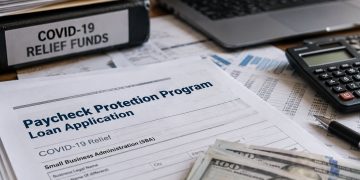
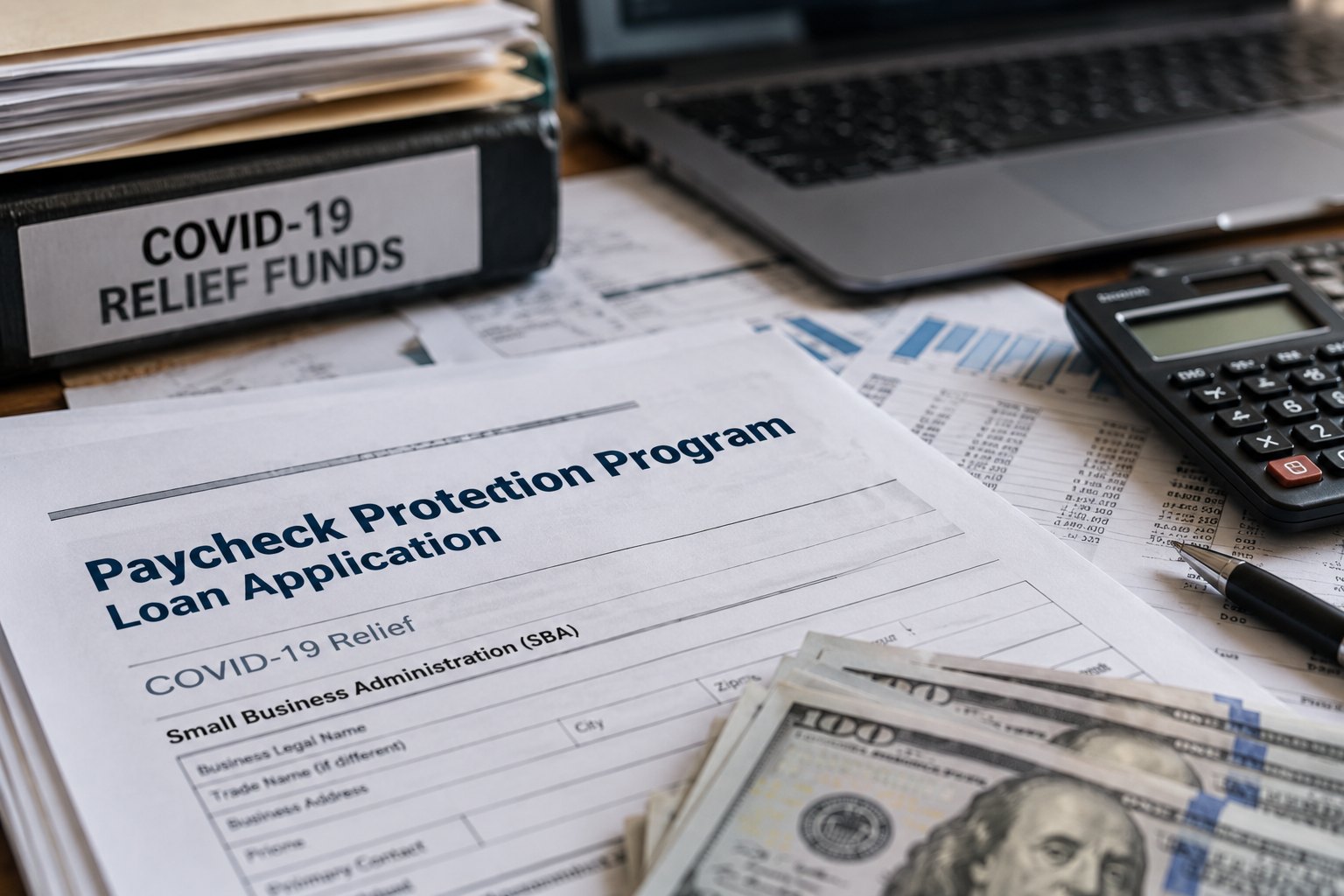
Federal prosecutors said the three defendants submitted fraudulent applications for Paycheck Protection Program loans and helped other people obtain loans through false information and documents.
The PPP was established by Congress in 2020 as part of the federal response to the economic disruption caused by the COVID-19 pandemic.
Three defendants pleaded guilty this week
Knighten, Williams and Mata are the three defendants who have pleaded guilty in the case.
According to their plea agreements, the scheme operated from approximately March 2021 through August 2021. During that period, the defendants submitted fraudulent PPP loan applications for themselves, family members, close associates and other people they recruited into the operation.
The applications falsely stated that applicants were self-employed and certified that the money would be used for legitimate business purposes permitted under the program.
The defendants also submitted fraudulent tax documents to the U.S. Small Business Administration and participating financial institutions, prosecutors said.
Those documents were used to support applications that otherwise would not have qualified for the federal relief funds.
More than 100 people allegedly participated
Federal prosecutors said the three defendants were part of a larger operation involving more than 100 co-schemers.
After lenders approved the fraudulent applications, PPP funds were deposited into bank accounts controlled by the defendants and other participants.
According to the plea agreements, some of the people who received the loans then paid kickbacks to the defendants within days of receiving the money.
The defendants and other participants used the money for personal purposes rather than expenses authorized under the PPP program, according to the federal government’s case.
The participants also submitted additional fraudulent documentation when seeking forgiveness of the loans.
The Department of Justice said prosecutors estimate that the overall scheme caused approximately $3.5 million in losses to the PPP loan program.
The government’s estimate covers the broader operation, rather than representing the individual losses attributed to each of the three defendants who pleaded guilty this week.
Individual losses varied among defendants
The plea agreements identify different amounts of losses associated with each defendant.
Knighten admitted causing at least $145,550 in losses to the PPP program, according to federal prosecutors.
Williams admitted causing at least $187,497 in losses, while Mata admitted causing at least $201,642 in losses.
Those figures represent the amounts each defendant acknowledged in their respective plea agreements. The estimated $3.5 million total involves the broader scheme and the losses associated with other participants.
The distinction is significant because the federal case involves a much larger network of fraudulent applications than the three defendants who have now pleaded guilty.
Another defendant has pleaded not guilty
The case is not over.
Mikhail G. Hoalim, 35, of Moreno Valley, is accused of participating in the same scheme but has pleaded not guilty to nine counts of wire fraud.
His case is scheduled to proceed to trial on November 9, according to the U.S. Attorney’s Office.
Because Hoalim has pleaded not guilty, the allegations against him remain allegations unless and until they are established in court.
The federal case therefore includes defendants at different stages of the judicial process: Knighten, Williams and Mata have admitted their roles through guilty pleas, while Hoalim continues to contest the charges.
Sentencing is scheduled for January
Knighten, Williams and Mata are scheduled to appear for sentencing on January 14, 2027, before U.S. District Judge Kenly Kiya Kato.
The three defendants each face a statutory maximum sentence of 20 years in federal prison for the wire-fraud count to which they pleaded guilty.
A statutory maximum is the highest penalty authorized by law for an offense. It does not mean defendants will necessarily receive that sentence.
The actual punishment will be determined by the federal court after considering the applicable sentencing rules and the circumstances of each case.
Investigation focused on pandemic relief fraud
The investigation was conducted as part of the Pandemic Response Accountability Committee Task Force, which was created to oversee federal spending connected to the government’s response to the COVID-19 pandemic.
The investigation was led by the Amtrak Office of Inspector General with support from Homeland Security Investigations.
Investigators also received assistance from the committee’s Pandemic Analytics Center of Excellence, which uses financial analysis and forensic techniques to identify potential fraud involving pandemic-relief programs.
The federal government established multiple relief programs during the pandemic, including the PPP, to provide financial assistance to businesses dealing with severe economic disruption.
Because those programs distributed billions of dollars relatively quickly, federal investigators have continued pursuing cases involving fraudulent applications, false supporting records and improper use of relief funds.
Federal authorities continue pursuing COVID-relief fraud
The case involving the three Riverside County-area defendants is part of the continuing federal effort to investigate suspected misuse of pandemic-relief money.
The SBA Office of Inspector General has maintained resources for reporting and investigating suspected fraud involving SBA programs, including pandemic-related assistance.
Federal prosecutors said the defendants in this case used false information about employment and business activity to obtain PPP funds and then sought loan forgiveness using additional fraudulent documentation.
With three guilty pleas now entered, the case has moved into the sentencing phase for Knighten, Williams and Mata. Hoalim’s case remains pending, with a federal trial scheduled for November.
The overall investigation has identified an estimated $3.5 million in taxpayer losses, according to federal prosecutors.