











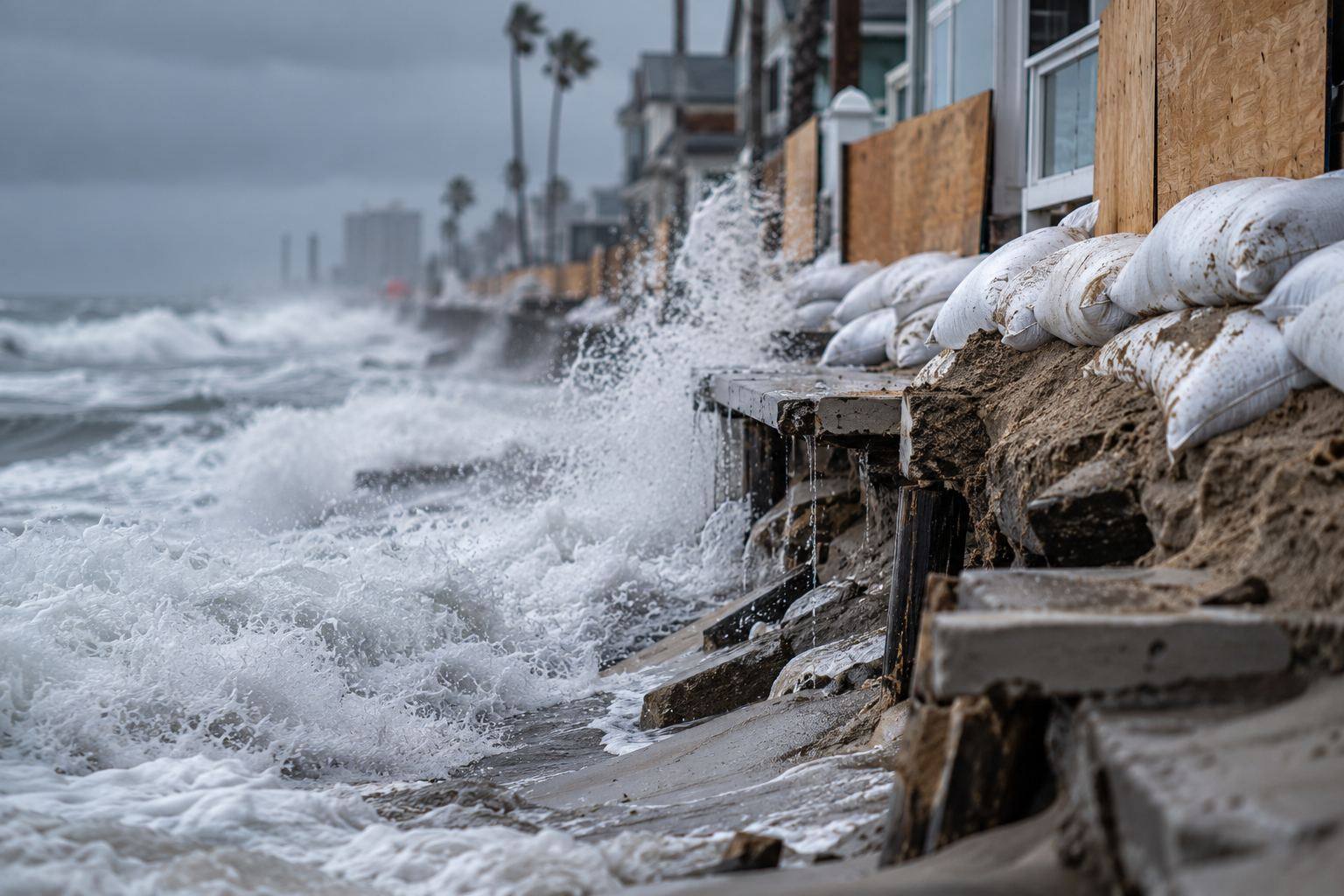
LOS ANGELES, CA – Long Beach has declared a local emergency after powerful surf associated with Hurricane Marie caused significant erosion along the Peninsula, damaged portions of the century-old boardwalk wall and removed large amounts of protective beach sand.
The declaration comes as city crews work to repair vulnerable sections of the shoreline while officials monitor the potential effects of another Pacific hurricane. Hurricane Polo remains well offshore, but its large swells could bring another period of elevated surf, dangerous rip currents and additional coastal erosion.
As of Friday, the National Hurricane Center reported that Polo remained a powerful Category 5 hurricane in the eastern Pacific, with no coastal watches or warnings in effect. The storm was located hundreds of miles southwest of Cabo San Lucas and moving westward.
For Long Beach, the concern is not a direct hurricane strike but the possibility that ocean swell generated by the storm could again reach an already weakened section of the Peninsula.
Long Beach declares local emergency
The Long Beach City Council unanimously approved the local emergency declaration during a special meeting Tuesday night, according to information provided for this report.
The action gives the city additional flexibility to accelerate repairs, arrange emergency contracts, obtain supplies and prepare for potentially hazardous coastal conditions.
The emergency declaration follows several days of intense surf linked to Hurricane Marie. According to the City of Long Beach, the storm’s high tides, surf and swell affected the Peninsula shoreline and prompted cleanup and repair work along the boardwalk, bulkhead and beach.
City officials have been documenting the damage and working on mitigation measures as crews address areas where the shoreline lost substantial amounts of sand.
Hurricane Marie stripped away protective sand
The Peninsula’s beach functions as an important buffer between ocean waves and nearby homes and infrastructure.
During the Hurricane Marie swell event, waves washed away large quantities of that protective sand. The erosion was particularly severe in the area between 62nd and 69th places, where the loss of beach material created additional challenges for repair crews.
According to the information provided for this report, the erosion became so extensive in portions of that area that conventional access for trucks was affected, making it more difficult for crews to rebuild the protective sand berm.
The city has previously identified the Peninsula and other low-lying coastal areas as locations that can require additional preparation during periods of significant surf and storm activity. Its emergency preparedness guidance also provides information about sand and sandbag distribution for Long Beach residents.
Crews repair damaged boardwalk sections
Temporary repair work is underway along damaged portions of the boardwalk and seawall.
Crews are installing replacement planks and reinforcing sections that were exposed to the strongest wave action. Engineers are also evaluating longer-term measures intended to strengthen the shoreline against additional erosion.
The damage has placed particular attention on the relationship between the beach itself and the structures protecting homes and public infrastructure.
City Manager Tom Modica said the city would take steps to protect public infrastructure but emphasized that property owners remain responsible for protecting their private property.
Residents have been preparing by installing plywood, moving sand and using sandbags around vulnerable portions of their properties.
City has sand and sandbags available
Long Beach maintains designated locations where residents can obtain sand and sandbags during coastal and storm emergencies.
The city’s current information lists the Lifeguard Station at 72nd Place and Ocean Boulevard, along with Fire Stations 7, 12 and 13. Sand and sandbags are also available at Fire Station 14, although the city notes that the station is temporarily closed for construction and directs residents to a location off East Paoli Way and East 3rd Street.
The city says the distribution is limited to Long Beach residents, who are required to provide identification and can receive a maximum of 10 bags. Residents are advised to bring their own shovel or other equipment for collecting sand.
These preparations are particularly relevant along the Peninsula, where the loss of beach sand has reduced the distance between incoming waves and vulnerable properties.
Dredging project could replenish Peninsula sand
Long Beach is also pursuing a larger shoreline and navigation project involving the Alamitos Bay Entrance Channel.
According to the city’s Alamitos Bay Entrance Channel Dredge Project, the project is designed to remove accumulated sediment from the entrance channel and reuse clean dredged material to nourish Peninsula Beach.
The city’s project page says the beach nourishment component would place dredged sand along the shoreline between 62nd Place and the jetty at 72nd Place. The project is intended to both restore safe navigation depths in Alamitos Bay and widen and stabilize the Peninsula shoreline.
The city says the channel has not been dredged in more than 15 years and that sediment buildup has reduced navigational depth. Reusing the dredged material on the Peninsula is described as a coastal-resiliency measure that can expand usable beach areas while supporting navigation.
The information provided for this report identifies a $9.27 million project that would move approximately 415,000 cubic yards of sand onto the Peninsula, potentially extending the beach by roughly 200 feet between 72nd and 63rd places.
However, the city’s currently available project page lists the construction start as TBD and says that, as of October 2025, contractor bids had exceeded the city’s available approved budget. Public Works said it was evaluating cost reductions and seeking additional funding opportunities.
That means the larger dredging and nourishment project should not be treated as an already completed or fully scheduled response to the current emergency.
Hurricane Polo remains offshore
The immediate concern is whether another significant swell reaches the Southern California coast before the Peninsula has fully recovered from the previous event.
The National Hurricane Center reported Friday afternoon that Hurricane Polo had maximum sustained winds of 180 mph and was moving westward over the eastern Pacific. The storm was approximately 320 miles southwest of Cabo Corrientes, Mexico, and about 395 miles south of Cabo San Lucas. No coastal watches or warnings were in effect.
Those conditions do not indicate a direct hurricane threat to Long Beach. The potential concern for Southern California is instead the ocean swell generated by the distant storm and how that swell interacts with an already eroded shoreline.
Because the Peninsula has recently lost substantial amounts of sand, another period of large surf could put additional pressure on the same coastal defenses that crews are currently repairing.
City prepares for another round of coastal impacts
Long Beach officials are therefore working on two fronts: repairing damage already caused by Hurricane Marie while preparing for the possibility of additional wave activity associated with Polo.
The city’s existing storm-preparedness guidance emphasizes preparation in vulnerable coastal areas and provides residents with access to sand and sandbags.
The emergency declaration also gives the city greater flexibility to respond quickly if additional damage occurs.
For residents along the Peninsula, the condition of the beach itself remains a central concern. Sand that previously absorbed part of the force of incoming waves has been removed, leaving portions of the shoreline more exposed.
The city’s longer-term dredging and beach nourishment plans are intended to address that vulnerability, but the current project timeline remains subject to funding, contracting and construction considerations.
What happens next
Long Beach crews will continue temporary repairs and shoreline preparations while officials monitor ocean conditions.
The city is also expected to continue evaluating longer-term coastal protection measures, including the Alamitos Bay Entrance Channel dredging and beach nourishment project.
Hurricane Polo is currently not under a coastal warning for Southern California, but its movement and resulting ocean swell remain relevant to a city whose Peninsula shoreline has only recently sustained significant erosion.
Information gathered by Street People indicates that the local emergency is focused on the damage already sustained and the city’s need to respond quickly to additional coastal threats, rather than a forecast of a direct hurricane landfall in Long Beach.