








LOS ANGELES, CA – Cleanup crews moved through an abandoned Studio City property Friday after a fire swept through a homeless encampment there early Thursday, while the incident quickly escalated into a public dispute between Mayor Karen Bass and Councilmember Nithya Raman over who had responsibility for addressing the long-troubled site.
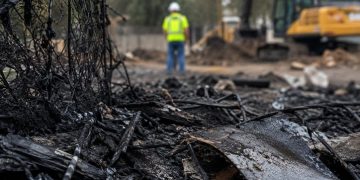
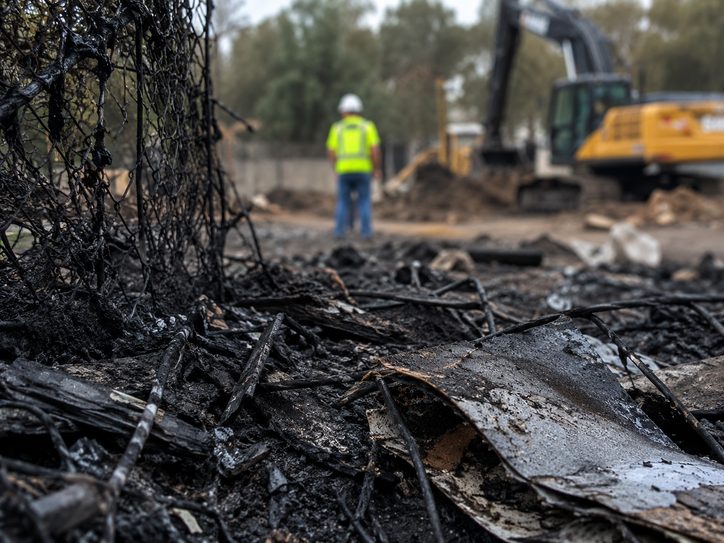
Heavy machinery was used along Babcock Avenue to remove debris and trim overgrown vegetation as crews worked to secure the property following the fire.
Residents said the location had been a persistent neighborhood concern for years, with complaints focused on trespassing, encampments and conditions at the abandoned property.
The fire itself soon became only part of the story.
Raman, who represents the area on the Los Angeles City Council, said her office had repeatedly raised concerns about the property with city departments and had specifically identified it to Bass’ office months before the blaze.
“My office repeatedly contacted city departments, identified this property directly to the Mayor’s office as a priority nuisance site 10 months ago and continued escalating the case repeatedly before the fire,” Raman said.
Bass acknowledged that Raman’s office had previously flagged the location, but disputed the suggestion that her administration had failed to respond to a direct request for help.
According to the mayor, Raman’s office identified the property but did not explicitly ask the mayor’s office to intervene.
That distinction has become the center of an increasingly political argument over whether city bureaucracy, council offices or the mayor’s administration should have acted more aggressively before the fire.
The dispute also carries broader significance because Raman is challenging Bass in the Los Angeles mayoral race, turning a neighborhood nuisance complaint into an immediate test of both officials’ arguments about city management and accountability.
The confrontation comes against a longer-running debate inside City Hall about abandoned properties.
Raman has previously pushed legislation aimed at accelerating Los Angeles’ response to vacant and abandoned buildings. In a 2023 proposal, her office said the city’s process for identifying certain properties, securing them and potentially declaring them public nuisances could take as long as nine months. Raman argued at the time that abandoned properties are particularly vulnerable to fires and can create significant risks for surrounding neighborhoods.
That earlier effort was not connected specifically to the Babcock Avenue property, but it provides context for Raman’s argument that Los Angeles has struggled with a system that can move slowly when neglected private properties become chronic neighborhood problems.
City departments have different responsibilities depending on who owns a property and the nature of the nuisance. For city-owned vacant land and buildings, for example, the Department of General Services says nuisance-abatement work can include fencing, weed removal, trash removal, graffiti cleanup and homeless encampment cleanup.
The Babcock Avenue property, however, was described in the source material as privately owned, and the owner could not immediately be reached for comment.
The political tension became particularly visible during a press conference held by Raman.
A nearby resident identified as Nestor interrupted the event and criticized the councilmember over another unfinished property on Laurelgrove Avenue, several blocks away. According to residents, that property is owned by the same person and has also attracted squatters and unhoused people.
“This is a great neighborhood! We shouldn’t have to be dealing with this,” Nestor said. “You can’t even handle the community that you’re representing, how the hell are you going to handle the mayoral office?”
Residents at the event called for the Laurelgrove Avenue property to be addressed as well, widening the discussion beyond the site damaged by Thursday’s fire.
The neighborhood frustration underscores why the Babcock Avenue incident has resonated beyond a single cleanup operation: residents say the problem was visible long before flames brought city crews and political attention to the property.
For Bass, the dispute comes as her administration continues emphasizing encampment removals and housing placements through Inside Safe. In August, the mayor’s office said the program had surpassed 6,000 people brought indoors citywide and had completed more than 130 operations since it began.
Those broader Inside Safe figures do not establish what could or should have happened at the Babcock Avenue property, but they form part of the larger policy disagreement over how Los Angeles handles homelessness, unsafe properties and encampments.
Bass has also recently highlighted city investments and homelessness efforts in the San Fernando Valley, describing reducing street homelessness and improving public safety as continuing priorities for her administration.
At Babcock Avenue, meanwhile, the response has shifted from debate to physical cleanup.
Crews were removing burned material, cutting back vegetation and preparing to install a permanent perimeter fence intended to prevent people from entering the property again.
Neighbors expressed relief that action was finally being taken, even as questions remain about why the conditions persisted for as long as they did.
The available information does not establish whether any particular city official or department had the legal authority to unilaterally clear or secure the privately owned property before the fire. It also does not show that the fire itself was caused by any specific person at the encampment.
No cause for the blaze was provided in the source material, and no injuries were reported there.
What is clear is that the fire has turned a longstanding Studio City nuisance complaint into something much larger: a dispute over city responsiveness, responsibility and political leadership at a time when both Bass and Raman have strong incentives to defend their records.
For residents living near Babcock and Laurelgrove avenues, however, the immediate concern remains more practical than political — getting unsafe properties cleared, secured and kept from becoming recurring neighborhood hazards.
Cleanup at the Babcock Avenue lot is continuing, with installation of a permanent fence expected as part of the effort to keep the property from being reoccupied.