





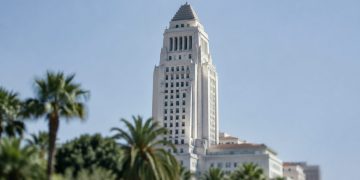

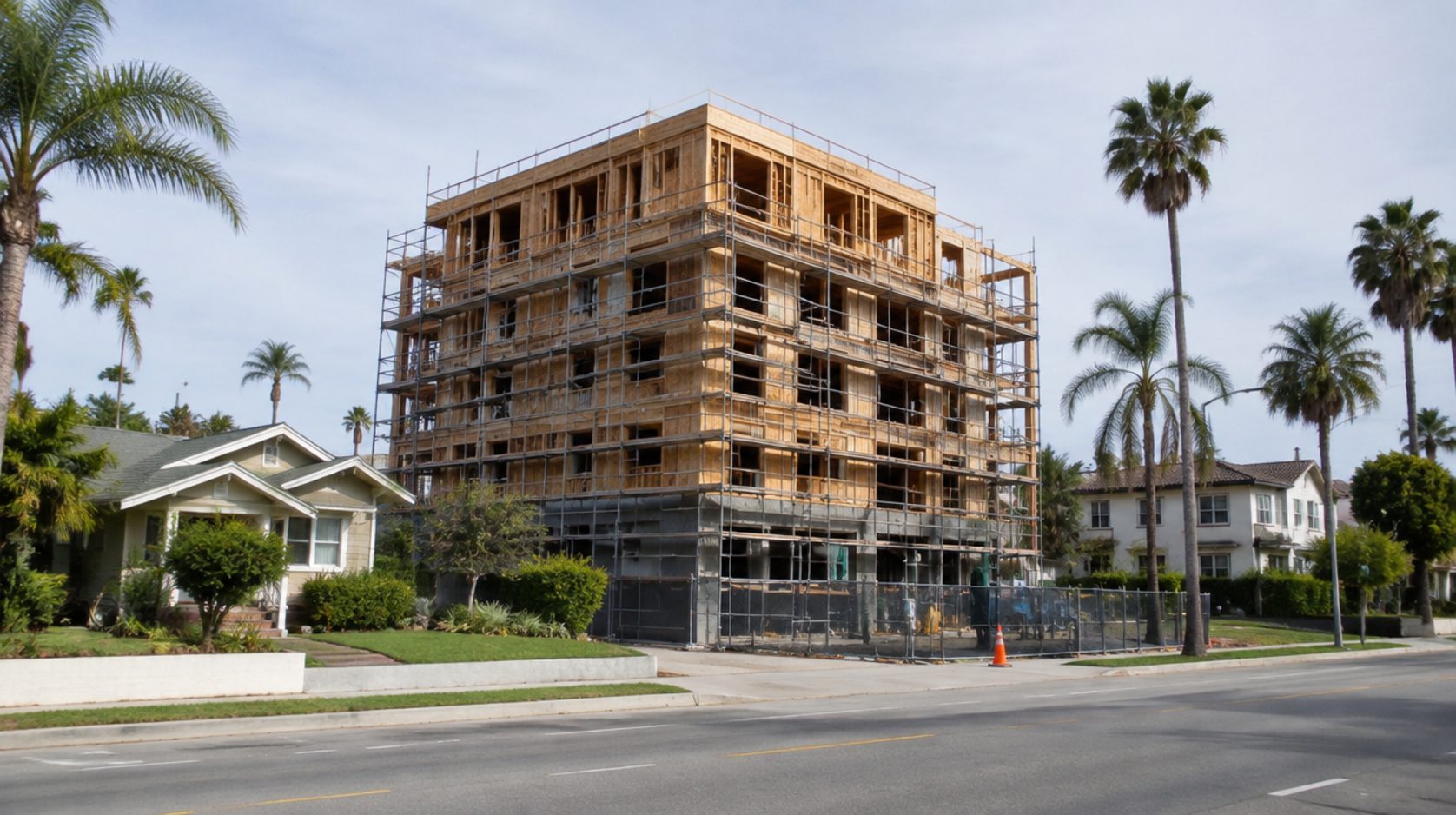
LOS ANGELES, CA – Mayor Karen Bass and City Councilmember Nithya Raman, who face each other in the Nov. 3 general election for mayor of Los Angeles, have laid out overlapping housing plans that differ on density, Measure ULA and how quickly the city should approve new projects.
In a televised debate Tuesday, Oct. 13, both candidates said they support more affordable housing, and both raised the issue in their opening statements and again during the hourlong event. Housing was one of several subjects the candidates were asked about.
The race comes as Los Angeles remains one of the most expensive cities in the country. Raman called the cost of housing the single biggest driver of the cost of living in the city, while Bass said more affordable housing was built during her four years in office than in many earlier years.
The two have spent much of the past few years working in political parallel, and Raman endorsed Bass before entering the race herself. Raman, who represents District 4, has embraced the “yes in my backyard” movement, while Bass has not labeled herself either way.
Bass points to Executive Directive 1
Bass pointed at the debate to Executive Directive 1, which she signed on Dec. 16, 2022. According to the mayor’s announcement, the directive requires the city to complete its approval process for affordable housing within 60 days.
After construction starts, the permit, utility and certificate of occupancy process takes 5 days for 100% affordable housing and no more than 2 days for temporary housing, the announcement states.
Bass said the directive “cut the red tape and accelerated it tremendously.” She said about 47,000 affordable units are in the pipeline and about 10,000 have been completed. At an Aug. 20 candidate forum hosted by the Sherman Oaks Homeowners Association, she put the number of affordable units in development at 42,000.
The City Council voted unanimously in December 2025 to make the streamlining permanent, and Bass signed the ordinance, according to the mayor’s office. The change writes the directive’s affordable housing provisions into the city code.
Bass also signed Executive Directive 7, which is meant to encourage more housing at all income levels, with an emphasis on affordable and mixed-income housing, according to a mayor’s office announcement.
Raman says production is still lagging
Raman argued that those steps have not gone far enough. “We desperately need to address the cost of housing. It is the single biggest driver of the cost of living here in L.A.,” she said, adding that “the mayor has paid lip service to that, but L.A. is still one of the most expensive and longest places to build in the country.”
Her housing plan proposes tripling annual housing construction and setting firm timelines for city decisions on projects. It also calls for changes to zoning, permitting and affordable housing funding.
Her council office announced a suite of motions to cut red tape and speed housing production in Los Angeles. Her office’s housing page also lists renter protections, an affordable housing database and a motion on an Affordable Housing Overlay Zone.
Density divides the candidates
Bass said at the debate that she believes the city must embrace density, “but the question is how.” At the Sherman Oaks forum, she said she does not support Sacramento telling the city what to do and that the best way to build is to reach agreement with communities.
According to initial reports, Bass has asked Gov. Gavin Newsom to veto Senate Bill 79, a state bill that allows denser housing near transit. The candidates’ differences on that question are part of a longer debate in Los Angeles over what to build and where, between neighborhoods of single-family homes and multifamily development.
Raman has criticized the mayor’s position on denser building in residential neighborhoods near transit. She says the result has been that more building falls on the city’s poorer council districts.
Measure ULA is a point of overlap
Measure ULA, the so-called “mansion tax” approved by city voters in 2022, levies a 4% or 5.5% tax on Los Angeles property sales above about $5.4 million. Apartment buildings are subject to the tax as well as large houses, and developers say it makes new projects financially unfeasible and has slowed apartment construction.
Raman was one of the measure’s loudest supporters in 2022 and has since changed her position. She said at the debate that the data before the vote suggested it would not affect new housing construction, and that when results began to come in she looked at the data again and concluded the measure needed reform. She said the switch angered many of her allies and endorsers.
“It still needs reform, and I’ll fight for that reform as mayor,” Raman said. Bass pointed to her own effort to change the measure in the state Legislature. “Anything that is going to inhibit housing needs to be examined,” she said.
Both reform attempts stalled
Neither candidate has succeeded in changing the tax. Bass pushed a bill in the state Legislature that would have reduced taxes on apartment buildings and then withdrew it.
Raman introduced a motion in January 2026 to amend the measure, including 15-year exemptions for new multifamily and commercial construction. According to initial reports, the City Council voted 9-5 on June 17 to direct the City Attorney to draft a November ballot measure that would exempt newly built multifamily and mixed-use buildings for 10 years.
On July 1, the Council voted 14-0 to shelve that measure. As a result, no ULA measure is on the November ballot.
City analysis estimates effects of an exemption
The Los Angeles Housing Department analyzed exemption scenarios in a report dated May 10, 2026, filed in Council File 26-0088-S1. The department estimated that a 10-year exemption for new construction would reduce ULA revenue by about 5% and raise new apartment development by about 5%, or about 330 units a year.
A broader 15-year exemption, covering properties built or substantially remodeled in the past 15 years, would reduce revenue by 29%, or about $145 million a year, according to the report. The report presents estimates for scenarios and does not represent a decision by the Council.
Tenant protections added in December 2025
Bass also signed an update to the city’s Rent Stabilization Ordinance in December 2025. The update caps annual increases for rent-stabilized units, which cover units built on or before Oct. 1, 1978, at between 1% and 4%, according to the mayor’s office.
Raman helped pass the update. She also championed the city’s Just Cause eviction protections, which the Council passed in 2023.
State housing targets frame the race
The city’s 2021-2029 Housing Element is the plan through which Los Angeles responds to its state-assigned housing targets. City Planning publishes annual progress reports on housing permits measured against those targets.
At the debate, Raman said production is still lagging. Bass countered that affordable housing production has risen under her administration.
Election date is Nov. 3
Voters will choose between Bass and Raman in the Nov. 3 general election. The only televised debate between them has taken place, and no change to Measure ULA is on the ballot.
Both candidates have said they would pursue reform of the tax and further changes to speed approvals if they hold the office. The next scheduled step in the race is the election itself.