



LOS ANGELES, CA – Millions of pounds of rotting food have been removed from the fire-damaged Lineage warehouse in Boyle Heights, marking a major milestone in a cleanup that has generated thousands of odor complaints, but nearby residents say persistent smells, rats and flies are making it difficult to consider the crisis over.
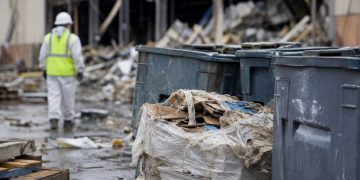
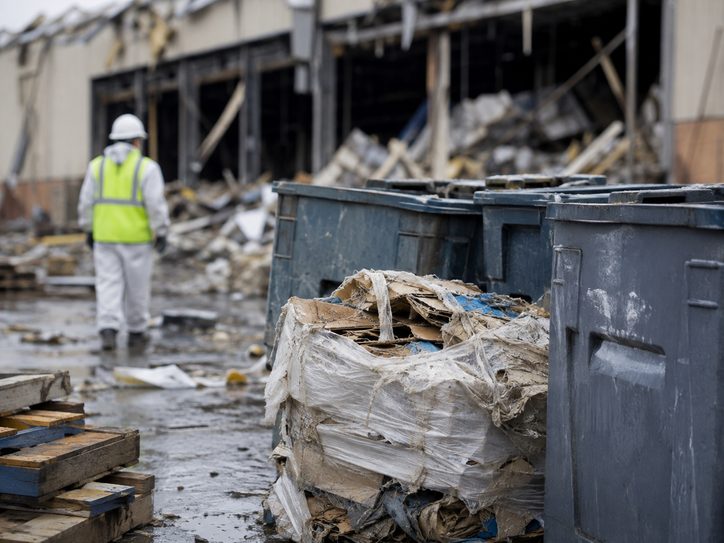
An enforcement team from the South Coast Air Quality Management District inspected the property Saturday and confirmed that Lineage had completed removal of the bulk food waste left inside the facility following the June warehouse fire.
The regulatory agency said completion of that work has now triggered a new deadline: Lineage has seven days to carry out final cleanup operations, including removing remaining debris, power-washing the affected area and disinfecting Freezer 1.
During that work, Lineage must maintain negative air pressure inside the building and continue operating pollution-control equipment designed to limit odors from escaping the damaged facility.
For residents who have lived through more than two months of odors and pest problems, however, removing the food does not necessarily mean removing the consequences.
Neighbor Ana Barrera said her family has continued encountering rats around the property and surrounding homes.
“No creo. Porque ahí están las ratas que. ¿Cómo se van a ir y dejar esa peste? Ahorita en la mañana y anoche estuvo bien fuerte,” Barrera said in Spanish.
She said she did not believe the problem was finished because rats remained and the odor had been particularly strong the previous night and again that morning.
Asked about rats found around her home, Barrera said, “Hemos encontrado tres aquí. Tres. Y mi vecina también tiene. Atrás andan las ratas también.”
Another resident, Edith Padilla, said flies remain a problem and that the disruption has affected her ability to sleep.
“I want everything is clean,” Padilla said. “I don’t want no rat, no mosquitoes, no flies. I have a lot of flies over here.”
Their complaints come against a substantial enforcement record accumulated since cleanup operations began.
According to South Coast AQMD, the agency received more than 4,900 odor complaints beginning July 12, with community members reporting persistent odors described as rotten, sour and garbage-like. Regulators issued 38 Notices of Violation between July 12 and Aug. 25 for alleged public nuisance violations under South Coast AQMD Rule 402 and California Health and Safety Code Section 41700.
The violations reflect the scale of a problem that stretched well beyond the warehouse property itself.
South Coast AQMD says Rule 402 and state law prohibit emissions that create injury, nuisance or annoyance to a significant number of people or the public. When inspectors receive odor complaints, they can investigate whether the smell can be confirmed and traced to a particular source.
As cleanup continued through July, regulators said inspectors repeatedly traced rotten and garbage-like odors reported by residents back to operations at the Lineage facility.
That eventually led to a more aggressive regulatory response.
On Aug. 6, the South Coast AQMD Hearing Board approved an enforceable Order for Abatement containing more than 90 conditions aimed at controlling and ultimately eliminating odors from the warehouse cleanup.
Among those conditions was a strict food-removal schedule requiring at least 8.8 million pounds of waste per week to be taken from the facility and transported off-site as quickly and safely as possible.
The order also required food waste to move through a covered loading dock, prohibited waste from remaining at the loading area for longer than 30 minutes and required odor-control or neutralizing agents to be applied to exposed food waste.
South Coast AQMD has continued conducting daily inspections and air monitoring around Boyle Heights. Regulators warned that additional violations, larger penalties or further modifications to the abatement order remain possible if nuisance odors continue or Lineage fails to comply with its obligations.
The agency has also carried out unannounced air-quality assessments around the surrounding community while providing technical oversight of third-party monitoring connected to the cleanup.
The aftermath traces back to the major warehouse fire that began June 17.
The Los Angeles Fire Department’s official incident record shows firefighters spent days battling the unusually difficult cold-storage facility fire. LAFD declared knockdown on June 24 after prolonged operations involving structural hazards, extensive insulation and specialized heavy equipment.
The fire itself was controlled, but its consequences continued for weeks as spoiled food remained inside the damaged cold-storage building.
The city later established a broader recovery response. The Los Angeles Emergency Management Department’s Boyle Heights recovery page says Mayor Karen Bass issued emergency executive orders aimed at accelerating remediation, strengthening environmental protections and increasing accountability after the fire.
On July 31, Bass issued another order directing city departments not to process plans to rebuild the warehouse while officials and the public evaluate the property, future uses and potential health, safety and environmental impacts.
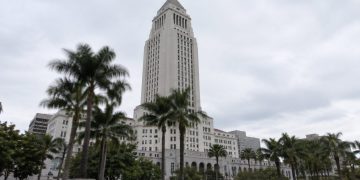
The proposed rebuild is also facing resistance at City Hall.
Councilmember Ysabel Jurado, whose district includes Boyle Heights and the warehouse site, has publicly opposed approval of Lineage’s pending rebuilding applications. Her office has pushed for reconstruction permits to remain paused until the fire investigation is completed and evidence-preservation requirements have been satisfied.
A City Council committee has already advanced measures aimed at withholding applicable rebuild permits and requiring greater review of any future use of the property.
That debate has become increasingly important to residents such as Barrera, who said she does not want the cold-storage operation rebuilt at the location.
“Oh, no, no, no. Que se lleven eso para otro lado. Yo no quiero eso,” she said — saying she wanted the operation taken somewhere else rather than returned to the neighborhood.
Meanwhile, Lineage said the overall cleanup is expected to cost more than $100 million, according to information provided with the original report.
The cleanup also produced another incident Saturday afternoon when a worker was injured at the site and transported to a hospital. Lineage said the injury was not life-threatening.
With the bulk food waste now removed, the next week represents another critical phase.
Lineage must remove remaining debris, power-wash and disinfect the damaged freezer while continuing required odor-control measures. South Coast AQMD says daily inspections and monitoring will continue during that process.
Residents can report continuing odors or other air-quality concerns through 1-800-CUT-SMOG or through South Coast AQMD’s reporting system. The agency also maintains continuous monitoring information and community resources through its Palos Fire response page.
For Boyle Heights residents who have dealt with the smell, insects and rodents since the fire, Saturday’s announcement represented tangible progress — but not necessarily an ending.
The rotting food may finally be gone. The remaining question is how quickly the property, and the neighborhood around it, can be brought back to conditions residents consider genuinely clean and safe.