











LOS ANGELES, CA — Southern California remained under a dangerous combination of extreme heat and elevated humidity Thursday, while coastal communities continued dealing with damage left behind by powerful surf associated with former Hurricane Marie.
The National Weather Service maintained an Extreme Heat Warning through 8 p.m. Thursday across much of Los Angeles County and surrounding areas. Forecasters expected some relief west of the mountains, but warned that humidity would remain high enough to keep heat risks elevated even as temperatures began to ease in some locations.
The heat followed a record-setting Wednesday across parts of Southern California. Downtown Los Angeles reached 105 degrees, tying the daily record set in 2024, according to the National Weather Service.
Other communities also experienced exceptionally high temperatures. Santa Ana reached 108 degrees, while Long Beach and Anaheim reached 107 degrees, according to the weather information provided for the region.
Heat and humidity continue to create dangerous conditions
The combination of temperature and humidity has made the current heat wave more difficult to tolerate than a typical dry-heat event.
The National Weather Service said Thursday’s temperatures would fall by roughly 4 to 10 degrees west of the mountains as upper-level high pressure weakens and onshore flow increases. Interior areas, however, were expected to see considerably less immediate relief.
The agency continued to classify the conditions as dangerous enough to warrant an Extreme Heat Warning. At Los Angeles International Airport, for example, the warning remained in effect through 8 p.m. Thursday, while a separate Beach Hazards Statement continued into Friday.
California workplace safety officials were also warning about the heat. The California Department of Industrial Relations said employers should protect workers at indoor and outdoor worksites by providing water, shade or cool-down areas, rest breaks and heat-illness training.
Coastal communities are still recovering from Marie
The heat arrived as communities along the Southern California coastline continued assessing and repairing damage caused by powerful surf and elevated tides associated with former Hurricane Marie.
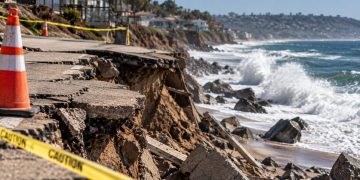
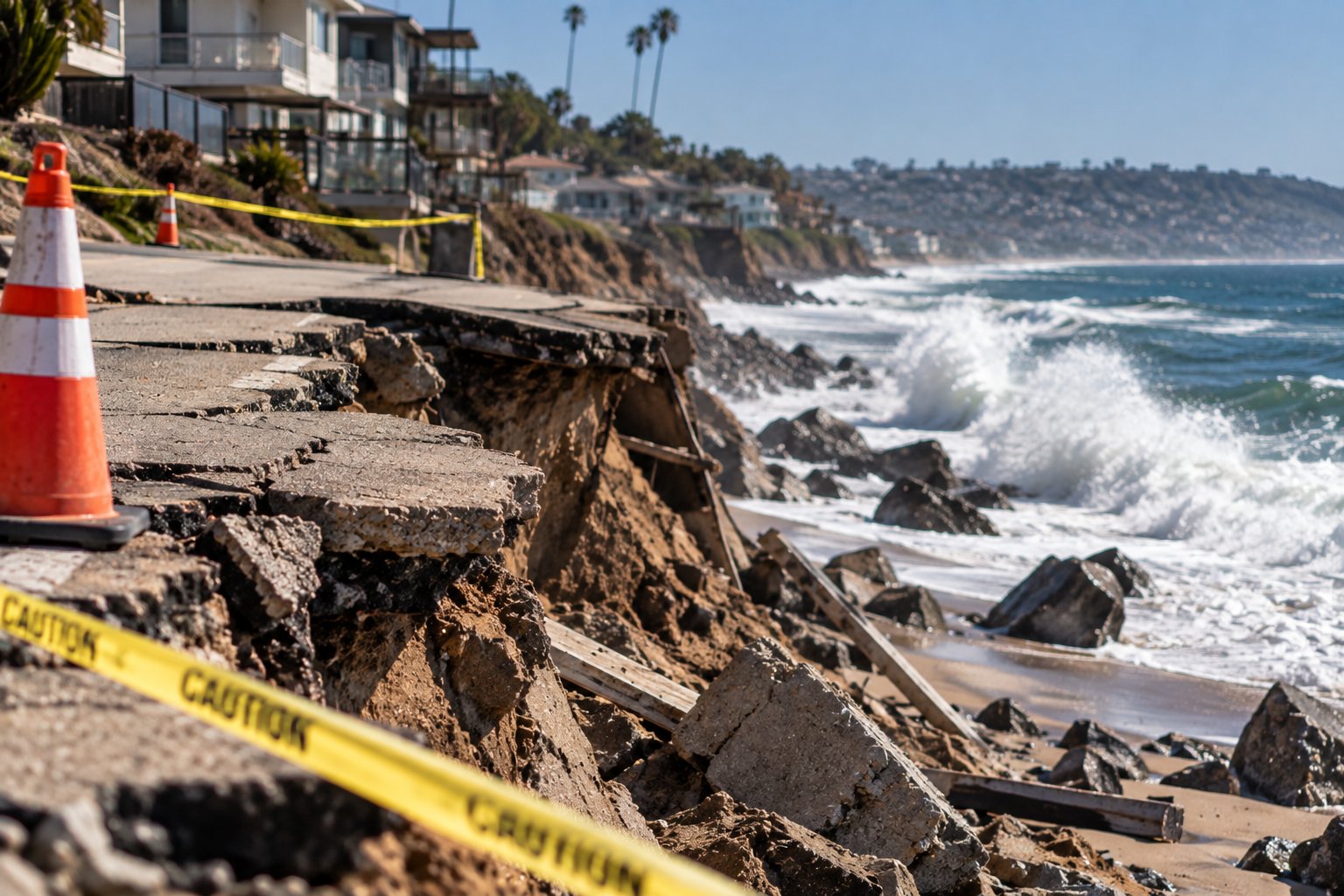
In Malibu, coastal erosion produced a large sinkhole near Sea Level Drive, restricting access for residents and emergency services. The City of Malibu declared a local emergency and issued evacuation orders for affected properties after the roadway and nearby access were compromised.
The city’s September 9 update said the sinkhole was caused by coastal erosion from high waves and that evacuations remained part of the response while officials dealt with the damaged access route.
The coastal damage has not been limited to Malibu.
In Dana Point, high tides and swells damaged properties along Beach Road. The City of Dana Point said six homes had been red-tagged and two had received yellow tags in its September 8 update, with officials continuing to monitor the area as additional high tides approached.
The situation has also affected the Long Beach Peninsula, where residents were evacuated earlier in the week after high surf damaged portions of the shoreline and raised concerns about structural safety. By Wednesday, building inspections had allowed residents to return to properties that were determined to be safe, while at least one structure remained subject to a yellow tag.
Beach erosion remains a concern
The unusually strong swell also dramatically altered sections of the Orange County coastline.
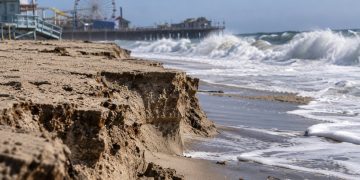
At Newport Beach, severe erosion near the Wedge and Balboa Pier exposed previously buried material and created steep sand drop-offs along the beach. The combination of strong surf and rapidly changing beach contours created additional hazards for people using the shoreline.
The City of Newport Beach Marine Operations Division advises beach users to pay attention to changing ocean conditions, while its ocean-safety guidance warns that holes, trenches and other dangerous changes can form around coastal structures and groins.
The National Weather Service had also warned of hazardous beach conditions associated with the swell generated by Marie, making the coastal recovery more complicated as communities moved from emergency response toward cleanup and repairs.
Water-quality concerns add another layer
The weather and coastal damage have also created public-health concerns.
An ocean-water-quality rain advisory remained in effect for Los Angeles County beaches because runoff can carry elevated levels of bacteria into coastal waters after rainfall. Residents and visitors are advised to follow current beach-health warnings rather than assuming that clear skies or high temperatures mean ocean conditions are safe.
The county’s Ready LA County heat-safety resources also recommend using air-conditioned public facilities or cooling centers during periods of excessive heat. The county says residents can call 211 for information about available cooling resources and emergency preparedness assistance.
Cooling trend expected over the weekend
Forecasters expect the current heat pattern to gradually weaken.
The National Weather Service said temperatures should begin falling Friday and Saturday as stronger onshore flow develops and the high-pressure system loses strength. The broader pattern is expected to bring substantially cooler conditions into Southern California by Sunday.
That transition could provide relief for residents dealing with the heat, but it does not immediately resolve the coastal problems created by Marie’s surf.
Along vulnerable shorelines, crews and local officials still face the work of inspecting damaged properties, stabilizing affected areas and determining the full scope of repairs.
In Dana Point, protective work has been underway along sections of the shoreline, while Malibu officials continue addressing the damaged Sea Level Drive access route. In Long Beach, inspections have been used to determine which properties could safely be reoccupied.
What remains unclear
The full financial cost of the coastal damage has not yet been established across Malibu, Dana Point, Long Beach and other affected communities.
It also remains unclear how long all structural repairs and shoreline stabilization efforts will take. The timeline will depend on additional inspections, engineering assessments, coastal conditions and the extent of damage discovered as crews continue their work.
For residents, the two weather threats have arrived in close succession: dangerous heat and humidity inland, and ongoing hazards along portions of the coast.
For now, officials are urging residents to treat the heat warning seriously, remain cautious around damaged shorelines and continue following local emergency and public-health advisories as Southern California moves toward cooler weather.