











LOS ANGELES, CA — Hurricane Marie’s powerful swell dramatically reshaped sections of the Newport Beach coastline, stripping away large amounts of sand and exposing material that had been buried beneath the beach for years.
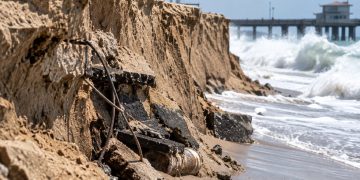
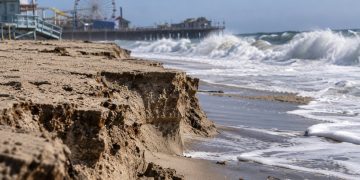
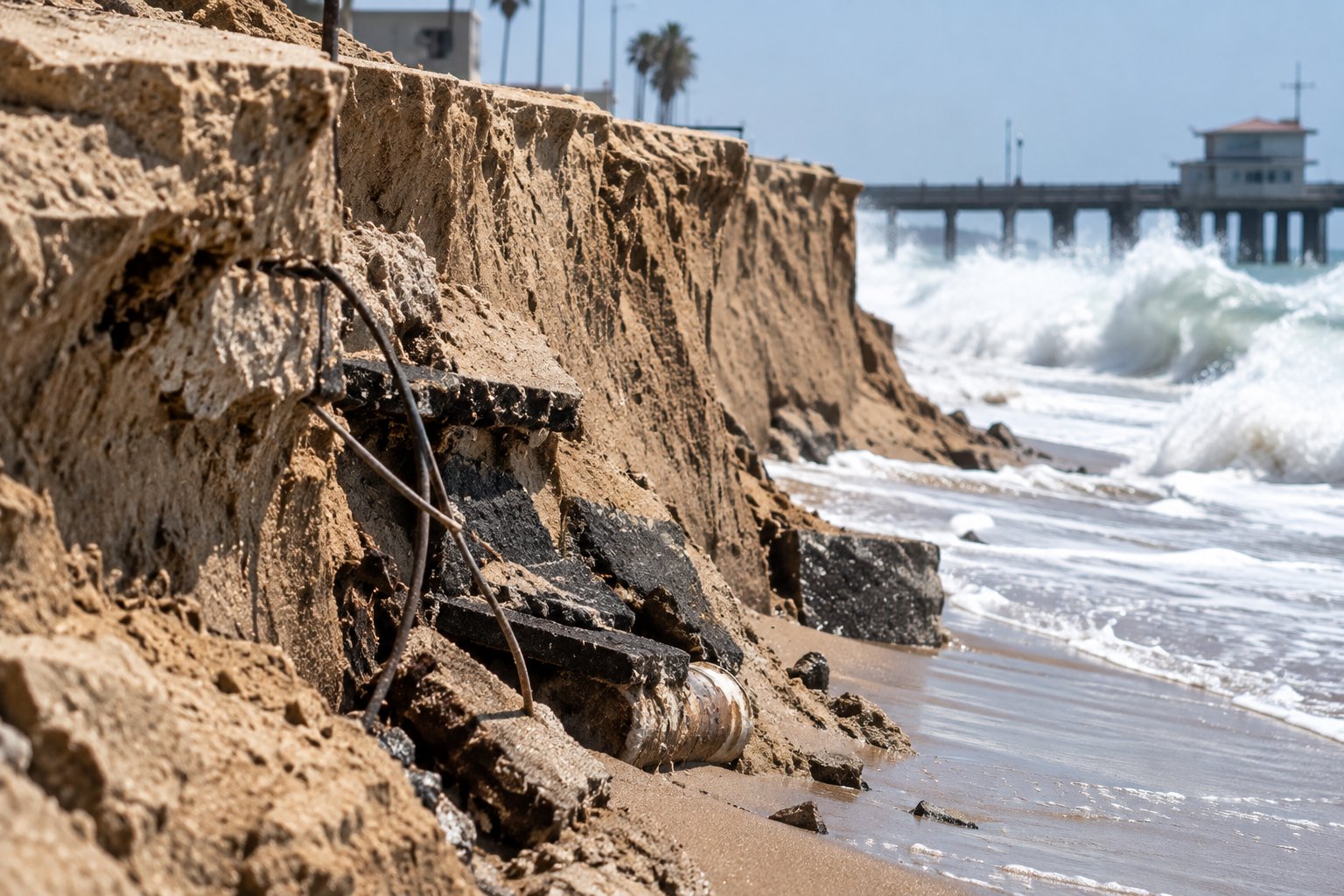
The most visible changes were reported around The Wedge and Balboa Pier, where the force of the surf left steep sand drop-offs and revealed rocks, wires, asphalt, a pipe and pieces of an older pier structure.
Marie remained well offshore of Southern California and did not make landfall in the region. However, the National Weather Service warned ahead of the storm that a significant southerly swell would produce hazardous surf conditions along parts of the Southern California coast.
The National Hurricane Center also warned that Marie would continue producing dangerous beach conditions along Southern California for several days as the system moved away from the region.
Sand stripped from Newport Beach shoreline
At The Wedge, the erosion exposed portions of the beach that are normally hidden beneath a much deeper layer of sand.
The changes have revealed a collection of buried materials, including rocks, wires, asphalt, a pipe and sections believed to be associated with an old pier.
For people familiar with the area, the discovery was unexpected because these objects had been concealed beneath the beach for years.
The Wedge is already known for powerful surf during large south swells. A California Coastal Commission report describes the location as a major recreational and cultural landmark and notes that waves there can reach roughly 20 feet during large south swells.
The same report also describes the beach as a heavily used public recreation area, making changes to the shoreline relevant not only to surfers but also to beachgoers and visitors.
Steep drop-off develops near Balboa Pier
The erosion was also particularly pronounced near Balboa Pier.
Instead of the gradual transition normally found between the upper beach and the water, sections of the shoreline were left with a sharply defined vertical drop where the sand had been removed.
That change created an additional challenge for people attempting to reach the water.
For some older beachgoers and people with limited mobility, the newly formed drop-off can make access significantly more difficult. The physical condition of the beach can change quickly following major surf events, particularly where large quantities of sand are moved offshore or along the coastline.
The City of Newport Beach’s Lifeguard Operations Division advises beach visitors to pay attention to changing ocean conditions and follow instructions from lifeguards.
The city’s ocean-safety guidance also warns that beaches can contain holes and trenches, particularly around rock structures and groins.
Marie stayed offshore but still affected Southern California
Marie did not need to make landfall to affect the coastline.
The storm remained offshore while generating a large southerly swell that propagated toward Southern California. The National Weather Service’s Los Angeles/Oxnard office said Marie would remain well offshore but still bring significant impacts to the region, including hazardous surf.
The weather service later described the southerly swell as significant and said hazardous surf conditions would affect beaches through at least Tuesday.
That distinction is important: the erosion seen in Newport Beach was associated with the storm’s ocean swell and resulting surf, rather than a direct landfall by Marie in Southern California.
Newport Beach has used sand berms during major surf
The latest erosion also highlights the continuing challenge of maintaining a wide sandy beach along the Balboa Peninsula.
Newport Beach has previously taken precautionary measures before significant swell events. In a recent high-surf advisory, the City of Newport Beach said its Beach Operations staff had constructed protective sand berms in vulnerable locations and could temporarily close beach access points when conditions warranted.
The city’s coastal-management history also includes beach nourishment projects. The California Coastal Commission has previously approved Newport Beach applications involving the placement of suitable dredged material for beach nourishment.
That does not mean the sand exposed or removed by Marie will automatically be replaced following this event.
What happens to the missing sand?
The immediate question for beachgoers is what happens next.
The material removed from the shoreline does not simply disappear. Major swell events can redistribute sand offshore or move it along the coast, changing the shape and elevation of the beach.
For Newport Beach, the issue is particularly visible because the Wedge and Balboa Peninsula are heavily used public beaches and recreational areas.
The city has not publicly announced a specific plan in the information reviewed for this report to replace the sand removed during Marie’s swell.
That leaves the longer-term appearance and accessibility of the affected areas uncertain.
Information gathered by Street People indicates that Newport Beach already has established procedures for monitoring hazardous surf and managing beach access during major ocean events. The city’s marine operations and ocean-safety resources emphasize the risks associated with large waves, rip currents, holes and trenches in the sand.
A coastline temporarily reshaped by the swell
The changes at The Wedge and Balboa Pier provide a visible reminder of how quickly a Southern California beach can be reshaped by a major swell.
Sand that normally conceals portions of the shoreline was removed, exposing old material and creating steep sections that changed how people move between the boardwalk and the water.
While Marie remained hundreds of miles offshore, its effects were still felt along the coast through the powerful swell it generated.
For Newport Beach residents and visitors, the next steps will depend on how the beach naturally recovers, how much sand returns to the shoreline and whether the city determines that additional management or nourishment is necessary.
For now, the altered beach remains a striking result of a storm that never made landfall in Southern California.