





LOS ANGELES, CA – While this week’s storms triggered mudslides and debris flows in fire-ravaged areas, researchers are also examining another potential consequence of the heavy rains—the spread of toxic materials left behind by recent wildfires.
Scientists from the University of Southern California have been studying the presence of lead and other hazardous substances in burn zones, following earlier findings that revealed elevated levels of heavy metals in fire-damaged areas. Their research suggests that fires can release lead from older paint, batteries, and other materials, spreading contaminated ash across communities.
Initial tests found high concentrations of lead near burn sites, but strong winds may have dispersed the hazardous material beyond the immediate fire zones. Even if airborne lead is not detected in large quantities elsewhere, experts warn that any level of exposure poses health risks.
“Even small amounts of lead can cause serious health problems, with larger amounts possibly resulting in death,” according to the Mayo Clinic.
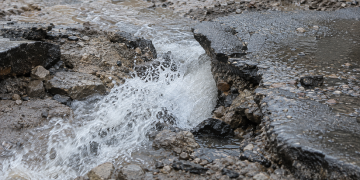
The recent rainfall likely helped wash some of the lead-containing ash away, reducing the risk of inhalation. However, scientists caution that the rain may also carry toxic substances into storm drains, rivers, and the Pacific Ocean, spreading contamination unpredictably.
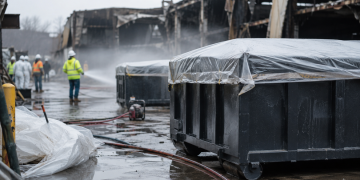
“[Airborne ash] is somewhat mitigated by the recent rains, which should at least help to keep too much of the ash from resuspending into the air,” said Seth John, an associate professor of earth sciences at USC. “But it’s something that cleanup crews will need to be cautious about as they clear out burned material from Altadena.”
Water runoff may transport lead and other pollutants into the ocean, further complicating environmental concerns. Some toxic materials may settle in urban areas, while others could be carried long distances, creating new contamination risks.
“Some of that will get washed into the gutters and then go into the rivers and out into the ocean,” John said. “Some of it may escape that and just be contained in Altadena and presumably eventually be cleaned up during the remediation process.”
Josh West, a professor of earth sciences and environmental studies, emphasized the long history of lead accumulation in Los Angeles. He noted that past use of leaded gasoline, industrial pollution, and older building materials have left lingering contamination throughout the region.
“There’s a long-term history of lead accumulation that has to do with all kinds of things,” West said. “Even though we phased many of those out, lead has accumulated in the environment.”
A recent change in federal regulations has also expanded the number of locations classified as lead-contaminated. The Environmental Protection Agency (EPA) lowered the screening level for lead in soil from 400 parts per million to 200 parts per million, meaning areas once considered safe may now require remediation.
“If lead-containing ash settles on those sites, it could increase contamination levels further, requiring serious cleanup efforts before the land can be considered safe again,” West said.
Experts warn that lead does not simply disappear over time. Sam Silva, an assistant professor of earth sciences and public health, said that without intervention, lead contamination can persist for decades.
“If you do nothing about it, lead will stick around for quite some time,” Silva said. “It doesn’t just go away like some other compounds might. It doesn’t just blow away with the wind.”
Researchers are also concerned about the potential impact on marine ecosystems. If lead and other toxins reach the ocean, further studies will be needed to assess how they affect wildlife and food sources.
Scientists urge residents to take precautions when cleaning up fire-damaged areas and to be mindful of potential hazards. They also stress that lead is just one of many contaminants that could be present, including burned plastics, arsenic, and other heavy metals.
“We tested for lead,” Silva said. “There are loads of other potential contaminants that we just haven’t tested for yet … Lead is not the only potential contaminant that can come from fires, and so it’s still worth it to pay attention to what we hear from the state and local governments about what is and isn’t safe.”