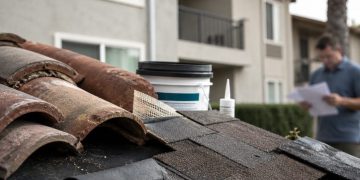











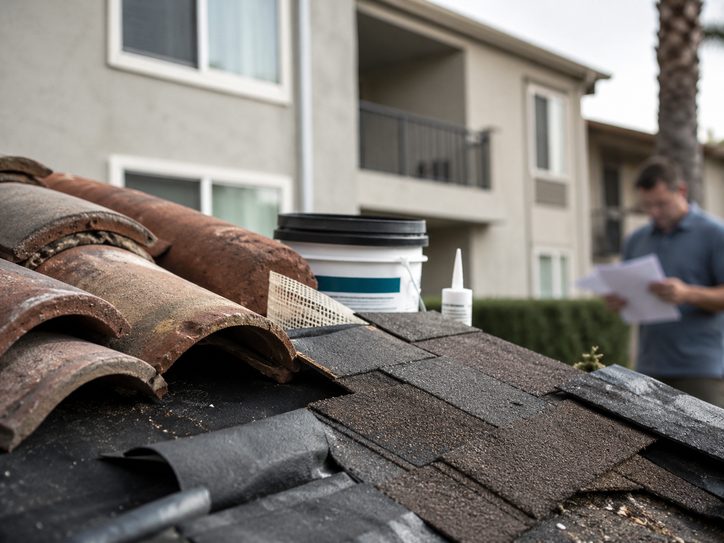
LOS ANGELES, CA – Homeowners at a 198-unit condominium complex in San Clemente are challenging an unexpected assessment of more than $26,000 per unit for roof replacements, arguing that the project may not qualify as an emergency and questioning whether residents should have been given a vote before being handed the substantial bill.
The dispute involves the Vilamoura condominium complex, located in the 220 block of Via Presa.
Residents said they were recently informed that the homeowners association had imposed what was described as an emergency assessment to fund replacement of the development’s roofs.
For some owners, the individual charge exceeds $26,000.
The amount — and the relatively short period residents say they were given to begin paying it — has triggered concern among homeowners who say the expense could dramatically affect their household finances.
Among them is Beverly Albright, 81, a longtime resident who lives on a fixed income.
“This was just such a surprise and it’s due in six weeks,” Albright said. “I will have to take the last of my retirement funds. You just can’t come up with that.”
Residents said the HOA offered several payment structures.
Owners could reportedly pay the entire assessment upfront, split it into two payments or make monthly payments that would initially add more than $2,000 per month for six months, followed by payments of roughly $400 per month until the balance was satisfied.
Homeowners also said they were told unpaid assessments could ultimately lead to liens against their units.
That prospect has intensified the dispute, particularly among residents who say they do not necessarily oppose repairing the roofs but question how the project was approved, priced and presented to homeowners.
Residents Question Whether the Work Was Really an Emergency
One of the central issues is the HOA’s characterization of the roofing work as an emergency.
Resident Noah Martin said homeowners believe the association was aware of roofing problems well before the assessment was imposed.
“In this circumstance, I don’t believe it was an emergency,” Martin said. “It didn’t fit the code for an emergency and that means that we, the members of the association, should have a vote.”
That argument matters under California law because the amount an HOA board may impose without membership approval is normally limited.
Under California Civil Code Section 5605, a homeowners association generally cannot impose special assessments in a fiscal year that, in the aggregate, exceed 5% of the association’s budgeted gross expenses without approval from a majority of a quorum of the membership.
There is, however, an important exception.
California Civil Code Section 5610 allows assessment increases necessary for qualifying emergency situations without being constrained by the normal Section 5605 limit.
The law defines those circumstances relatively specifically.
An emergency can include an extraordinary expense required by a court order, a repair or maintenance expense necessary because of a threat to health or safety or another hazardous condition, or an extraordinary repair expense that could not reasonably have been foreseen when the HOA prepared its annual budget.
For an assessment relying on that last category, the board must adopt a resolution containing written findings explaining both why the extraordinary expense is necessary and why it could not reasonably have been anticipated during the budgeting process. That resolution must then be distributed to homeowners with the assessment notice.
That framework is likely to become especially important in the Vilamoura dispute.
Residents contend the need for roofing work was known beforehand. If that characterization is accurate, they may argue that the expense was foreseeable and therefore did not fall within the statutory emergency exception.
But the available information does not establish whether the assessment complies with or violates California law.
That would depend on facts not yet publicly available, including the HOA’s reserve studies, inspection reports, board resolutions, annual budget materials, governing documents and the precise condition of the roofs when the assessment was adopted.
More Than $5 Million Could Be at Stake
With 198 units and individual assessments reportedly exceeding $26,000, the overall amount being sought from homeowners could potentially exceed $5 million.
Using $26,000 as a conservative figure across all 198 units would produce an aggregate assessment of approximately $5.15 million.
The actual amount could be higher depending on the exact charge assigned to each owner.
Residents say that scale is another reason they want more information about how the project was priced.
Homeowners obtained a separate roofing estimate that they say was substantially lower than the amount reflected in the HOA assessment.
They are now calling for a competitive bidding process before major roofing contracts move forward.
The competing estimate has not been publicly provided in the source material, so its scope cannot be compared directly with whatever work is included in the HOA’s project.
Different proposals can vary considerably depending on whether they include complete roof replacement, structural repairs, waterproofing, demolition, permits, insurance, contingency reserves and other costs.
Still, residents say they want the association to explain the discrepancy.
“We asked upfront for more information and how it was done, but we’ve been denied,” Albright said.
California Law Requires Advance Assessment Notice
State law also establishes notice requirements when homeowners’ assessments increase.
Under Civil Code Section 5615, an association must provide individual notice of an increase in regular or special assessments at least 30 days and no more than 60 days before the increased assessment becomes due.
Residents said they were given roughly six weeks before payment obligations began, which appears to fall within that statutory notice window based solely on the timeline they described.
But compliance with the notice period does not by itself resolve whether the board had authority to impose the amount without a membership vote.
Those are separate legal questions.
The California Department of Real Estate also notes that HOA disclosure documents include information concerning current regular and special assessments and changes already approved by a board but not yet due.
That reflects the significant financial impact assessments can have on both existing owners and people buying or selling units in common-interest developments.
Residents Want a Vote
For Martin and other homeowners, the solution is straightforward: allow the membership to decide how the project moves forward.
“We as a community should have a vote on how we go about doing this and I think that’s the fair way to do it,” Martin said.
Under California’s Davis-Stirling Common Interest Development Act, membership approval is generally required when a special assessment crosses the statutory threshold in Section 5605 unless an applicable exception — such as a qualifying emergency under Section 5610 — permits the board to proceed without that vote.
That makes the definition of “emergency” more than a semantic disagreement between homeowners and their board.
It could determine whether a multimillion-dollar assessment could legally be approved by the board alone.
Liens Add Another Source of Concern
Residents said they were also warned that failure to pay could result in liens being placed against their properties.
California HOAs do have statutory mechanisms for collecting delinquent assessments, although associations must follow a detailed process before enforcing those debts against homeowners.
The possibility is particularly alarming for residents such as Albright, who say they do not have tens of thousands of dollars readily available.
Her concern illustrates how a special assessment can affect homeowners very differently even when every unit receives a similar obligation.
For a homeowner with significant savings, a $26,000 bill may represent a major but manageable expense.
For someone relying largely on retirement income, the same assessment can require drawing down savings accumulated over decades or taking on additional debt.
That financial disparity has become one of the most emotional aspects of the dispute.
Questions About Reserves Could Become Important
Another unresolved issue is why such a large expense apparently needs to be collected directly from homeowners.
California condominium associations generally maintain reserve funds for major components that deteriorate over time, including roofs, paving, building systems and other common-area infrastructure.
The existence of an assessment does not necessarily mean an HOA failed to maintain adequate reserves. Costs can exceed estimates, damage can appear unexpectedly and reserve funds may be distributed across numerous future obligations.
But in a dispute involving known roof deterioration, reserve planning could become central.
Residents may seek records showing how much money was reserved for roofing work, what previous reserve studies estimated the project would cost and whether the anticipated replacement date changed.
State law requires HOA boards to exercise prudent fiscal management over reserve accounts. California Civil Code Section 5515 also addresses circumstances in which money is temporarily moved from reserves and provides for special assessments when funds must be restored.
Nothing currently available establishes that such a reserve transfer occurred at Vilamoura.
The law simply provides additional context for why residents seeking answers may focus on the association’s financial records and long-term maintenance planning.
HOA Declines Comment Amid Legal Dispute
The Vilamoura homeowners association has not publicly provided its version of the dispute.
The association was contacted for comment and reportedly declined to discuss the matter because of ongoing legal action.
That means several potentially important facts remain unavailable from the board.
Among them are:
- the exact total cost of the roofing project;
- the condition of each roof;
- the engineering or inspection findings supporting replacement;
- when the board first became aware of the problems;
- whether reserve funds are available;
- how contractors were selected;
- whether multiple bids were obtained;
- and what specific legal basis the HOA relied upon when classifying the assessment as an emergency.
Without those materials, it would be premature to determine whether the board acted properly or whether the homeowners’ legal objections will succeed.
Homeowners Seek Legal Representation
Residents are now looking for legal representation to evaluate their options.
Their potential arguments could include whether the assessment complied with the Davis-Stirling Act, whether the statutory emergency requirements were satisfied, whether required documentation was provided and whether the association complied with its own governing documents.
Homeowners may also seek access to financial and board records relevant to the assessment.
The dispute ultimately centers on two issues that are related but not identical.
The first is whether roofs at Vilamoura genuinely need significant repair or replacement.
Residents do not appear to dispute outright that roofing work is necessary.
The second — and far more contentious — question is who gets to decide how that work is financed and whether a $26,000-plus bill can be imposed without a homeowner vote.
For Albright, the legal debate has an immediate financial consequence.
She says paying the assessment could mean taking what remains of her retirement savings.
For other residents, the concern is about precedent and control over multimillion-dollar spending within the community.
Until the association releases additional documentation or the dispute reaches a legal resolution, the legitimacy of the emergency designation — and therefore the board’s ability to impose the assessment without a membership vote — remains contested rather than settled.