



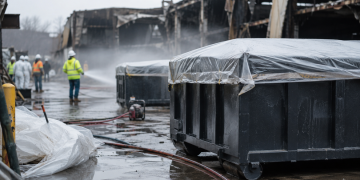


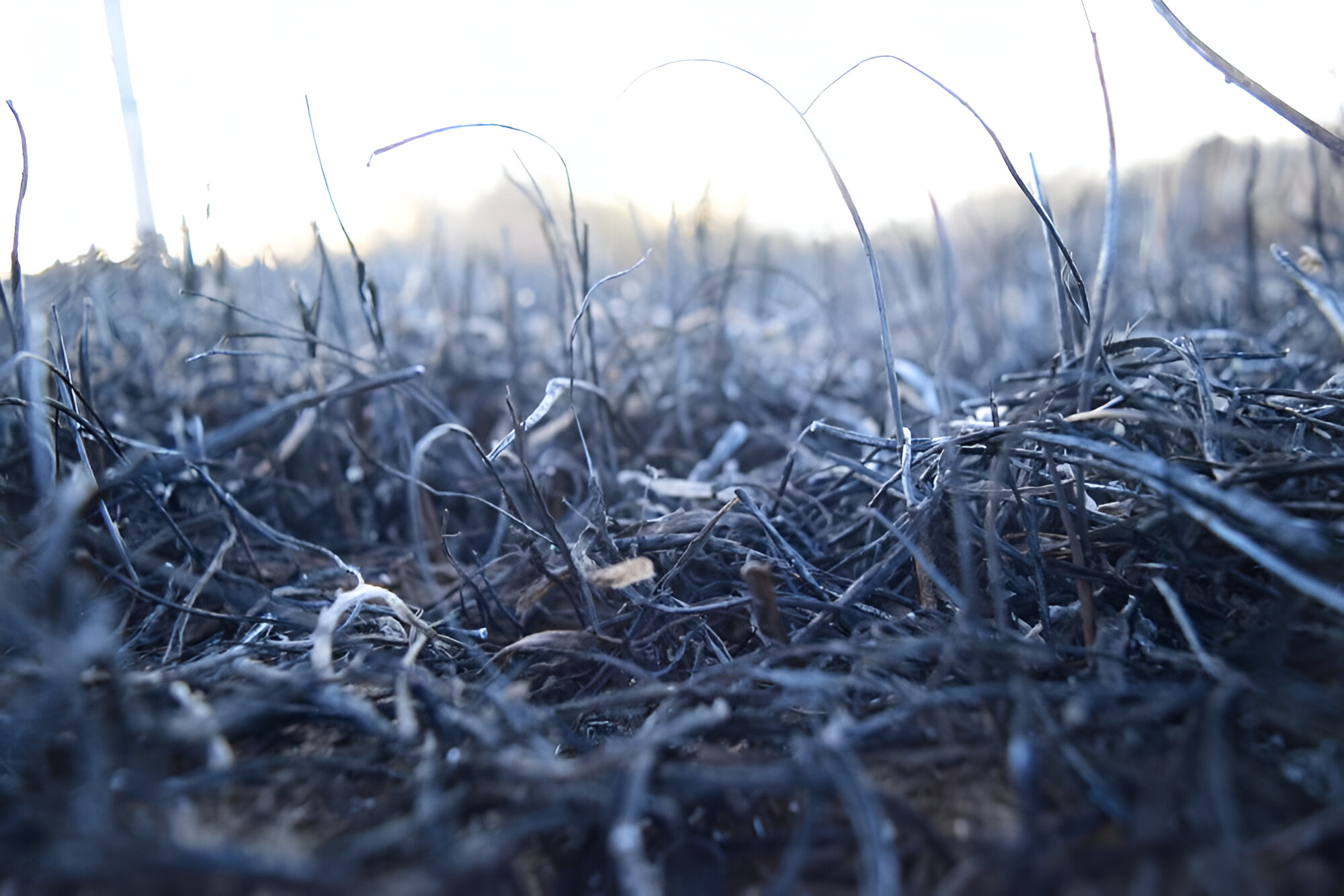
LOS ANGELES, CA – Officials announced Tuesday that phase two of the debris removal process has begun for residential properties affected by the Palisades Fire, marking a critical step in recovery efforts following the destruction caused by the wildfire.
At a press conference in Pacific Palisades, local, state, and federal leaders gathered to highlight the progress being made. Los Angeles County Supervisor Lindsey Horvath was joined by Los Angeles Mayor Karen Bass, alongside representatives from the Governor’s Office of Emergency Services, the Environmental Protection Agency (EPA), the Federal Emergency Management Agency (FEMA), and the U.S. Army Corps of Engineers.
“This is an amazing day to think that we are here just a few weeks after these fires were contained,” said Nancy Ward, Director of the Governor’s Office of Emergency Services. “With the completion of the Household Hazardous Materials removal in phase one, we are now able to begin phase two.”
FEMA officials emphasized the scale of the disaster, with Cameron Hamilton, the agency’s acting administrator, comparing the devastation to past wildfires in Northern California.
“My family and friends lost homes in the fires of 2017 in Northern California, so seeing the devastation here is catastrophic,” Hamilton said. “But it’s remarkable to see the community come together in times like this.”
Hamilton reiterated FEMA’s commitment to assisting those impacted.
“We at FEMA are committed to ensuring that every survivor here knows they have our full commitment,” he said. “You have our focus, and you will not be forgotten.”
Mayor Bass underscored the coordinated effort between various levels of government.
“We stand with you, we grieve with you, and we will be here until everybody is able to return home,” Bass said. “This is what happens when government works together.”
Horvath emphasized the urgency of the cleanup and the cooperation between agencies to expedite the process.
“To move quickly, to move efficiently, to move safely, has been our key, and this is the quickest debris removal process in state history,” she said. “We thank the EPA and the Army Corps of Engineers, who have been relentless in making sure we clean up our neighborhoods and make them safe for people to return home.”
Officials said that more than 8,000 forms have been submitted by residents opting into the Army Corps of Engineers’ debris removal program, with 99% of applicants choosing this coordinated process. For the remaining 1%—131 individuals who opted out—Los Angeles County stands ready to issue the necessary permits for private removal efforts. The deadline for form submissions is March 31, 2025.
Colonel Eric Swenson of the U.S. Army Corps of Engineers highlighted lessons learned from wildfire recovery efforts in Hawaii following last year’s devastating fires on Maui.
“We were right off the heels of that, and we’ve learned a lot,” Swenson said. “The same contractor we had in Hawaii is our contractor here. We have what’s called the Advanced Contracting Initiative—so all of these contracts are pre-negotiated on five-year agreements. It’s like having a lawyer on retainer—we have a contractor on retainer.”
Swenson explained that this pre-planned contracting system allowed for a rapid response.
“When a crisis happens, if we get called, we call our contractor, and they are responsive to us,” he said. “They were already here almost the same time we were, planning and doing their own analysis. That shaved a lot of time off the process.”
Looking ahead, officials acknowledged that incoming rain could pose additional risks, but Swenson said the team has taken measures to mitigate potential complications.
“A light rain is absolutely our friend—that’s the Lord providing us with a little bit of dust mitigation,” he said. “But too much rain is not our friend. That’s why we have best management practices in place, like these green sleeves with wood chips in them, designed to slow, catch, and filter water before it reaches storm drains.”
Los Angeles officials have also installed more than 7,500 feet of concrete barriers and distributed over 6,500 sandbags throughout the Palisades to prevent further damage from mudslides and flooding.
As the recovery process continues, authorities encourage residents to stay informed and access resources at recovery.lacounty.gov.