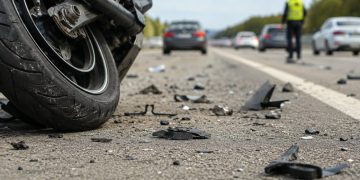





LOS ANGELES, CA – A motorcyclist was killed Wednesday morning on the southbound 405 Freeway near the 101 Freeway interchange in Sherman Oaks after witnesses reported that the rider fell from the motorcycle and was subsequently struck by passing vehicles.
The fatal collision unfolded in the southbound lanes of Interstate 405 near its interchange with U.S. 101, one of the busiest freeway junctions in the San Fernando Valley.
According to preliminary information attributed to the California Highway Patrol, witnesses reported that the rider came off the motorcycle in the freeway’s faster-moving lanes before being struck by vehicles traveling behind him.
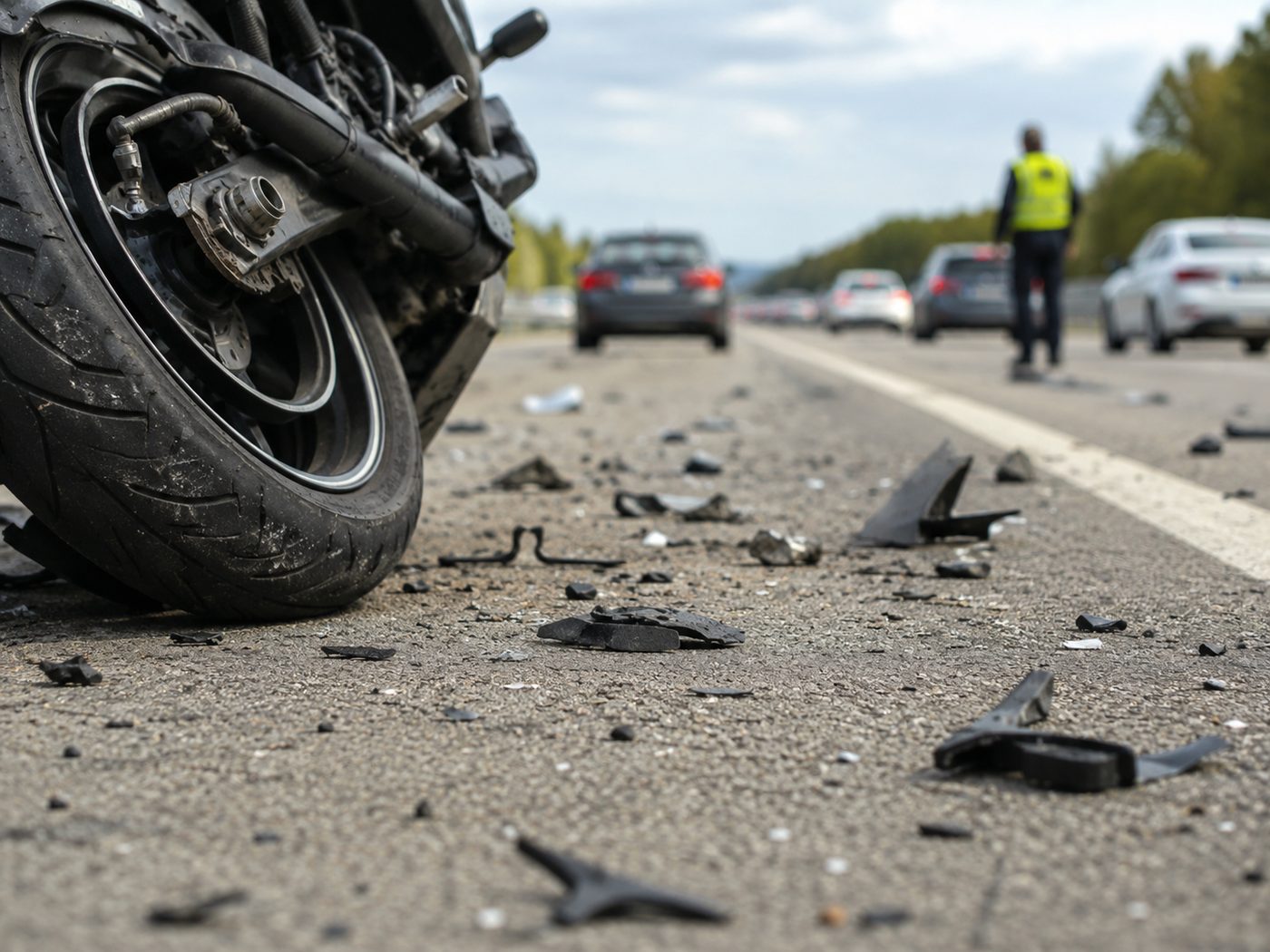
First responders arrived to find the motorcyclist lying in Lane 1, the far-left travel lane.
A firefighter pronounced the rider dead at the scene at approximately 11:35 a.m.
The victim’s name had not been publicly released.
Authorities typically withhold the identity of a person killed in a crash until relatives have been notified.
What caused the rider to fall remains unclear
The circumstances that caused the motorcyclist to separate from the motorcycle remain under investigation.
CHP had not publicly said whether another vehicle made contact with the motorcycle before the rider fell.
There was also no confirmed information indicating that speed, impairment, a roadway hazard or a mechanical problem caused the initial loss of control.
Those possibilities should not be assumed while investigators continue reconstructing the crash.
The information released so far establishes only that witnesses reported the motorcyclist fell and was then struck by passing traffic.
Investigators will need to determine what happened immediately before that sequence began.
Multiple vehicles may have been involved after the fall
Witness accounts indicated that vehicles traveling through the fast lane struck the rider after he fell onto the freeway.
Authorities had not disclosed how many vehicles were involved or whether every driver remained at the scene.
CHP also had not announced any arrest or hit-and-run investigation.
In fatal freeway crashes involving several vehicles, investigators may examine damage to each vehicle, interview motorists and witnesses and review any available dashboard-camera or freeway surveillance footage to establish the order of impacts.
No such evidence had been publicly released in this case.
Southbound 405 temporarily shut down
The crash forced authorities to impose a hard closure on the southbound freeway while emergency crews and investigators worked at the scene.
Traffic was diverted as the closure produced substantial congestion around Sherman Oaks and the 405-101 interchange.
CHP later reopened two lanes to begin relieving the backup while the investigation remained active.
The closure affected one of the San Fernando Valley’s most important transportation corridors.
The 405 carries traffic between the Valley, the Westside and communities farther south, while the nearby 101 provides a major east-west route through the Valley.
A fatal investigation near the interchange can therefore quickly produce backups extending well beyond the immediate crash site.
CHP’s Traffic Incident Information system provides current information on freeway collisions, lane closures and other incidents being handled by officers across California.
CHP West Valley patrols the surrounding region
The Sherman Oaks area falls within the broader territory served by the California Highway Patrol’s West Valley Area office.
CHP says the office is responsible for roughly 400 square miles of freeway and highway territory covering communities across the western San Fernando Valley and surrounding areas, serving about 2.1 million residents and travelers.
The West Valley office was established in 1969 when CHP assumed traffic enforcement responsibilities on the region’s freeways and highways.
Its current headquarters is located on De Soto Avenue in Woodland Hills.
The agency had not released a separate detailed public collision report identifying the investigating officers or providing a preliminary cause for Wednesday’s fatality.
Fatal motorcycle crashes remain a major safety concern
The collision comes against the backdrop of broader motorcycle safety concerns across California.
CHP says motorcyclists remain overrepresented in statewide traffic deaths even as improvements have been made in other areas of traffic safety.
In a statewide motorcycle safety initiative announced in 2024, CHP cited provisional data showing more than 7,000 motorcycle-involved crashes within CHP jurisdiction during federal fiscal year 2022-23, resulting in 336 deaths and more than 6,300 injuries.
Those statewide figures have no known connection to Wednesday’s Sherman Oaks crash, but they demonstrate why motorcycle fatalities remain a continuing focus for traffic-safety agencies.
CHP emphasizes that motorcycle crashes are more likely to result in serious injury or death because riders have much less physical protection than occupants of passenger vehicles.
Safety guidance focuses on visibility and road conditions
California requires motorcycle riders to wear helmets meeting federal Department of Transportation standards.
CHP also recommends that riders remain out of vehicle blind spots, scan the road for oil, gravel and other hazards and avoid sudden starts, stops and turns.
The agency specifically warns that motorcycles are more vulnerable to changes in pavement and roadway debris that may have little effect on larger vehicles.
CHP also encourages riders to wear visible protective clothing and remain alert around trucks and other large vehicles.
None of those safety factors has been identified as contributing to the Sherman Oaks crash.
The official investigation had not established what caused the rider to fall.
Lane splitting is legal, but investigators have not said it was involved
California is unusual among U.S. states in explicitly recognizing motorcycle lane splitting.
State law defines lane splitting as a motorcycle traveling between rows of stopped or moving vehicles in the same lane.
CHP says the practice is legal when performed safely but warns that risks increase as overall vehicle speed and the speed difference between the motorcycle and surrounding traffic increase.
The agency advises riders who lane split to pay attention to lane width, surrounding vehicles, roadway conditions, visibility and available space.
It also says it is typically safer to split between the far-left lanes than between other lanes.
There is currently no public indication that the motorcyclist in Wednesday’s crash was lane splitting.
That information is provided only as general California motorcycle-safety context and should not be interpreted as an explanation for the collision.
Investigators will need to reconstruct the first moments
The most important unanswered question remains what caused the rider to come off the motorcycle.
That determination may depend on physical evidence left on the pavement.
Investigators can examine scrape marks, debris fields, tire marks and damage to the motorcycle to establish its direction of travel and whether another vehicle made contact with it.
Statements from drivers traveling nearby could also help determine whether the rider was changing lanes, braking or reacting to traffic immediately before the fall.
Authorities had not disclosed whether the motorcycle itself remained in Lane 1 or came to rest elsewhere.
They also had not said whether the rider struck a median barrier or another object before falling.
Freeway traffic can complicate fatal investigations
A crash in an active freeway lane creates immediate challenges for emergency personnel.
Responders must protect the scene from additional traffic while providing medical care and preventing secondary collisions.
When a death occurs, CHP investigators also need time to preserve evidence before lanes can fully reopen.
That can require substantial closures even when the physical crash scene occupies only a small section of roadway.
In Wednesday’s case, authorities initially closed the southbound lanes before reopening two lanes as the investigation progressed.
Motorists were advised to use alternate routes because traffic backed up for miles.
Identity of victim remains pending
The motorcyclist’s identity had not been announced.
Authorities had also not released the rider’s age, hometown or information about the motorcycle.
The Los Angeles County Medical Examiner is generally responsible for formally identifying people who die in traffic collisions within the county and notifying relatives before names are made public.
No information had been released about whether the victim had passengers or was riding with other motorcyclists.
The available account describes only one motorcycle rider involved.
No criminal allegations announced
CHP had not announced any criminal charges or citations connected to the fatal crash.
No driver had been publicly accused of causing the rider to fall.
Likewise, there was no official indication that any motorist intentionally struck the victim after he was on the roadway.
The investigation remains focused on establishing the sequence of events.
If investigators determine another driver violated the law before or after the collision, that could change the direction of the case.
For now, no such conclusion has been announced.
Officials continue seeking clarity on sequence of crash
The key facts released so far remain limited.
The motorcyclist was traveling on the southbound 405 near the 101 interchange.
Witnesses said the rider fell from the motorcycle.
The rider then ended up in the fast lane, where passing vehicles reportedly struck him.
Emergency crews pronounced him dead at 11:35 a.m.
A major freeway closure followed while authorities investigated.
His name has not been released.
The cause of the initial fall, the number of vehicles involved and whether any additional enforcement action will follow remain unknown.
CHP’s investigation is ongoing.