











LOS ANGELES, CA — About 20 homes along Seaside Walk in Long Beach were placed under evacuation orders Monday night after several days of powerful surf associated with Hurricane Marie compromised the peninsula’s seawall, damaged portions of the boardwalk and sent seawater into nearby streets and homes.
The evacuation area covers Seaside Walk between 63rd Place and 67th Place, according to the information provided by Long Beach officials. The orders were issued as a precaution while the city’s Building Department evaluates the affected properties and determines whether the homes remain structurally safe for residents to occupy.
The City of Long Beach has previously identified the Peninsula as an area vulnerable to high tides, large swells and localized coastal flooding. The city’s Peninsula information page notes that the ocean-facing portion of the neighborhood requires regular maintenance because natural ocean movement continually shifts sand along the shoreline.
The latest conditions developed as Marie’s large southern swell moved toward Southern California. The National Weather Service warned that the swell would produce significant coastal impacts, with high surf and dangerous rip currents along south-facing beaches in Los Angeles and Ventura counties. The Long Beach coastline was specifically identified as one of the areas expected to experience some of the highest surf.
High surf overwhelms the Long Beach Peninsula
According to the information released about the evacuation, the immediate problem was not a direct landfall by Marie but the powerful ocean swell generated by the storm.
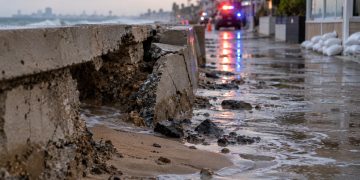
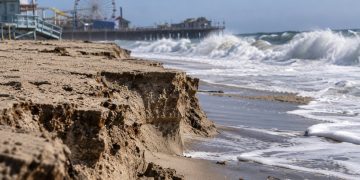
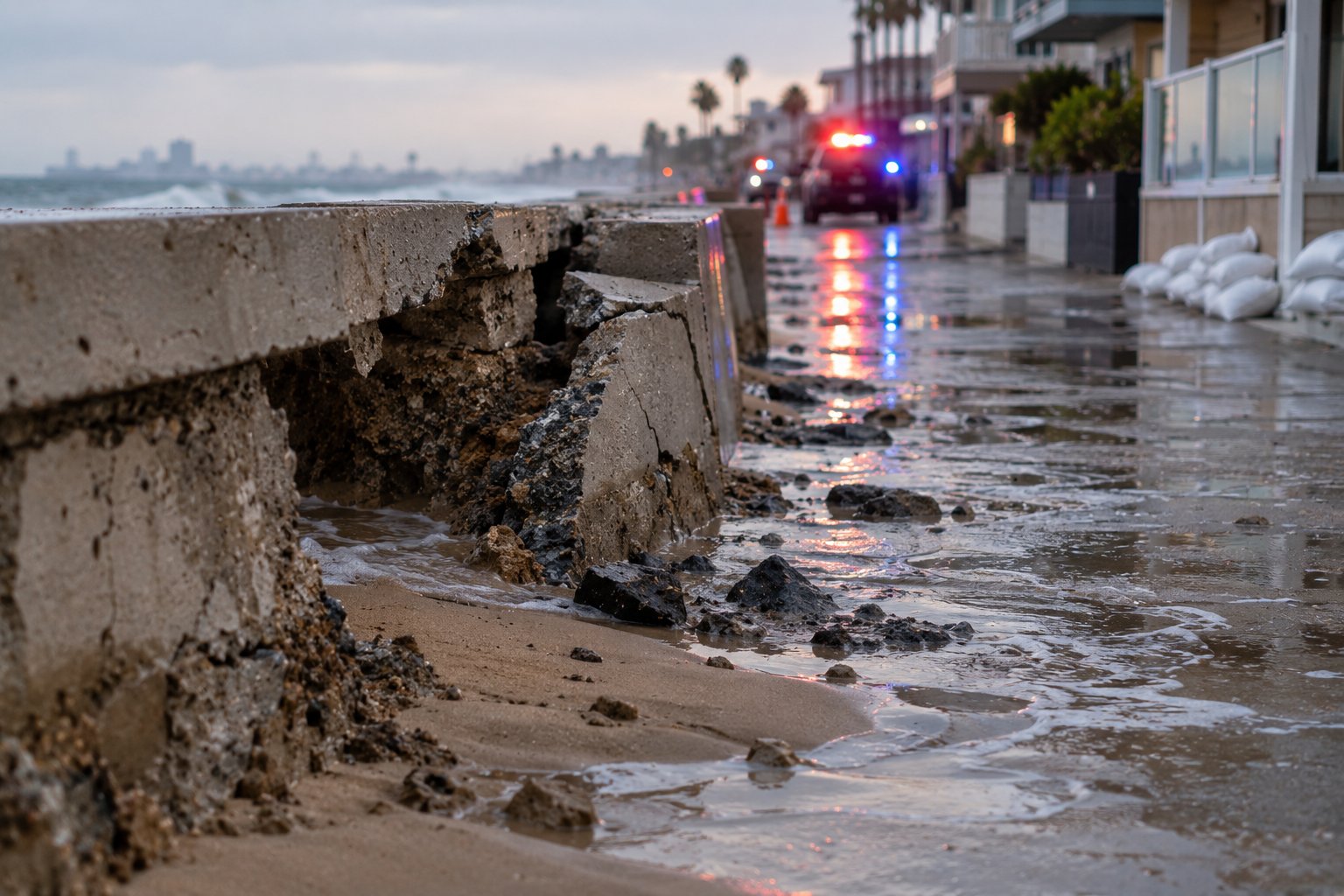
The waves pushed water over the protective berm along the peninsula and onto the Seaside Walk area. Officials reported damage to the seawall and boardwalk, as well as cracked and damaged concrete in areas between several homes.
The National Weather Service said Marie-generated swells reached Southern California while the storm remained offshore. In its Sept. 6 advisory, the National Hurricane Center warned that swells from Marie would continue affecting Southern California for several days and could produce life-threatening surf and rip-current conditions.
By the following days, the weather service reported that moderate coastal flooding had occurred and warned that flooding could continue around evening high tides, particularly along south-facing shores. It specifically identified the Long Beach area as one of the locations where the highest surf was expected.
The combination of high surf, elevated tides and already vulnerable coastal infrastructure created the conditions that prompted the residential evacuations.
Flooding also affected streets and storm drains
The waves did not only threaten properties directly along the shoreline.
Sand pushed inland by the surf settled into storm drains, reducing their ability to carry water away from the peninsula. According to the information provided by city officials, the resulting blockage contributed to localized flooding on neighborhood streets.
A contractor was brought in to jet-blast the affected drains and clear accumulated sand ahead of another high tide.
The city also deployed three portable pumps, with additional equipment kept on standby as crews prepared for continued coastal impacts.
The response involved multiple city departments and volunteers. Long Beach Search and Rescue volunteers, fire interns and police explorers participated in sandbag operations, while Parks, Recreation and Marine beach maintenance crews and Public Works personnel worked on storm mitigation.
Thousands of sandbags were prepared as crews attempted to reinforce vulnerable portions of the peninsula before additional high tides.
Evacuations remain tied to structural inspections
The evacuation orders were issued out of caution while the Long Beach Building Department examines the affected homes.
That evaluation is important because the immediate concern is not simply whether floodwater has entered a property. Officials also need to determine whether damage to the seawall, boardwalk, concrete areas or other portions of the coastal environment has affected the safety of nearby structures.
The information provided for this report does not indicate that every evacuated home has suffered structural damage. Instead, the city is evaluating the properties before determining whether residents can safely return.
The city’s emergency response also includes the Long Beach Police Department, which is assisting with evacuations and street closures related to flooding and water damage.
The Long Beach Health Department is assisting displaced residents, while Long Beach Transit is providing buses for immediate shelter.
Peninsula remains restricted during response
While the emergency response continues, access to the peninsula has been restricted.
Residents are permitted to enter the area, but the beach and boardwalk remain closed.
The closure affects an important section of the Long Beach coastline. The city describes the Peninsula as a narrow strip of land separating Alamitos Bay from the Pacific Ocean, with the ocean-facing Peninsula Beach and the Seaside Walk Boardwalk along its southern side.
The Seaside Walk Boardwalk dates to the 1920s and is considered by the city a historic feature of the Peninsula.
The location’s exposure to the Pacific also makes it particularly vulnerable when large swells coincide with high tides.
Long Beach has dealt with similar coastal threats during previous storm systems. In an earlier city response to severe weather, officials warned Peninsula and Alamitos Bay residents about high tides, large swells and possible localized flooding, while crews reinforced protective berms along the oceanfront peninsula.
Crews prepare for more high tides
The response is continuing because the immediate threat does not end when the largest waves begin to subside.
The National Weather Service said the Marie-generated swell would gradually decrease, but coastal impacts could continue while tides remained unusually high. In one forecast, observed tides were running about six inches above predictions, with evening tides approaching or exceeding seven feet.
Another National Weather Service update said moderate coastal flooding could continue around high tides even as the swell weakened.
That combination has kept crews working on the peninsula and preparing for additional water movement.
The city has also previously advised residents in vulnerable coastal areas to prepare for flooding during severe weather, including maintaining access to sandbags and monitoring official emergency information.
Long Beach’s current preparedness campaign similarly encourages residents to create evacuation plans, maintain emergency supplies and sign up for Alert Long Beach notifications.
Officials warn residents to remain prepared
Long Beach Mayor Rex Richardson said the latest conditions are a reminder that coastal residents need to be prepared for additional weather events.
“The real message is that this is early in the El Niño season. There could be more storm events. There could be more water events,” Richardson said.
He also pointed to Long Beach’s broader geography, saying the city sits at the southern end of two rivers and multiple watersheds. Rainfall across the region can ultimately contribute to conditions along the coast.
The city’s advice comes as Southern California continues to deal with the effects of Marie’s unusually large swell. The National Weather Service warned that high surf, strong rip currents and coastal flooding could persist even after the storm itself weakened offshore.
For residents who were evacuated from the Seaside Walk area, however, the most immediate question remains whether their homes can safely be occupied.
What happens next
The Long Beach Building Department will determine whether the approximately 20 evacuated homes between 63rd and 67th places can be reoccupied.
Until those inspections are completed, residents are being asked to follow evacuation and access restrictions. Crews are expected to remain active on the peninsula as they continue pumping water, clearing storm drains, reinforcing vulnerable areas and preparing for additional high tides.
The National Weather Service expects Marie’s swell to gradually subside, but warned that dangerous surf and coastal flooding could continue while elevated tides persist.
The episode also highlights a recurring challenge for Long Beach’s Peninsula: protecting homes and infrastructure located directly along an exposed coastline when large ocean swells arrive at the same time as high tides.
For now, the beach and boardwalk remain closed, the affected homes remain under evacuation orders, and city crews are continuing to work ahead of the next round of high water.