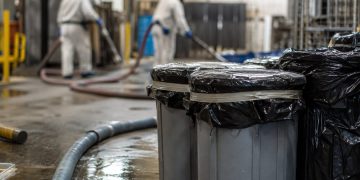





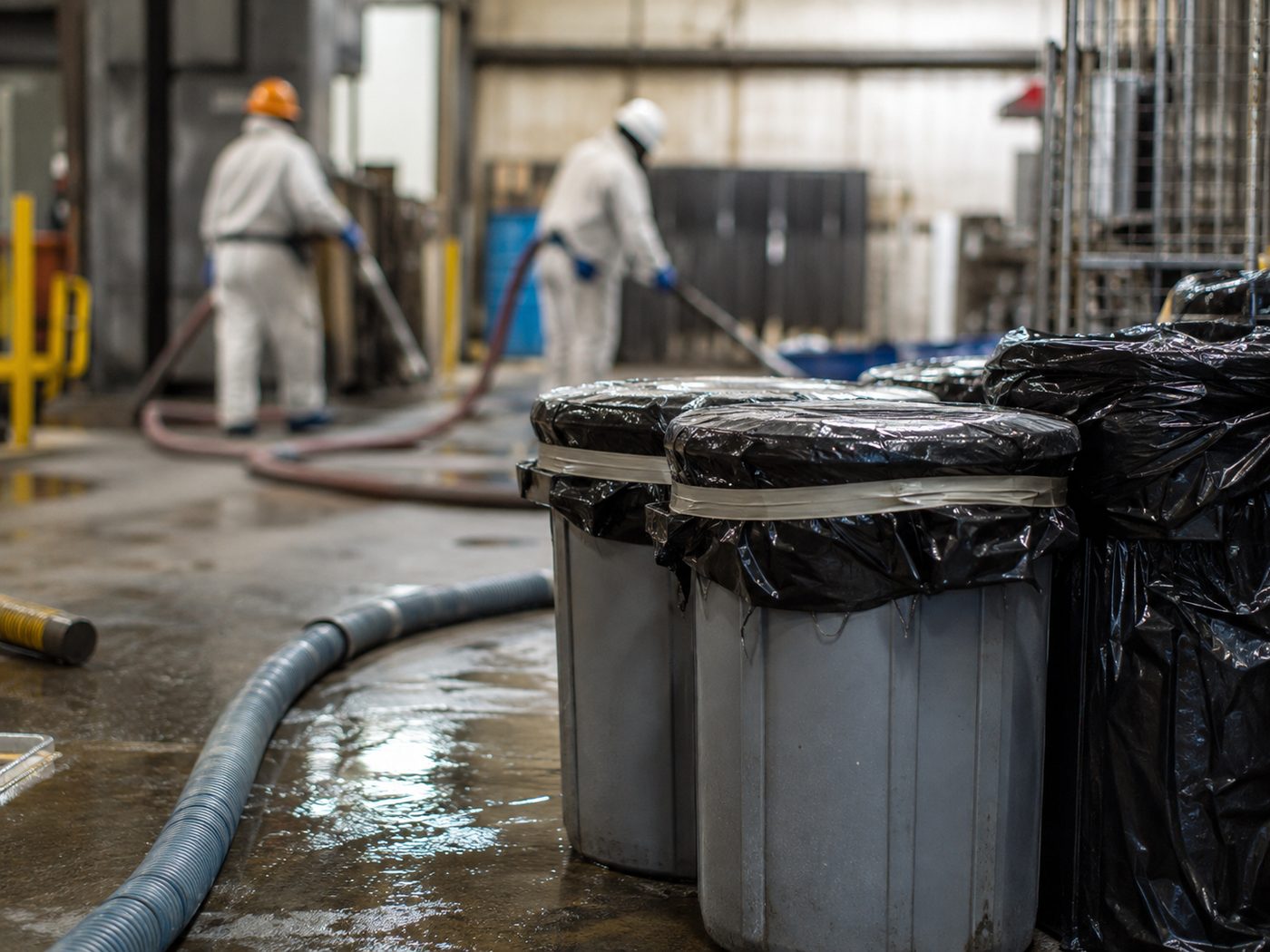
LOS ANGELES, CA – Lineage Logistics has completed the removal of bulk food waste from its fire-damaged Boyle Heights cold-storage warehouse, reaching a major cleanup milestone after more than two months of odors, pests and neighborhood complaints.
The South Coast Air Quality Management District said its enforcement team inspected the site on Aug. 29 and confirmed that the company had removed the remaining large volumes of decomposing food from the facility.
That confirmation started a seven-day deadline for Lineage to complete final cleanup and disinfection work required under an air-quality enforcement order.
The milestone is significant for Boyle Heights residents who have spent much of the summer dealing with the aftermath of the June 17 warehouse fire, but it does not mark the end of the cleanup or the city’s response.
Lineage still faces regulatory requirements at the property, while Los Angeles officials are advancing proposals that could affect reconstruction permits, financial liability and longer-term environmental oversight.
Fire left tens of millions of pounds of food inside warehouse
The fire began June 17 at the cold-storage facility at 1400 S. Los Palos Street.
According to information released during the recovery process, the warehouse contained more than 85 million pounds of stored food when the fire occurred.
The blaze damaged the refrigeration and warehouse systems, leaving large quantities of food inside the structure as cleanup crews worked to gain safe access.
Over the following weeks, decomposing inventory became the focus of persistent odor complaints from residents in Boyle Heights and neighboring communities.
South Coast AQMD eventually began issuing public nuisance violations against Lineage under Rule 402 and California Health and Safety Code Section 41700, which prohibit emissions that cause injury, nuisance or annoyance to a considerable number of people.
The agency’s public response page documents nuisance violations beginning July 12 and continuing repeatedly into late August. As of Aug. 25, the list included violations on dozens of separate dates.
That enforcement record helps explain why the removal of the remaining bulk food waste is more than an operational milestone for the company.
It represents the removal of what regulators had identified as the primary source of the persistent odor problem.
Air regulators confirm bulk waste is gone
South Coast AQMD said enforcement officers personally verified the completion of bulk food removal on Saturday.
“Today, South Coast AQMD’s enforcement team was on site at Lineage Logistics in Boyle Heights and confirmed that Lineage has completed removal of the bulk food waste,” the agency said.
Regulators described the development as completion of a “major phase of cleanup” following weeks of odor impacts in surrounding neighborhoods.
The announcement immediately activated the next requirement.
“With all bulk food waste removed, the 7-day clock has started for Lineage to complete final clean-up activities,” South Coast AQMD said.
The agency has not publicly reduced those remaining tasks to a short checklist in its announcement, but the broader enforcement order requires continued odor controls, sanitation measures, monitoring and other steps intended to prevent additional nuisance impacts.
Cleanup is governed by formal Order for Abatement
The company is not completing the work solely under a voluntary timetable.
On Aug. 6, the South Coast AQMD Hearing Board approved a formal Order for Abatement against Lineage Logistics.
The proceeding followed weeks of complaints and escalating enforcement.
The final order imposed more than 90 conditions intended to contain, reduce and eliminate odors associated with the burned warehouse, according to South Coast AQMD.
Those requirements included continued fenceline air monitoring and bilingual communication with the surrounding community.
The hearing process also incorporated written statements from Boyle Heights residents, community organizations, Los Angeles County officials and Mayor Karen Bass.
That makes the seven-day deadline legally and regulatorily significant: it is part of an enforcement process developed after the agency concluded that voluntary odor-control measures had not been sufficient to prevent repeated nuisance impacts.
Neighborhood impact went beyond odor
Residents repeatedly described the consequences of the fire as broader than a bad smell.
As food decomposed inside the warehouse, neighbors reported flies, rodents and persistent odor entering homes and outdoor spaces.
The incident became an environmental-justice issue because the warehouse sits in a densely populated Eastside community already identified by South Coast AQMD as part of its East Los Angeles, Boyle Heights and West Commerce AB 617 community.
AB 617 is California’s community air-protection program focused on neighborhoods disproportionately affected by air pollution.
That existing designation meant South Coast AQMD already had a community steering structure and neighborhood air-quality framework in place before the warehouse fire.
After the fire, the agency used that infrastructure to hold community meetings, distribute information and expand access to air filtration.
Up to $5 million approved for home air filtration
South Coast AQMD’s response went beyond enforcement against Lineage.
Its Governing Board approved up to $5 million in additional funding to expand the AB 617 Residential Air Filtration Program for affected residents.
Eligible households were offered CARB-certified HEPA air purifiers, a three-year supply of replacement filters and direct delivery at no cost.
Agency staff also held community outreach events to help residents apply.
That funding illustrates why the warehouse fire evolved into a larger public-health and environmental-equity issue rather than remaining solely a private industrial cleanup.
The fire occurred at one facility, but its impacts spread into surrounding residential blocks, forcing public agencies to spend money and deploy resources well beyond the property boundary.
City response has expanded into multiple policy tracks
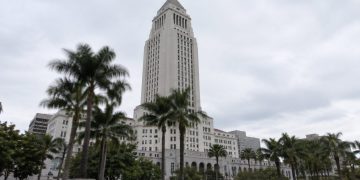
Los Angeles City Hall has also moved beyond the immediate cleanup.
A series of council files now addresses the warehouse fire from several angles, including public health, emergency response, tenant complaints, cleanup reimbursement, future reconstruction and long-term environmental oversight.
The city declared a local emergency connected with the Boyle Heights and East Los Angeles warehouse fire, a measure that received final council action in August.
Separate measures have addressed additional bus service, emergency notifications, vehicle impound issues and investigation of tenant complaints in the affected area.
That growing legislative record reflects how a single industrial fire became a neighborhood-wide government response.
Reconstruction permits remain under scrutiny
One of the most consequential proposals concerns whether Lineage should be allowed to rebuild without first resolving outstanding cleanup and compliance issues.
A City Council motion introduced Aug. 4 calls for withholding reconstruction permits for the property at 1400 S. Los Palos Street.
The Planning and Land Use Management Committee approved the item on Aug. 25, after which it was rereferred to the newly created Ad Hoc Committee for Boyle Heights Fire Recovery.
That means the proposal is advancing, but it is not yet a final citywide ban on rebuilding permits.
The distinction matters.
The city is considering stronger leverage over future reconstruction, but the council file remained pending as of the latest update.
City also considering civil recovery of public costs
Another pending proposal would direct Los Angeles to pursue civil action against Lineage Logistics to recover public costs associated with the fire and cleanup.
That measure was scheduled for Budget and Finance Committee consideration and later rereferred to the Ad Hoc Committee for Boyle Heights Fire Recovery.
If ultimately approved and pursued successfully, such an action could seek reimbursement for city expenses associated with emergency response, cleanup support or other impacts tied to the warehouse incident.
No final reimbursement amount has been established.
The company has separately said it expects its own total cleanup spending to exceed $100 million.
That figure comes from Lineage’s public statements and has not been independently audited by the city or South Coast AQMD.
Proposed mitigation fund would shift money toward community recovery
The council is also considering creation of a mitigation response fund tied to Lineage and its parent company, Bay Grove Capital.
That proposal has moved through the city’s civil rights committee and remained pending before additional committees as of late August.
The concept reflects another major political issue arising from the fire: whether the affected company should contribute directly to community recovery beyond cleaning its own property.
That question has become increasingly important as residents have described costs involving air filtration, pest control, temporary displacement and disruption to everyday life.
The existence of the proposal does not mean such a fund has already been created or funded.
Environmental justice commission also proposed
City officials are considering a separate proposal to establish an Environmental Justice and Advocacy Advisory Commission in response to the warehouse fire and broader concerns in Boyle Heights and East Los Angeles.
That measure reflects criticism from residents who say communities already burdened by pollution should have a stronger role in how industrial hazards and emergency responses are handled.
The proposal is separate from the immediate Lineage cleanup.
Its significance is longer-term: the fire has become a catalyst for potentially changing how Los Angeles incorporates environmental-justice concerns into future policy.
City has already authorized additional neighborhood cleanups
Some council actions have moved beyond proposals.
On Aug. 26, the City Council adopted a motion involving Bureau of Sanitation cleanup work connected with the Boyle Heights and East Los Angeles impacts of the Lineage fire.
That action recognizes that remediation outside the warehouse property can become a public responsibility even while regulators continue requiring Lineage to address conditions inside its site.
It also reinforces the larger question of cost recovery.
When city crews perform work because of impacts originating from a private industrial property, officials can face pressure to ensure taxpayers do not ultimately bear the entire expense.
Completion of bulk removal does not erase violations
The successful removal of the food does not cancel the enforcement record accumulated during the preceding weeks.
South Coast AQMD’s public page continues to list repeated Rule 402 nuisance violations issued to Lineage throughout July and August.
The agency’s Hearing Board order also remains relevant during final cleanup.
That means Saturday’s milestone is best understood as a transition from one phase of enforcement to another, not as a conclusion that the facility is now fully compliant and the matter closed.
Regulators can continue monitoring the site and enforcing the existing order while remaining cleanup work is completed.
Residents will likely judge progress by conditions outside the fence
For neighboring households, the practical measure of success will be whether odors, flies and other impacts finally disappear.
Removal of the bulk food should eliminate the largest source of decomposing material, but residents have spent weeks living with the consequences.
South Coast AQMD continues to maintain its Palos Fire response page, which includes violation information, air-monitoring resources and community updates.
The agency also continues working through its East Los Angeles/Boyle Heights/West Commerce community program, where the fire and recovery have become part of ongoing environmental-justice discussions.
Seven-day deadline is the next immediate test
The next major benchmark is now clear.
Lineage has seven days from South Coast AQMD’s Aug. 29 confirmation to complete the remaining cleanup activities required under the abatement process.
Regulators are expected to continue inspecting the facility.
At the same time, the city’s political response is moving on a separate track.
Council committees are weighing whether the company should face restrictions on future reconstruction, whether Los Angeles should pursue reimbursement for public costs and whether additional community funds or environmental oversight structures should be created.
Those decisions could outlast the physical cleanup by months or years.
For Boyle Heights, the removal of the warehouse’s bulk food waste marks a significant improvement after more than two months of odors and pest complaints.
But the larger dispute, over accountability, public-health impacts and what conditions should be imposed before the site can operate or rebuild again, remains unresolved.