









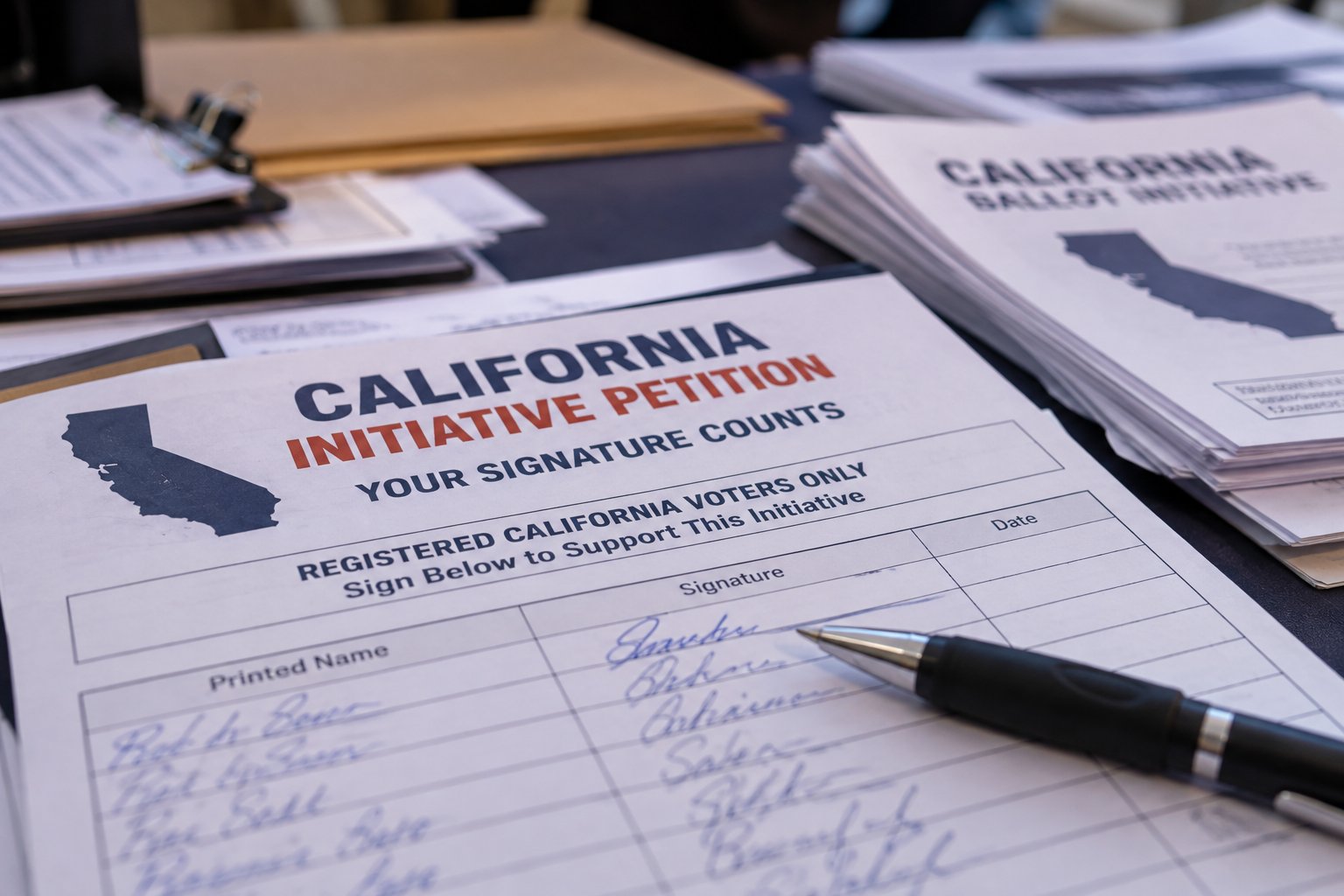
LOS ANGELES, CA — A Victorville man was arrested after federal prosecutors accused him of participating in a scheme that allegedly used stolen identities of registered California voters to manufacture signatures on ballot initiative petitions, including through people recruited on Skid Row in downtown Los Angeles.
James Brass, 47, also known as “Lord,” was arrested Sept. 10 and charged in a federal indictment along with two alleged petition collectors, according to the U.S. Attorney’s Office for the Central District of California.
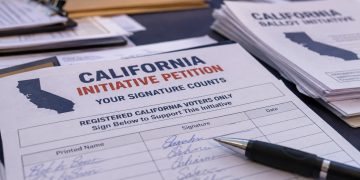
Brass is accused of managing a team of people collecting signatures for ballot initiatives and personally gathering signatures. Prosecutors allege that he and the other defendants used information belonging to registered voters to create fraudulent petition signatures.
Brass pleaded not guilty at his arraignment in U.S. District Court in Riverside and was released on a $10,000 bond, federal prosecutors said.
What prosecutors allege happened on Skid Row
According to the indictment, the alleged activity took place from February through August 2026.
Prosecutors allege Brass and Courtney Price, 49, of Jacksonville, Florida, went to Skid Row and distributed stolen voter identities to people who were paid to copy the voters’ personal information onto ballot initiative petitions.
The people allegedly recruited to sign the petitions were then instructed to sign using the names of registered California voters, rather than their own identities.
Federal prosecutors allege the purpose was to generate signatures that could be submitted as part of efforts to qualify initiatives for California election ballots.
The indictment also names Jateisha Herron, 33, of Boron, California. All three defendants are charged with conspiracy to commit identity fraud in furtherance of a state felony. Brass and Price face an additional count of identity fraud in furtherance of a state felony.
The FBI’s Los Angeles Field Office is investigating the case with assistance from special agents from the U.S. Attorney’s Office.
Petition collectors allegedly made false declarations
The allegations go beyond the signatures themselves.
Federal prosecutors say Brass and Herron signed declarations attached to the petitions after the signatures were collected. Those declarations allegedly stated, under penalty of perjury, that the defendants had personally witnessed the people identified on the petitions signing them.
The declarations also allegedly represented that the signatures were genuine signatures of the people whose names appeared on the petitions.
According to the indictment, Brass and Herron allegedly submitted the petitions to several petition coordinators while knowing the signatures and accompanying declarations were false.
Prosecutors contend that the false petitions could then be included among signatures being counted in connection with an initiative effort.
Brass allegedly received approximately $41,600 from coordinators working with a petition management company, according to the Justice Department.
California requires large numbers of signatures for initiatives
The alleged scheme targeted a process that can require hundreds of thousands of voter signatures.
Under California’s initiative system, voters can propose statutes or constitutional amendments for consideration through the statewide ballot process. The California Secretary of State currently lists 546,651 signatures as the requirement for an initiative statute and 874,641 signatures for an initiative constitutional amendment.
For the 2026 election cycle, proponents have a limited period to collect and submit the required signatures.
That system depends on petition signatures being connected to eligible voters. California election regulations require elections officials to verify petition signatures against voter registration records.
The state’s signature verification rules provide that signatures on initiative petitions can be compared with signatures contained in a voter’s registration record.
The rules also address circumstances involving a petitioner’s name, residence information, handwriting and circulator declarations.
Why the circulator declaration matters
California’s petition process places responsibilities on the people who circulate petitions.
The Secretary of State’s statewide initiative guide explains that each petition circulator who obtains signatures must complete a declaration attached to the petition.
Paid circulators must also execute a statement acknowledging that knowingly or willfully allowing signatures to be used for purposes other than qualifying the measure for the ballot is a misdemeanor under state law.
The rules are designed to create a documented chain between the person collecting a signature and the voter who actually signed the petition.
In the federal case against Brass and his co-defendants, prosecutors allege that this process was deliberately circumvented by using stolen voter information and false declarations.
Previous federal case also involved Skid Row petition activity
The allegations against Brass come several months after another federal case involving ballot petition activity and people experiencing homelessness on Skid Row.
In May, federal prosecutors charged Marina del Rey woman Brenda Lee Brown Armstrong, 64, also known as “Anika,” with allegedly paying people, including homeless individuals on Skid Row, to register to vote.
According to the Justice Department, Armstrong had worked as a signature collector for ballot initiatives and allegedly paid people cash to sign petitions. Prosecutors said she later began offering payments to some people to complete voter registration forms.
That case is separate from the Brass prosecution.
The two cases nevertheless illustrate why federal investigators have focused on activity involving paid signature collection and voter information in connection with California ballot initiatives.
Authorities say election confidence is at stake
First Assistant U.S. Attorney Bill Essayli said the defendants are accused of using stolen identities to manufacture petition signatures.
“These defendants are charged with using stolen identities of registered voters to manufacture signatures on ballot petitions used to shape California law,” Essayli said in the Justice Department announcement.
He said the alleged conduct involved people from Skid Row’s homeless population and argued that such activity could undermine confidence in the election system.
FBI Assistant Director in Charge Patrick Grandy similarly said the alleged scheme sought to undermine an essential part of the political process.
The investigation remains ongoing.
What happens next
Brass is scheduled to return to federal court on Nov. 2, according to the information provided by federal prosecutors.
If convicted, each defendant could face a statutory maximum sentence of five years in federal prison for each count, the Justice Department said.
The charges remain allegations at this stage. The federal indictment does not establish guilt, and Brass, Price and Herron are presumed innocent unless and until they are proven guilty beyond a reasonable doubt in court.
Federal prosecutors said the FBI investigation is continuing, with attorneys from the U.S. Attorney’s Office handling the case.