




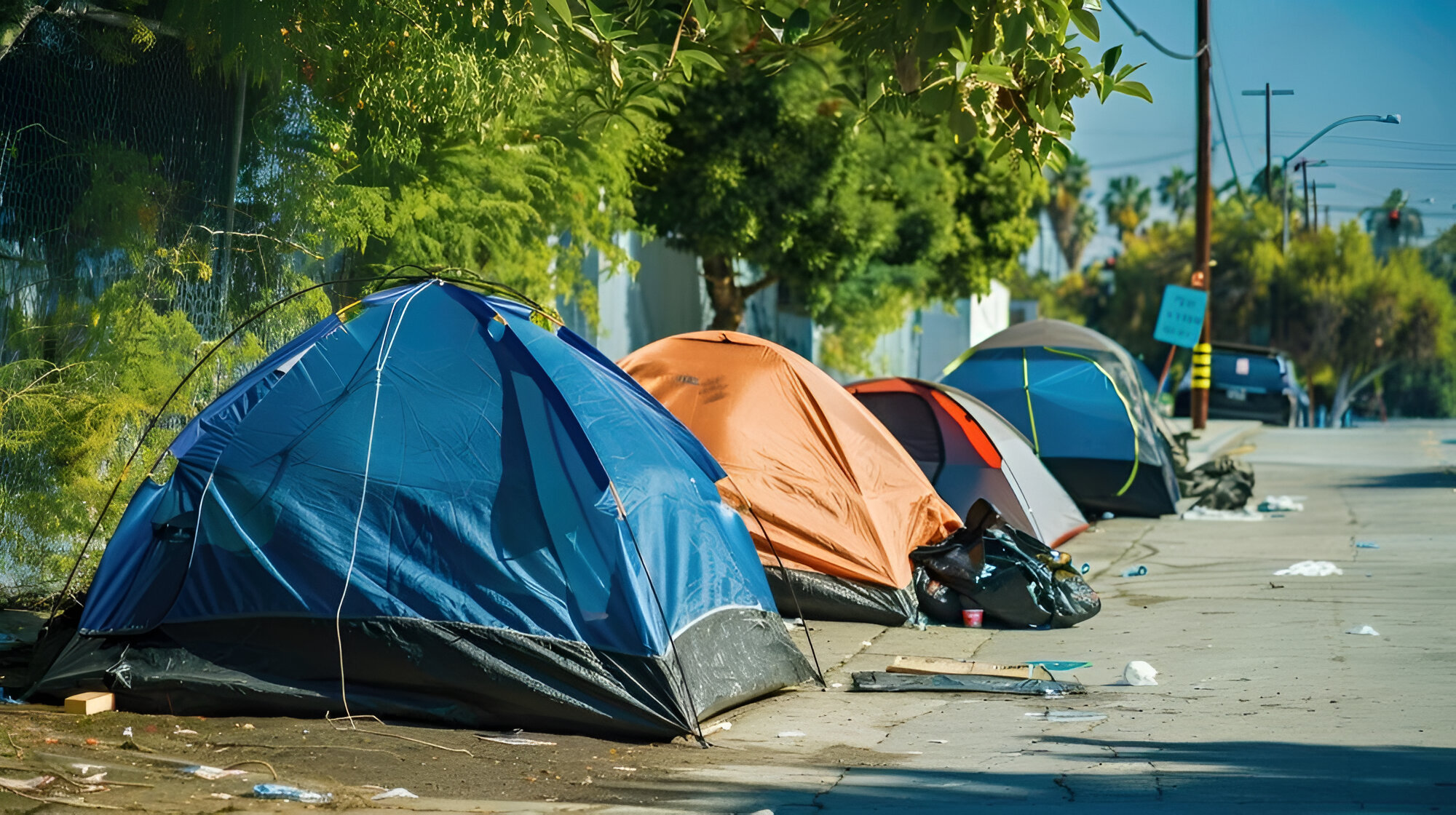
LOS ANGELES, CA – Los Angeles Mayor Karen Bass is blaming federal and state policy changes for an expected increase in the city’s homeless population, a setback for an administration that has made reducing street homelessness its defining issue.
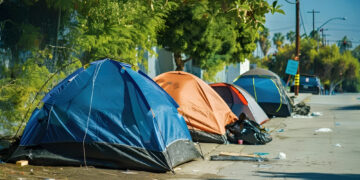
The Los Angeles Homeless Services Authority is expected to release the city’s latest point-in-time homeless count on Friday. Ahead of the official announcement, multiple local reports said homelessness in the city of Los Angeles rose 3.4% this year, bringing the estimated number of people without stable housing to about 45,194. The increase was reportedly driven by a 7.9% rise in unsheltered homelessness, which includes people living outdoors, in tents, makeshift shelters, cars, campers and RVs.
The reported increase follows two consecutive years of declines under Bass. In 2025, LAHSA said homelessness fell 3.4% in the city to 43,699 people and 4% countywide to 72,308 people. Unsheltered homelessness also dropped 7.9% within the city that year, according to LAHSA’s official 2025 count.
In a statement issued before the new count’s release, Bass said the city’s progress was undercut by broader economic pressure and funding reductions.
“For two years straight, we drove down homelessness by historic margins, but as expected, last year our efforts ultimately couldn’t keep up with policies and funding cuts at the federal and state levels that pushed more people onto the streets,” Bass said.
Bass specifically criticized President Donald Trump’s administration, saying federal policies had increased costs for households already struggling to remain housed.
“The Trump Administration has driven up the cost of gas, groceries and rent, pushing more families to the edge, and slashed critical safety net funding,” Bass said.
Information reviewed by Street People indicates Bass also pointed to cuts in California’s Homeless Housing, Assistance and Prevention grant program, known as HHAP. CBS Los Angeles reported that Bass attributed the increase in part to a 50% reduction in state HHAP funding, from $1 billion to $500 million, which she said caused a $70 million hit to the city of Los Angeles alone.
The latest figures, if confirmed Friday, would complicate one of Bass’ core political arguments: that her administration reversed years of worsening homelessness through emergency action, encampment operations and interim housing placements.
Bass took office in late 2022 and quickly declared homelessness her top priority. Her signature Inside Safe program was designed as a voluntary, housing-led effort to move people out of tents and encampments and into interim housing, often motel rooms, while connecting them to services and eventual permanent housing. The mayor’s office describes Inside Safe as part of a broader emergency strategy that also includes accelerating affordable and temporary housing construction and maximizing city-owned property for housing.
According to the mayor’s Inside Safe dashboard, data posted as of Feb. 28 showed 5,808 Angelenos moved indoors through the program, 1,431 permanently housed through Inside Safe and 121 encampments addressed across all 15 council districts.
Bass has continued to argue that the city remains ahead of where it was when she took office, saying overall homelessness is still down 11% since 2023. NBC Los Angeles reported that Bass cited that broader decline while acknowledging that this year’s count was expected to show an increase.
Still, the expected rise lands at a volatile moment for Los Angeles’ homelessness response system.
The Los Angeles Homeless Services Authority, the joint city-county agency long responsible for coordinating homelessness services, has been the focus of audits, court scrutiny and growing political pressure over financial controls and accountability. Bass said she would not defend what she called a broken system.
“Audits and the courts have now made plain what too many Angelenos already saw: the money wasn’t tracked, providers went unpaid, and public trust eroded,” Bass said. “I’m not going to defend a broken system. The city must build something better, results-driven, transparent and centered around the people we’re trying to help, not the bureaucracy.”
The concerns surrounding LAHSA are not new. The Associated Press reported last year that Los Angeles officials moved to take control of hundreds of millions of dollars in homelessness spending after audits found poor record-keeping, late invoice payments, weak contract monitoring and undocumented cash advances to service providers. AP also reported that LAHSA had an annual budget of about $875 million at the time.
More recently, LAist reported that a federal audit found LAHSA underspent its budget by $108 million in the fiscal year ending in June 2025, mostly because of program delays. The year before, the underspending was nearly $150 million. The same report said auditors found failures tied to bookkeeping and internal controls.
The Trump administration suspended federal funding to LAHSA in June 2026, citing alleged financial mismanagement and internal control issues. Local officials have warned that the suspension could disrupt housing subsidies and services, while federal officials have argued that stronger oversight is needed.
The political stakes are also high. Bass is seeking a second term, and homelessness remains one of the most visible and closely watched issues in Los Angeles. The city continues to face pressure from residents, business owners, advocates, service providers and courts over how quickly it can move people indoors, how money is tracked and whether temporary housing placements are converting into permanent stability.
The annual point-in-time count itself is a key policy tool, but it is also limited. LAist noted that the census is required by the U.S. Department of Housing and Urban Development and provides a snapshot used to track year-to-year changes and help determine federal homelessness grant allocations.
That means Friday’s release will not answer every question about why more people may be living outside, how many people are cycling in and out of homelessness, or whether the city’s programs are reaching people fast enough. But it will provide the clearest public measure yet of whether the city’s recent progress continued or stalled.
For Bass, the message ahead of the count is that Los Angeles made measurable gains, but those gains were not enough to withstand rising costs, funding reductions and a homelessness system she says still needs major reform.
The official LAHSA results are expected to be released Friday afternoon.