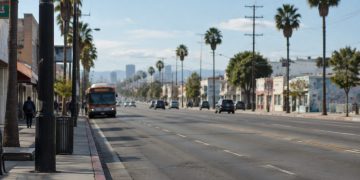




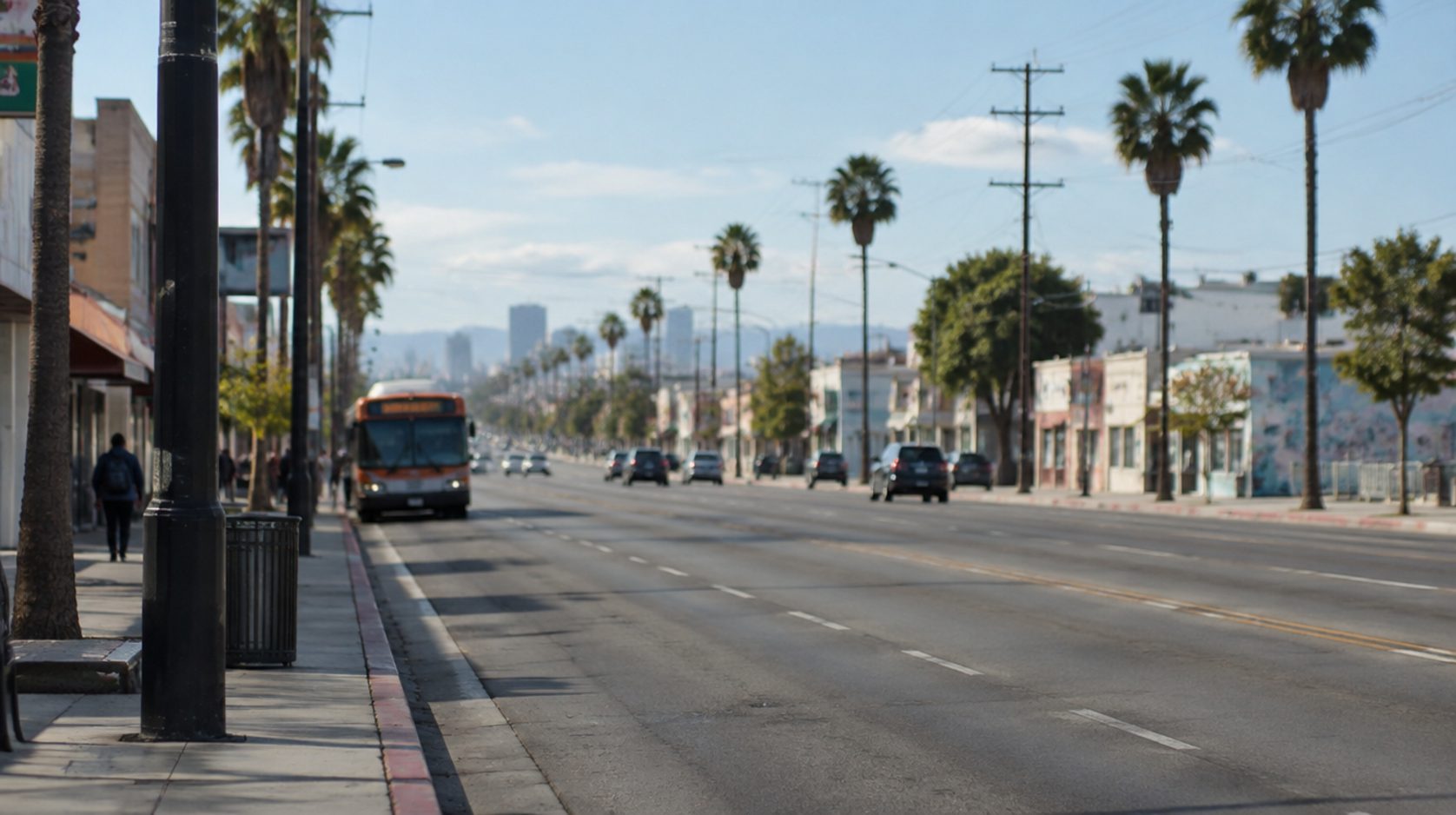
LOS ANGELES, CA – Mayor Karen Bass and Metro leaders broke ground Wednesday on the Vermont Transit Corridor Bus Rapid Transit project, a 12.4-mile line of dedicated bus lanes along Vermont Avenue that will connect South Los Angeles and Los Feliz, according to the Los Angeles County Metropolitan Transportation Authority.
The groundbreaking took place Wednesday, Oct. 21, in South Los Angeles. Bass, who chairs the Metro Board, joined Metro leaders at the event, and Metro CEO Stephanie Wiggins and Los Angeles County Supervisor Holly J. Mitchell, a Metro Board member, issued statements about the project.
The line will run from Sunset Boulevard in Hollywood to 120th Street in the Athens area. Metro, which also goes by LA Metro, said the project will include 26 stations at 13 intersections.
Metro said the project will cut end-to-end travel time by as much as 24%. The agency said the corridor now carries about 38,000 daily riders and projects more than 66,200 by 2045.
A $149.9 million Federal Transit Administration grant, state funds and Measure M sales-tax revenue fully fund the project, Metro said. The agency is targeting service before the 2028 Olympic and Paralympic Games.
Dedicated lanes from Sunset Boulevard to 120th Street
Metro describes the project on its Vermont Transit Corridor project page as a 12.4-mile end-to-end, side-running bus rapid transit service from Sunset Boulevard to 120th Street. In a side-running design, the bus lanes sit along the curb side of the street.
The page says the project will improve speed, reliability and access for over 38,000 daily riders. It also says the line will connect riders to Metro’s B/D Lines, E Line and C Line.
The 12.4-mile route ties together Hollywood, Los Feliz, South Los Angeles and the Athens area along a single street. The 26 stations are spread across 13 major intersections.
Bass says the bus is how life gets done
Bass said at the groundbreaking that her background shaped how she views the project. “As a former community organizer in South LA, I know personally that this project is a transformational investment that will deliver reliable and affordable transportation for more than 38,000 hardworking people who use this bus every weekday,” she said.
She also described what the line means to the people who use it. “For so many Angelenos in this neighborhood, the Vermont bus isn’t a choice, it’s how life gets done,” Bass said.
Bass chairs the Metro Board, the body that approved the project in 2025. The statements she delivered Wednesday were made in that role.
Wiggins and Mitchell point to speed and comfort
Wiggins said in a Metro statement that the agency took an urgent approach to the project and listened closely to the community. “We approached this project with urgency and listened closely to the community, making critical adjustments as we are cutting travel times, fortifying our bus network and building a world-class transit system ready to move LA,” she said.
Mitchell focused on the rider experience in her own statement. “Today, we are delivering those riders the transit experience they deserve — fast, reliable service with welcoming, comfortable stops,” she said.
Neither statement gave a cost estimate for the project or a list of the community adjustments Wiggins referred to.
$149.9 million federal grant announced Sept. 1
Rep. Jimmy Gomez announced the federal money on Sept. 1, 2026, during remarks on the House floor, according to a statement from his office. The statement said Gomez advocated for the project alongside members of the Los Angeles congressional delegation.
The award is the maximum federal contribution under the Federal Transit Administration’s Capital Investment Grant Small Starts Program, according to the statement. The FTA publishes a project profile for the Vermont Avenue BRT within that program, available as an FTA project profile dated April 2026.
Gomez said the project is expected to serve over 66,200 daily riders and cut travel times 24 percent. He also said it would support more than 1,000 construction jobs annually.
“With this federal funding, Angelenos will soon have a transit option that gets them where they need to go faster, safer, and on-time,” Gomez said.
Measure M and state funds cover the rest
Metro’s project page says Measure M, which voters approved in 2016, includes funding for the corridor. The Metro Board’s file on the project ties its funding to Measure M as well.
Metro said the federal grant, state funds and Measure M sales-tax revenue combine to fully fund the project. The agency did not break out the share each source provides in the information available Wednesday.
Board approved the 12.4-mile design in March 2025
The Metro Board approved the project in March 2025. According to Board file 2025-0044, the Vermont Transit Corridor Environmental and Planning Study, the board approved a California Environmental Quality Act exemption. It also selected the 12.4-mile side-running bus rapid transit option as the locally preferred alternative.
Metro’s project page lists later milestones. Design reached 30 percent in December 2025, and the agency awarded a construction manager/general contractor contract in February 2026.
The page says bus rapid transit construction begins in late 2026 or early 2027. Wednesday’s groundbreaking falls within that window.
Station features and community input
According to initial reports, the project also includes traffic signal priority, off-board fare payment and boarding through all bus doors. The same reports say stations will get shelters for weather and shade, improved lighting, real-time arrival displays, emergency call buttons and curb ramps that meet Americans with Disabilities Act standards.
According to initial reports, some residents who attended community meetings in 2025 asked for more bicycle and pedestrian infrastructure. The reports say Metro’s design keeps shared bus lanes that bicycles can use.
Wiggins referred to critical adjustments made after listening to the community. Her statement did not specify which design changes she meant.
Ridership projections shape the case for the line
Metro’s figures describe a corridor that already moves a large number of people. The agency says about 38,000 people ride daily now, and it projects more than 66,200 daily riders by 2045.
Those projections are Metro’s estimates of future demand rather than counted ridership. Gomez cited the same 66,200 figure in his House floor remarks when he announced the federal funding.
Metro says the line will cut end-to-end travel time by as much as 24%. That figure describes the expected effect of the dedicated lanes once the line is built and running, not a result measured on the street today.
Service targeted before the 2028 Games
Metro’s project page sets the goal of opening service by the 2028 Summer Olympic and Paralympic Games. Construction is now under way, with the project fully funded according to the agency.
The next official steps are the construction work itself and the opening of service along the 12.4-mile route. Metro has not announced an opening date beyond the target of before the 2028 Games.