










LOS ANGELES, CA – An early-morning fire at an abandoned Studio City property damaged a neighboring home Friday and turned a yearslong neighborhood complaint into a political dispute between Mayor Karen Bass and Councilmember Nithya Raman over when City Hall was alerted and why the property remained unsecured.
The fire broke out at approximately 3:30 a.m. at a vacant residential property in Studio City.
Residents say the property had been a source of complaints dating back to 2020, with concerns involving trespassing, people camping on the property and an unmaintained swimming pool.
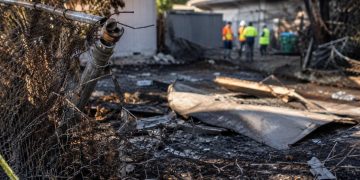
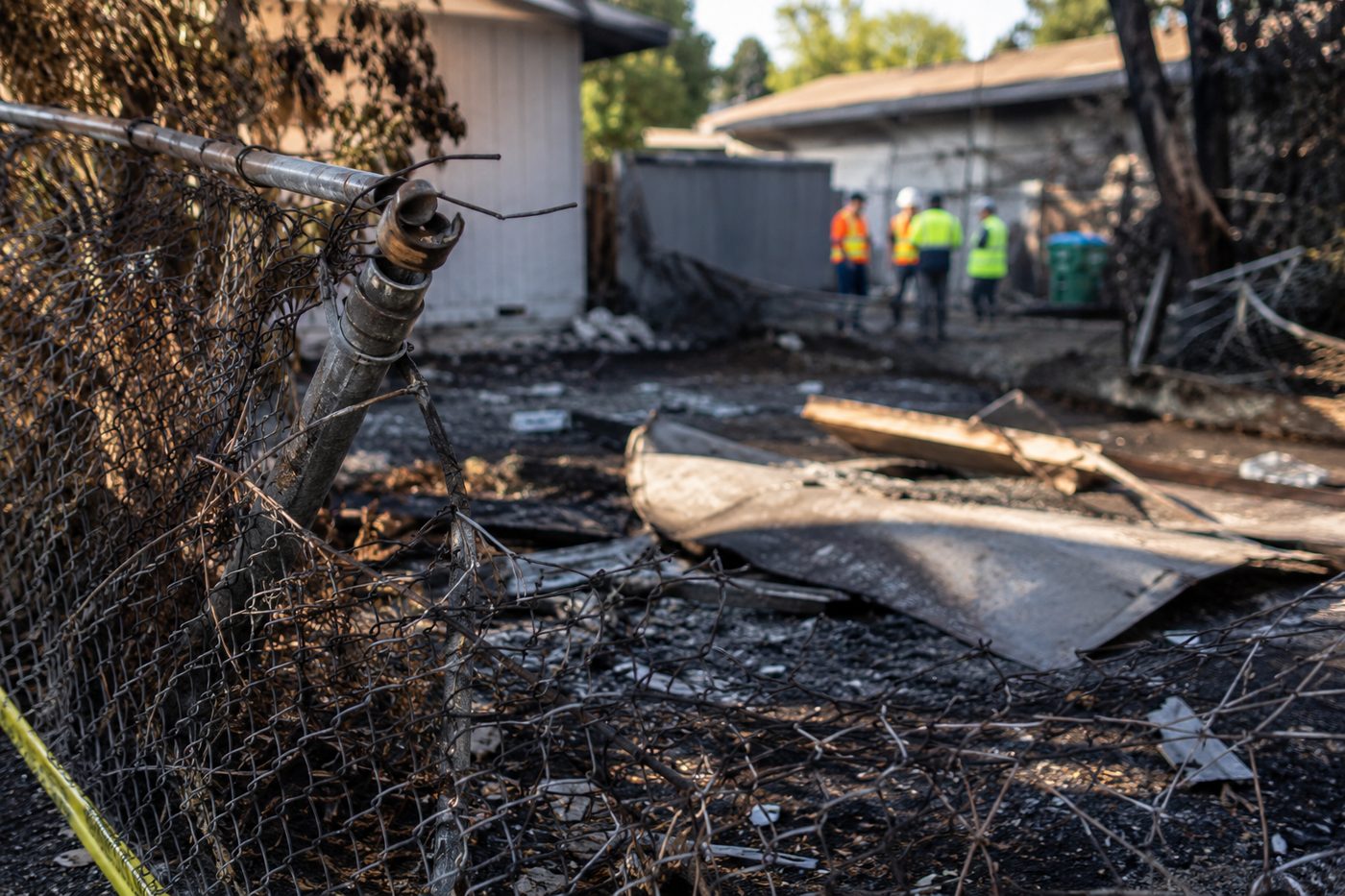
The fire damaged an adjacent home, escalating what neighbors had described for years as a safety and nuisance problem.
The cause of the blaze remains unknown.
Authorities have not said whether anyone was inside the vacant structure when the fire began or identified evidence connecting the fire to people who may previously have entered the property without authorization.
That distinction is important while the fire investigation continues.
Bass orders property secured after visiting site
Mayor Karen Bass visited the property after the fire and met with neighbors.
Her administration coordinated with the Los Angeles Department of Building and Safety to install temporary fencing around the site.
City crews were also expected to remove debris and other hazards and install a more permanent perimeter fence intended to prevent additional unauthorized entry.
Bass said she first became aware of the severity of the property’s condition after seeing coverage of the fire.
“It didn’t have to be this way,” Bass said.
She said she relies in part on council offices to elevate serious neighborhood issues because Los Angeles covers about 500 square miles and serves approximately 3.8 million residents.
That explanation quickly became part of the controversy.
Raman says mayor’s office was alerted 10 months earlier
Raman, whose Council District 4 includes Studio City, disputed the suggestion that the problem had not previously reached the mayor’s administration.
Her office said it directly flagged the property to the mayor’s public works team in November 2025, approximately 10 months before the latest fire.
According to information provided by Raman’s office, the address was identified as one of five priority problem properties in the district, and a deputy mayor responsible for public works acknowledged the communication.
“We flagged this property directly to the mayor’s office in November, 10 months ago,” Raman said.
“We have called, we have emailed, we have escalated, and we have brought this directly to her office months ago.”
The correspondence provided by Raman’s office creates an important distinction between whether Bass personally knew about the property and whether members of her administration had previously received information about it.
The material provided for this report supports Raman’s claim that her office says the issue was sent to the mayor’s team.
It does not establish whether Bass herself reviewed or was briefed on that communication.
Vacant properties are already subject to city nuisance rules
The dispute also exposes a larger problem in Los Angeles: the city already has an enforcement system specifically designed for open and abandoned structures, but the process can involve multiple agencies, notices and administrative steps before the city physically intervenes.
The Los Angeles Department of Building and Safety’s Code Enforcement Division operates a Vacant Building Abatement program for open, abandoned and vandalized properties.
Under that program, LADBS can declare a property a nuisance or hazard after the required process and order owners to clean, secure, rehabilitate or demolish dangerous structures.
If an owner fails to comply, the city can eventually perform abatement work through contractors.
Los Angeles law also places direct responsibilities on owners of vacant properties.
The municipal code prohibits owners from allowing trash, debris, excessive vegetation and similar nuisance conditions to accumulate and requires vacant structures to be secured against unauthorized entry. The city may also order fencing around a property.
That makes the central question in Studio City less about whether Los Angeles possesses enforcement authority and more about why that authority did not result in the property being fully secured before the fire.
City can order unsecured buildings barricaded
LADBS maintains specific procedures for properties considered vacant and unsecured.
The department’s own documentation states that property owners subject to a vacant-structure abatement order must provide a plan for maintaining the property and a timeline for lawful occupancy, rehabilitation or demolition.
Owners can also be required to control weeds, graffiti, debris and other nuisance conditions.
The same form notes that owners of abandoned properties are required to provide authorization allowing police to make trespass arrests under applicable city law.
For residents who had complained for years, those existing powers are likely to intensify questions about why fencing and cleanup came only after a neighboring home was damaged.
City officials had not provided a detailed chronology showing every inspection, citation, owner notice or enforcement action associated with the Studio City property.
Without that record, it is not possible to determine which part of the process stalled.
Los Angeles has been reexamining its vacant-building system
The Studio City dispute comes as City Hall has already been examining whether Los Angeles responds quickly enough to abandoned and nuisance properties.
In 2023, Raman herself co-sponsored a City Council motion focused on the Vacant Building Abatement program, asking for ways to speed the process of securing nuisance structures and declaring dangerous properties public nuisances when appropriate.
That council file remained active as LADBS later submitted recommendations regarding nuisance vacant structures.
More recently, the City Council adopted additional action concerning its authority to abate nuisance properties.
A 2026 council file dealing with abatement authority became final in June, with the resulting ordinance taking effect July 26. The Studio City Neighborhood Council later submitted a Community Impact Statement on that broader citywide issue.
The timing is notable: Los Angeles was already debating how to strengthen its nuisance-property system shortly before the Studio City fire brought the problem into public view again.
City Attorney has identified multiple enforcement pathways
A City Attorney report examining nuisance abatement procedures describes the vacant-building process as one of several mechanisms available to Los Angeles.
According to the report, LADBS may administratively act when a vacant structure is open to unauthorized entry or contains conditions such as trash, debris or excessive vegetation.
After an order is issued, the city may require a responsible owner to clean, fence, secure or barricade the property.
If conditions persist, the city can move toward stronger enforcement, including declaring a building a public nuisance and, in some circumstances, demolition.
The City Attorney separately reported that much of its vacant-building work begins through referrals from LADBS, LAPD or other enforcement agencies and can involve administrative proceedings, civil actions, criminal filings or citation programs.
That illustrates another difficulty in the current dispute: responsibility can be spread across council offices, the mayor’s administration, Building and Safety, police, fire officials and the City Attorney.
When those channels work slowly or information fails to move between them, residents can experience the system as one large city government even though the underlying responsibility is divided among multiple offices.
Neighbor says complaints began in 2020
Residents say the warning signs were not recent.
A neighbor of the woman whose home was damaged said complaints had been made since 2020.
“She’s called, she’s written letters, she has done all the right things,” the neighbor said.
The property was reportedly being used periodically by unhoused people as an informal camping location.
That fact adds a social dimension to the controversy, but it should not be confused with the cause of the fire.
Authorities have not established that an unhoused person started the blaze.
Nor has the city said homelessness itself was the underlying cause of the property’s deterioration.
The more clearly established issue is that an abandoned structure allegedly remained accessible and poorly maintained for years.
Abandoned structures can create multiple safety risks
Los Angeles’ vacant-property laws explicitly recognize that unsecured buildings can become more than code-enforcement problems.
The municipal code allows stronger nuisance action when a building repeatedly becomes accessible to unauthorized occupants or is associated with illegal activity. Older city provisions also specifically contemplate further action when a previously secured vacant building becomes open again or becomes fire damaged.
Those provisions are intended to address the cycle residents described in Studio City: an unused structure becomes accessible, complaints continue, temporary fixes may fail and neighborhood risk increases.
Fire adds another layer because vacant structures can present unique hazards to responding firefighters.
The Los Angeles Fire Department’s Valley Bureau serves Studio City and surrounding San Fernando Valley communities.
LAFD had not published a detailed incident account establishing the origin of Friday’s fire in the materials reviewed for this report.
Political dispute centers on accountability
Bass and Raman are not fundamentally disagreeing that the property had become a serious problem.
The disagreement is over responsibility for allowing the issue to remain unresolved.
Bass’ position is that the mayor cannot personally monitor every problem property in Los Angeles and depends on council offices and city agencies to elevate severe cases.
Raman’s response is that her office did exactly that and that the mayor’s own team acknowledged the property months before the fire.
That leaves a broader administrative question:
If the complaint reached both a council office and the mayor’s staff, why did permanent fencing, cleanup or nuisance abatement not occur until after the fire?
Neither side has yet publicly produced a complete city-agency timeline answering that question.
Council offices often serve as neighborhood escalation points
Los Angeles council districts play an unusually significant role in localized city services.
Raman’s office represents Studio City and publishes local contacts for police, fire and community organizations serving the neighborhood. (cd4.lacity.gov)
Residents frequently bring abandoned properties, encampments, street conditions and other neighborhood problems to council offices because those offices can coordinate with departments that have direct enforcement authority.
But a councilmember does not independently control LADBS abatement operations.
That can produce exactly the type of dispute now unfolding: a council office says it escalated the problem, while executive departments remain responsible for much of the actual enforcement work.
City’s abatement process can be slow by design
Property enforcement also involves legal protections for owners.
Before Los Angeles can enter private property, perform major cleanup or demolish a structure, agencies may have to issue notices, document violations, allow compliance periods and provide hearing or appeal opportunities.
That process protects property owners from arbitrary government action.
It can also make intervention frustratingly slow when a site repeatedly creates neighborhood problems.
A recent City Attorney analysis acknowledged that nuisance abatement in Los Angeles involves overlapping authorities and processes across departments.
That broader structural issue may ultimately prove as important as the political disagreement between Bass and Raman.
Fire turns administrative dispute into immediate action
Whatever happened during the previous five years, the fire produced rapid action.
Bass visited the property.
A temporary fence was installed.
Cleanup was scheduled.
A permanent perimeter barrier was planned.
Those steps are precisely the type of physical intervention residents say they had wanted before the neighboring property was damaged.
For the affected homeowners, that creates an obvious source of frustration: actions that appeared difficult to achieve through years of complaints happened quickly after a fire generated citywide attention.
Bass herself acknowledged that the outcome should not have reached this point.
What remains unknown
Several important questions remain unanswered.
Authorities have not determined what caused the fire.
It is not known whether anyone was inside the abandoned structure when it ignited.
The city has not released the complete complaint and inspection history for the property.
It has not explained whether LADBS previously issued a formal vacant-building abatement order, whether the owner was cited, whether hearings occurred or whether the city previously attempted to secure the site.
And while Raman’s office says the mayor’s team was notified in November, there has been no public explanation of what happened to that escalation after it was acknowledged.
Those records would provide the clearest answer to whether the failure was primarily an enforcement delay, a communication breakdown, owner noncompliance or some combination of those factors.
Broader problem extends beyond one Studio City lot
The issue is not unique to this property.
Los Angeles maintains an active citywide policy debate over abandoned structures, including a 2025 council file specifically addressing improvements to the Vacant Building Abatement program and another broader review of nuisance enforcement and interdepartmental governance.
That matters because the Studio City fire can be understood both as a neighborhood incident and as a case study in a larger municipal problem.
Los Angeles already has rules requiring vacant buildings to be secured.
It already has a department empowered to abate dangerous properties.
It already has procedures allowing nuisance structures to be cleaned, fenced and, in extreme cases, demolished.
The controversy now is whether those tools are operating fast enough.
For the Studio City residents who spent years reporting the property, that policy debate has become tangible.
A neighboring home was damaged, a fire investigation is underway and the city is finally fencing and clearing the site.
At the same time, Bass and Raman are publicly disputing who knew what, and when, about a property that both now agree should not have been allowed to remain a neighborhood hazard for so long.