







LOS ANGELES, CA – High summer bills from the Los Angeles Department of Water and Power have become a central issue in the runoff for Los Angeles mayor, with Councilmember Nithya Raman proposing an audit of the utility and Mayor Karen Bass’ office responding that Raman voted to raise bills last year.
Raman announced her plan Monday, Oct. 19, at an LADWP facility in North Hollywood, about two weeks before Election Day. Bass appeared the same day at a separate campaign event in MacArthur Park.
According to initial reports, many customers received bills double or triple their usual amounts after the summer, with some rising by hundreds or thousands of dollars. Those reports describe the stretch from July 1 to Aug. 26 as the warmest on record in downtown Los Angeles.
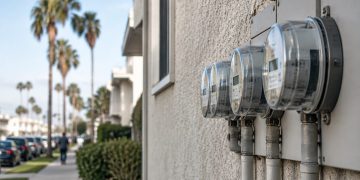
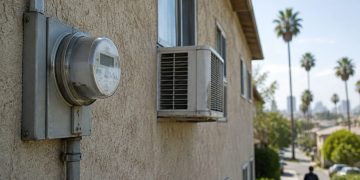
LADWP has said the heat increased electricity use. The utility’s rate pages show that electric charges also changed on July 1, when several pass-through adjustment factors took effect.
The dispute over who is responsible for the increases now sits at the center of the race between Bass and Raman.
Raman proposes audit and council review
Raman said LADWP bills have increased 40% citywide during Bass’ tenure. That figure is Raman’s claim and has not been independently established here.
She laid out a three-part plan. It calls for auditing LADWP with City Controller Kenneth Mejia, including executive pay, and for requiring LADWP officials to explain their rates to the Los Angeles City Council. It also calls for repairing and modernizing the system.
Raman said LADWP has not checked in with the City Council about rates since 2016. “The public deserves transparency about the cost that they are experiencing,” she said.
Raman says adjustment factors drive costs
Raman said much of the increase is tucked into what the utility calls adjustment factors. “These increases are hidden in what DWP calls adjustment factors,” she said, adding that the factors now make up more than two-thirds of the full cost of a bill.
LADWP’s own rate page says electric rates combine base rates with pass-through adjustment factors. According to the page, those factors fluctuate periodically in accordance with the city’s power rate ordinances.
The page does not state the share of a bill that the factors represent, and Raman’s two-thirds figure is her own characterization.
Bass’ office says Raman voted to raise bills
Bass’ office responded Monday that Raman voted to increase LADWP bills last year. The office did not say which vote it meant.
A Raman spokesperson disputed that in an email. “Nithya has never voted to raise water and electricity rates,” the spokesperson said.
No City Council file for a 2025 vote on LADWP rates matching the mayor’s office claim was located in the records reviewed. The two campaigns’ accounts of Raman’s voting record remain in direct conflict.
How LADWP residential electric rates work
LADWP offers a Standard Residential Rate and a Time-of-Use Residential Rate, according to its residential electric rates page. Current rates include costs from the Electric Rate Ordinance plus the Final Incremental Electric Rate Ordinance.
Under the standard rate, the utility says, “Your electric costs are made up of Tier 1, Tier 2, and Tier 3 charges that appear on your bill.” Higher tiers are charged at progressively higher rates, and customers in the hotter Zone 2 get a larger Tier 1 allowance than those in Zone 1.
The page also describes the Power Access Charge as “a monthly fixed charge tied to your highest level of energy use over the last year.”
LADWP’s residential rate schedule says the standard R-1A schedule carries higher summer rates from June through September, particularly for Tier 3. The Power Access Charge ranges from $2.30 to $22.70 a month depending on tier. The R-1B time-of-use rate has a flat $12.00 monthly service charge, and rates are adjusted in January, April, July and October.
Adjustment factors rose in July
The 2026 table of adjustment factors lists the IRCA factor at 0.05505 dollars per kilowatt-hour for January through June and 0.06934 for July through December.
The VEA factor is listed at 0.00781 for January through March and 0.00503 for April through June. It rises to 0.01071 for July through September and 0.01590 for October through December. The ECA factor is listed at 0.05690 in every quarter of 2026.
A LADWP official said electricity became more expensive starting in July because of a higher energy-cost rate, according to initial reports.
The city’s Office of Public Accountability, which serves as the Ratepayer Advocate, has also published material on why bills change. A post on its website explains that water and power pass-through adjustment factors move up or down under the rate ordinances, with many of the underlying expenditures approved by the LADWP Board.
The post says the board’s September 2025 approvals resulted in an increase of roughly 2.7% on the median residential electric bill and 3.6% on the water bill.
Tim O’Connor of the office said, “We understand when bills are high, especially in the summer season, people really start to ask this question.”
Controller Mejia reviews customer complaints
Controller Mejia said his office has received thousands of requests from residents upset about unusually high LADWP bills. He said the office has made a large data request as it looks into the bills.
“They don’t sit right with me,” Mejia said of the bills. He said he wants to understand why rates rose and how the tier structure triggers large increases.
Raman’s plan calls for an audit conducted with Mejia’s office. The controller has not announced the terms of any audit tied to her proposal.
LADWP urges customers to enroll in Level Pay
On Oct. 7, LADWP urged customers worried about summer bills to sign up for Level Pay, according to a news release from the utility. It said the call followed recent extreme heat and higher electricity use.
LADWP Interim General Manager David W. Hanson said in the release that the utility’s rates are lower than most other major utilities. He said LADWP offers flexible bill-payment options and financial-assistance programs.
All residential customers can enroll in Level Pay, which smooths seasonal highs and lows over 12 months. According to the program’s Level Pay page, the utility averages a customer’s usage over 12 months and divides it into equal monthly payments.
“Payment terms of 12, 24, and 36 months are available,” the page says, with longer terms offered only to accounts that have past-due balances. Customers still receive regular bills showing their actual usage, and they can enroll online or at 1-800-DIAL-DWP (800-342-5397).
Payment arrangements and heat-related shutoff pause
LADWP’s bill payment options page lists payment arrangements, payment extensions and Level Pay. It describes the arrangements this way: “No down payment. No interest. No fees. Extended time to pay your balance.”
Arrangements can run up to 48 months for discount-program participants or 24 months for other customers. They can be set up through 1-800-DIAL-DWP or at a service center.
Customers can also complete a Financial Assistance Qualification Form to learn which support programs they qualify for.
Separately, the LADWP Board of Commissioners approved a motion to suspend collections-related water and power shutoffs for all customers during extreme heat and cold events, according to a LADWP announcement. When the National Weather Service issues an extreme heat or cold weather advisory or warning, the utility will not shut off water or power for delinquent customers.
Runoff continues about two weeks before Election Day
The Bass-Raman runoff is about two weeks from Election Day. Bass’ office and Raman’s campaign have not reconciled their conflicting accounts of Raman’s record on LADWP rates.
Mejia’s review of the bills and his office’s data request remain open, and Raman’s proposed audit has not been scheduled.