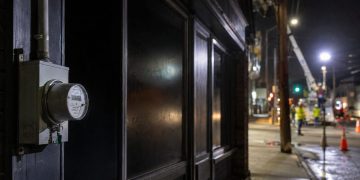




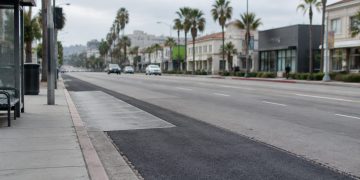

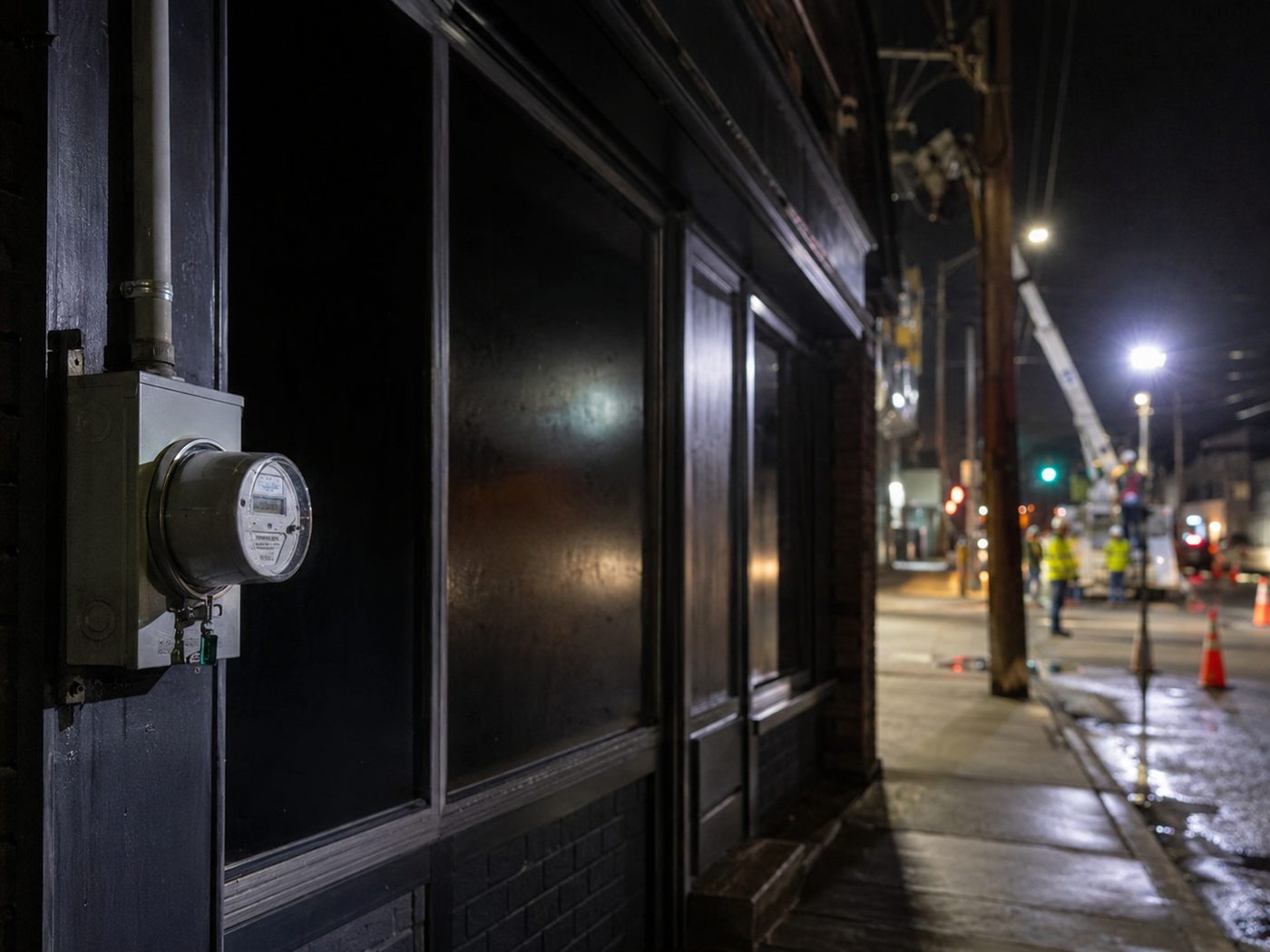
LOS ANGELES, CA – Electricity was fully restored to hundreds of homes and businesses in Echo Park early Thursday after a late-night outage left parts of the neighborhood without lights or air conditioning during one of Southern California’s hottest stretches of the summer.
Approximately 800 Los Angeles Department of Water and Power customers lost electricity beginning around 11 p.m. Tuesday, according to information provided by the utility.
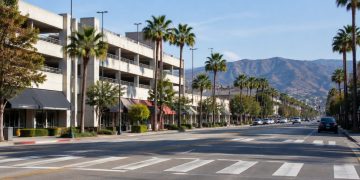
The blackout affected residential streets as well as businesses along Echo Park Boulevard, including commercial properties and gas stations.
LADWP crews worked through the overnight hours and had restored service to the affected customers by approximately 2 a.m. Thursday.
No injuries were reported in connection with the outage.
The exact cause remained under investigation.
LADWP had not publicly determined whether the failure was directly caused by extreme heat, unusually heavy electrical demand or a localized equipment problem.
That distinction is important because the outage occurred during a period when Los Angeles’ electrical system was experiencing increased demand from widespread air-conditioning use, but timing alone does not establish that heat caused a specific piece of equipment to fail.
Blackout arrived during dangerous heat
The outage came as Los Angeles remained under an Extreme Heat Warning issued by the National Weather Service.
The warning covered downtown Los Angeles and much of the county’s inland coastal area through 8 p.m. Friday, with daytime temperatures generally expected between 92 and 102 degrees and unusually warm nights providing less relief than normal.
The National Weather Service warned that the prolonged conditions carried a high risk of dangerous heat illness, particularly for older adults, young children, people without air conditioning and anyone spending significant time outdoors.
That made the loss of electricity more consequential than it might have been during milder weather.
Even though the Echo Park outage began late at night, homes that had accumulated heat during the day could quickly become uncomfortable without air conditioning or fans.
For residents with health conditions or limited mobility, several hours without cooling can pose an additional risk during an extended heat event.
Around 800 customers affected
The outage was relatively localized compared with some larger Southern California blackouts but still affected hundreds of individual customers.
In utility terminology, one customer can represent a single residence, an apartment building account or a commercial property, meaning the number of people affected can exceed the raw customer count.
Businesses along Echo Park Boulevard were among those that lost electricity.
An overnight outage can interrupt refrigeration, security systems, lighting, payment terminals and other equipment businesses rely on even when they are closed to customers.
Gas stations can also lose the ability to operate pumps when power is unavailable.
No estimate of business losses from the Echo Park outage had been released.
LADWP crews worked through the night
LADWP repair crews remained active until electricity was fully restored.
The department’s official outage system classifies outages through several stages, beginning with a reported interruption and progressing through crew assignment, dispatch, active repair work and restoration.
The utility cautions that outage information shown on its public map is an estimate that can change as field crews learn more about the problem.
In Echo Park, restoration took roughly three hours from the reported start of the outage until service was returned to all affected customers.
LADWP has not released details identifying what crews repaired.
It is therefore unclear whether the outage involved a transformer, underground cable, distribution circuit or another component of the neighborhood electrical system.
Cause still under investigation
The unresolved cause is one of the main remaining questions.
Extreme heat can place additional stress on electrical infrastructure because air-conditioning use drives up demand and equipment operates under heavier loads for longer periods.
But LADWP has not stated that Tuesday night’s outage was caused by excessive demand.
The department lists a range of possible causes for electrical interruptions, including equipment faults and other system disturbances. Its technical guidance defines a long-term interruption as an outage lasting longer than one minute and notes that faults that do not clear can cause sustained service loss.
Those are general explanations of how power systems can fail and are not findings about the Echo Park incident.
Until LADWP completes its review, the precise reason for the blackout remains unknown.
Heat places additional pressure on electricity use
The broader weather pattern created exactly the conditions in which electricity demand tends to increase.
The National Weather Service said inland portions of Los Angeles County were experiencing temperatures well above normal, while valleys and mountain communities were seeing highs around 100 to 110 degrees during the hottest part of the event.
Even closer to downtown, the weather service warned that temperatures could reach roughly 102 degrees.
Warm overnight conditions also meant air conditioners were likely to remain in use later than they would during a normal summer evening.
LADWP encourages residents to reduce unnecessary electricity use during hot periods through measures such as limiting major appliance use during peak daytime hours and using thermostats efficiently.
The utility recommends setting thermostats around 78 degrees while people are home during summer when feasible, using fans to improve comfort and shifting heavy appliance use toward mornings or evenings.
Those recommendations are intended to reduce electricity use and household bills; they do not mean individual customers caused the Echo Park outage through air-conditioning use.
Losing power during extreme heat creates added risks
A nighttime blackout during a heat wave can become a public-health issue because cooling becomes harder just when residents need it most.
LADWP’s Cool LA program specifically advises customers to use existing home cooling systems during extreme heat to remain safe and directs residents to city and county cooling resources when needed.
The National Weather Service likewise urged residents to remain in air-conditioned spaces, drink plenty of fluids and check on vulnerable relatives and neighbors during the warning period.
Had the Echo Park outage lasted considerably longer, affected residents without another cooled location could have needed to seek relief elsewhere.
Instead, power was restored before dawn.
LADWP advises customers to unplug equipment during outages
The utility also provides specific advice for customers while electricity is unavailable.
LADWP recommends turning off and unplugging appliances and other electrical equipment during an outage and leaving one light switched on so residents know when service returns.
That helps prevent multiple appliances from immediately restarting at the same moment electricity is restored, which can create additional electrical load.
The department also recommends flashlights rather than candles during outages because open flames introduce a fire risk.
Customers experiencing an outage can report it to LADWP 24 hours a day at 1-800-DIAL-DWP (1-800-342-5397).
Customers can track outages and receive alerts
LADWP maintains an online Power Outage Map showing estimated outages throughout its service area.
Customers can also subscribe to outage alerts for as many as three Los Angeles neighborhoods.
Those notifications can be sent by text message, email or both when a significant outage occurs, when new information becomes available and when power is restored.
That system can be particularly useful during heat waves, when residents may want to know whether an interruption is isolated to their building or part of a larger utility problem.
LADWP notes that outages may affect only part of a neighborhood, so customers can sometimes receive an alert even when their particular property retains electricity.
Other Southern California communities also experienced outages
The Echo Park blackout was not the only electrical interruption reported during the broader heat event.
Customers served by Southern California Edison experienced separate outages in communities including portions of Bell Gardens, Compton, Paramount and Lynwood.
Those outages occurred on a different utility system and should not be interpreted as evidence of a single regional electrical failure.
In Lynwood, more than 1,000 customers reportedly lost service beginning around 8 p.m. before electricity was restored at approximately 3:30 a.m.
The fact that multiple communities experienced outages while temperatures were extremely high illustrates the operational pressures associated with prolonged heat, but individual failures can have different causes.
Neither LADWP nor Southern California Edison had publicly established that all of those outages were caused by the same factor.
LADWP continues long-term reliability work
Los Angeles has an extensive program dedicated to replacing aging electrical infrastructure.
LADWP’s Power System Reliability Program tracks work including replacement of poles, transformers, underground cables and other distribution equipment.
As of Aug. 29, the program reported 212 priority circuits with failed components or circuits carrying extra load because of failed equipment, along with hundreds of infrastructure projects completed or underway.
The program also reported that more than 61 miles of underground cable had been replaced through its reliability work.
Those systemwide figures do not indicate that any particular aging component caused the Echo Park outage.
They do show the scale of maintenance required across an electrical network serving one of the nation’s largest cities.
Heat warning remained after electricity returned
By the time Echo Park residents woke Thursday morning, the immediate outage had ended but the weather emergency had not.
The National Weather Service continued its Extreme Heat Warning through Friday evening.
Forecast guidance called for hot daytime conditions through much of Los Angeles County, with some locations reaching 102 degrees and valleys substantially hotter.
Warm overnight temperatures remained another concern because they limit the time homes and people have to recover between hot afternoons.
The weather service encouraged people to limit strenuous activity to early morning or evening hours and never leave children or pets unattended in vehicles.
Record-stretch claims require final climate data
The prolonged heat also raised the possibility of an unusually long run of 90-degree days in Los Angeles.
Preliminary projections suggested the city could approach 13 consecutive days at or above 90 degrees, which would place the event among the longer hot streaks recorded in recent decades.
Final climate records, however, depend on observed temperatures rather than forecasts.
The National Weather Service had clearly confirmed the extreme heat warning and unusually warm conditions, but the final length and ranking of any temperature streak would need to be based on completed climate observations after the event.
That distinction matters when comparing an ongoing heat wave with historical records.
Full restoration came before dawn
For Echo Park, the immediate problem was resolved relatively quickly.
Power went out for roughly 800 customers at about 11 p.m.
Crews worked through the night.
By approximately 2 a.m., homes and businesses were back online.
The blackout lasted only several hours, but its timing during an extreme heat warning highlighted the dependence of residents on electricity for cooling during increasingly severe summer conditions.
LADWP has not announced a definitive cause.
Until that investigation is complete, it remains unclear whether the blackout resulted from heat-related stress, an equipment failure unrelated to weather or another localized problem.
Residents can monitor future interruptions through the LADWP outage map and report loss of service at 1-800-342-5397.