





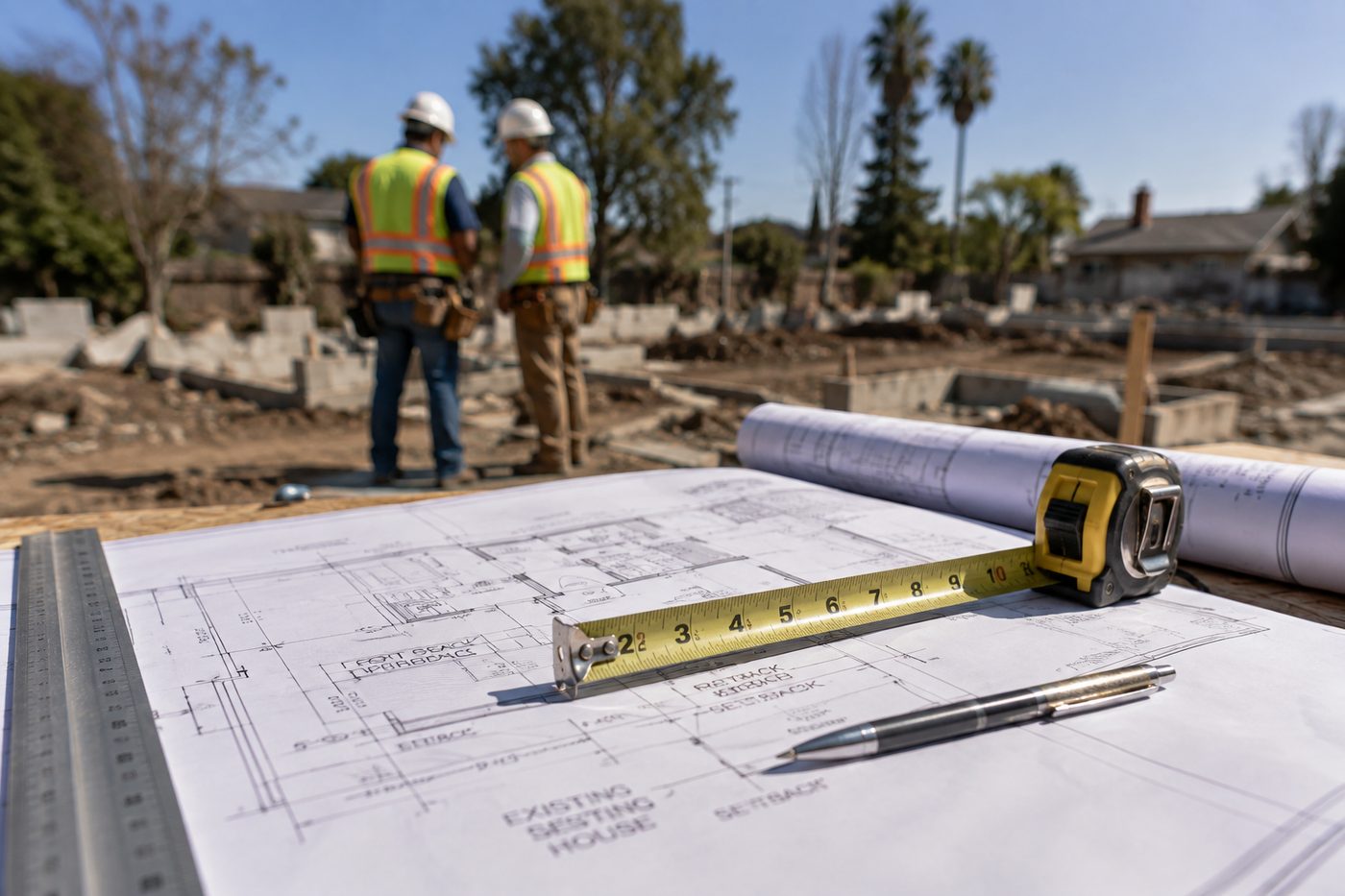
LOS ANGELES, CA – A Pacific Palisades family whose longtime home was destroyed in the 2025 Palisades Fire says its rebuilding plans have been stalled for months because Los Angeles officials want the replacement house moved approximately five feet farther back from the street.
The Pasternak family says it submitted plans in April to reconstruct roughly the same home that had occupied the property for decades.
The family has owned the property since 1990, and the house itself was built in 1972.
But according to the family, the plans have not received final approval because the city wants the front of the reconstructed house — including the garage and attached portion of the residence — shifted about five feet toward the rear of the property.
The Pasternaks say doing so would reduce their backyard and prevent them from rebuilding on the footprint they had before the wildfire.
“We didn’t choose to lose our home,” Ellie Rose Pasternak said. “So we should be able to rebuild exactly where our home was before.”
The dispute highlights an important distinction within Los Angeles’ expedited Palisades rebuilding rules: a homeowner may have the ability to preserve a pre-fire zoning setback while still facing separate restrictions involving the city’s designated street width or public right-of-way.
That distinction could be central to understanding why a home that legally stood in one location for decades may still encounter a setback issue during reconstruction.
Family wants to rebuild where house stood before fire
The Pasternaks say their proposed home is not intended to represent a dramatic redesign of the property.
They want to reconstruct roughly what existed before the fire.
“Our house was legal for all these years,” Glorrie Pasternak said while questioning why a new setback would now be required.
The family says the five-foot shift has been connected with space associated with the street or potential sidewalk requirements.
“There have never been sidewalks here,” she said.
The city has not publicly released the Pasternaks’ individual permit file, engineering determination or parcel-specific explanation, meaning the precise legal basis for the five-foot requirement cannot be independently established from the information currently available.
But official Los Angeles rebuilding rules show why a disagreement of this type can arise even under the city’s streamlined “like-for-like” program.
City rules generally allow old setbacks to remain
After the Palisades Fire, Los Angeles adopted a series of emergency orders intended to let homeowners reconstruct destroyed properties without navigating the full planning process normally associated with new development.
Under Mayor Karen Bass’ Emergency Executive Order No. 1, qualifying “like-for-like” reconstruction can generally preserve conditions that existed before the fire.
The Los Angeles City Planning Palisades rebuilding guidance says EO1 allows a replacement structure to retain nonconforming setbacks, even where those setbacks would not comply with current zoning regulations.
The same guidance allows a qualifying rebuild to increase the former building’s height and footprint by up to 10% while remaining within the expedited process.
Los Angeles’ current Return & Rebuild FAQ addresses the setback question directly.
The city says that when a house previously had a setback that does not comply with today’s zoning code, the homeowner may rebuild using the same nonconforming setback through a qualifying like-for-like project under EO1.
The FAQ also says homeowners can rebuild according to a prevailing front-yard setback on the block under either EO1 or Emergency Executive Order No. 8, depending on the project.
On its face, that policy appears broadly consistent with what the Pasternak family is requesting.
But another section of the emergency rebuilding rules creates an important limitation.
Street-width rules are separate from ordinary zoning setback rules
Mayor Bass’ revised Emergency Executive Order No. 1 says that neither a replacement building’s footing nor any part of the reconstructed structure may encroach into an area included within the applicable street-width standard as determined by the City Engineer.
That provision remained in the city’s later rebuilding orders.
A July 2025 executive action again stated that “neither the footing nor any portion” of a replacement structure could extend into an area covered by the applicable street-width standard.
In practical terms, this means two setback concepts can exist at the same time.
A house may have had a legally nonconforming front-yard zoning setback, which EO1 can generally preserve.
But the city may separately determine that part of the previous footprint sits within an area reserved under an applicable street-width standard.
The latter is governed by the City Engineer rather than simply by the zoning setback rules.
The available information does not establish whether that is precisely what is happening on the Pasternak property, but the distinction fits the type of issue the family describes.
Los Angeles officials have not publicly released the parcel-specific engineering record necessary to make that determination.
A five-foot difference could materially change the property
For the Pasternaks, five feet is not a minor adjustment on paper.
Moving the front of the house farther onto the lot would push the building toward the backyard, reducing usable outdoor space and altering a property configuration that existed for more than 50 years.
The family says it was also recently told that the garage and attached portion of the residence would need to move.
“Help us get to what we had,” Glorrie Pasternak said. “I don’t want to have it shortened.”
The family argues that residents who lost homes involuntarily in the fire should not be placed in the same position as homeowners voluntarily demolishing an existing residence and proposing an entirely new development.
That argument is also broadly consistent with the philosophy behind the city’s emergency rebuilding orders.
The city created EO1 specifically to distinguish qualifying fire reconstruction from ordinary development and remove many planning reviews that otherwise would apply.
The official Palisades Rebuild and Recovery program says eligible projects are fast-tracked and that most qualifying rebuilds do not require conventional City Planning review.
Los Angeles says Palisades rebuilds receive expedited review
The city maintains that all reconstruction projects on sites substantially damaged or destroyed by the Palisades Fire receive expedited initial permit review.
According to the city’s recovery FAQ, departments are directed to complete those initial reviews within 30 days.
But a 30-day review target does not necessarily mean a permit must be issued within 30 days.
Questions involving engineering, zoning, geology, fire access or requested plan changes can continue after an initial review.
The Pasternak family says its plans have remained unresolved since April.
That delay has become increasingly costly because the family’s insurance coverage for temporary rental housing has ended.
“The city can’t lose anything by waiting, but we do lose a lot just sitting and waiting for it,” Jesse Pasternak said. “It’s costing our family a lot.”
Housing costs put additional pressure on displaced families
Rebuilding delays have consequences beyond construction schedules.
Many Palisades families have spent well over a year living elsewhere while dealing simultaneously with insurance claims, architecture, financing, permitting and rebuilding costs.
Temporary housing coverage varies widely by insurance policy and can expire before construction is complete.
For families in that position, each additional month before permitting can mean paying for another residence while also financing design and rebuilding expenses on the property they lost.
That pressure is central to the Pasternaks’ complaint.
The family says it is ready to move forward but does not want to concede the five feet simply to end the dispute.
Jesse Pasternak said at least one nearby homeowner facing a similar issue eventually accepted the city’s requirement because she wanted construction to begin.
The city has not released information showing how many Palisades properties are facing comparable street-width or setback disputes.
Official guidance recognizes multiple rebuilding pathways
Los Angeles currently offers several ways for Palisades homeowners to rebuild.
The most relevant are EO1 and EO8.
EO1 is the like-for-like pathway. It generally permits rebuilding substantially in the same location and allows up to 110% of the former structure’s footprint and height. It can also preserve certain legally nonconforming conditions that existed before the fire.
EO8 gives owners of qualifying single-family properties another option: build a project that complies with current zoning requirements even if it differs more substantially from the previous home.
The city says the two programs were developed to give homeowners flexibility rather than force every property through one rebuilding formula.
But even the streamlined processes do not eliminate every building, engineering and life-safety requirement.
The street-width restriction is one example.
Geological conditions, canyon or coastal bluff requirements and fire access can also trigger additional review on particular properties.
City specifically says homeowners can rebuild to old nonconforming setbacks
The city’s current FAQ makes the front-yard setback issue unusually clear.
It says:
“If your home had a setback that does not comply with the current zoning code, known as a non-conforming setback, you can rebuild to that same setback only as part of a like for like rebuild.”
That language supports the general proposition that fire survivors are not automatically required to move their houses simply because modern zoning would place the front wall elsewhere.
But that provision does not override the separate restriction concerning the street-width standard.
That distinction is why the Pasternaks’ dispute cannot be resolved simply by pointing to the age of their former home.
The key question is what city rule is actually generating the five-foot requirement.
If officials are treating it merely as a zoning setback, the city’s own rebuilding guidance provides substantial flexibility.
If the requirement comes from the City Engineer’s applicable street-width determination, different provisions of the emergency order apply.
The public information provided about this case does not settle that question.
The family says sidewalks are part of the dispute
The Pasternaks specifically questioned the idea of sacrificing part of their property for sidewalks when they say the neighborhood has never had sidewalks at the location.
That suggests the controversy may involve public street standards rather than only a conventional front-yard zoning requirement.
However, no official city document released in connection with the family’s case confirms that explanation.
It would therefore be premature to say Los Angeles is requiring the family to move its home specifically because the city intends to build a sidewalk.
What can be established is that the city’s emergency order preserves the City Engineer’s authority to keep replacement structures outside areas designated under applicable street-width standards.
Whether that provision is responsible for all five feet in this particular case remains a parcel-specific question.
Council office says it is reviewing the problem
Councilmember Traci Park’s office is aware of the Pasternak dispute and is looking into the matter, according to information provided about the case.
Park represents Council District 11, which includes Pacific Palisades.
No resolution had been announced.
City officials have also told the family that an appeal is available.
The specific appeal procedure applicable to the Pasternaks’ setback determination was not detailed in the information released about the dispute.
Los Angeles City Planning maintains appeal procedures for applicable planning determinations, while other engineering or permitting decisions can follow different review processes.
The city has not publicly identified which route applies here.
Dedicated rebuild centers are available for Palisades homeowners
Los Angeles has established dedicated facilities specifically for Palisades reconstruction.
The city’s LA One-Stop Rebuilding Center at 1828 Sawtelle Boulevard brings together rebuilding services and gives homeowners access to city personnel handling Palisades projects.
A separate Palisades Inspections and Permitting Support Center operates at 16925 Marquez Avenue in Pacific Palisades.
City Planning also maintains a dedicated Palisades rebuilding contact at [email protected].
Those resources were established because rebuilding often requires coordination among Building and Safety, Planning, the Bureau of Engineering, Fire, Transportation, Water and Power and other departments.
The Pasternak case demonstrates why that coordination matters: a plan can satisfy one rebuilding rule while encountering a separate requirement administered by another city bureau.
Rebuilding is visibly advancing, but returning home takes longer
Pacific Palisades has entered a new stage of recovery.
Nearly all damaged or destroyed properties in the city portion of the Palisades Fire area have completed debris removal and received final signoff, according to the city’s recovery program.
Commercial recovery has also become increasingly visible.
Palisades Village reopened in August 2026, an event city officials described as an important milestone in bringing shops, restaurants and community gathering places back to the neighborhood.
Residential rebuilding is progressing as well, although construction and final occupancy naturally trail permit approval.
The city issued its first post-fire Certificate of Occupancy for a rebuilt Palisades home in November 2025. At that point, more than 1,300 rebuilding plans had been approved across 650 addresses and more than 1,070 permits had been issued for over 540 addresses.
Current city recovery pages now provide a live dashboard that updates rebuilding information directly from the Department of Building and Safety.
The source account of the Pasternak dispute cites 43 homes as having received certificates of occupancy, but the current public city search results reviewed for this article did not independently surface that exact figure. It should therefore be treated as a reported snapshot rather than a separately verified city total here.
Likewise, the source account describes roughly 6,000 homes as destroyed. The city’s current wildfire resilience materials use a different measure, reporting 5,381 structures destroyed in the Palisades burn area.
Those categories are not necessarily interchangeable because “structures” can include buildings other than homes.
Palisades rebuilding rules were designed to preserve what existed
The policy question underlying the family’s frustration is one Los Angeles anticipated when it created the emergency rebuilding program.
Thousands of residents did not voluntarily demolish their homes to undertake redevelopment.
They lost them in a disaster.
The city therefore created a pathway intended to allow people to reconstruct what had previously existed without treating every project as entirely new construction for zoning purposes.
EO1’s protection for nonconforming setbacks is part of that effort.
At the same time, Los Angeles preserved certain engineering and safety requirements, including the prohibition against rebuilding into areas covered by applicable street-width standards.
The tension between those two policies is now visible at the Pasternak property.
The family sees a home that legally occupied the same footprint for decades.
The city appears to see a rebuilding plan that still must comply with at least one current public-street requirement.
Without the city’s parcel-specific determination, it is not possible to say whether the five-foot demand is required by the emergency orders or whether another interpretation could allow the family to retain its former footprint.
Family wants a decision so construction can begin
For the Pasternaks, the dispute has become less about abstract planning policy and more about getting home.
Their plans have been in the system since April.
Their temporary housing coverage has ended.
They say every additional delay costs money and postpones a return to the property their family has owned since 1990.
“I’m just really disappointed,” Jesse Pasternak said. “I feel like the city let us down, and we’re just trying to get back to normalcy.”
The city says the family has an appeal option, and Park’s office says it is examining the situation.
No final decision had been announced.
Until then, the five-foot strip between the Pasternaks’ former home footprint and the location Los Angeles says the replacement structure should occupy remains a small physical distance with potentially major consequences for one family’s rebuilding plans.