





LOS ANGELES, CA – Malibu has delayed the start of its Pacific Coast Highway speed safety camera program after officials determined that additional installation adjustments were needed before the system could move into its warning phase.
The City of Malibu said the 60-day warning period, originally expected to begin in late September, will now start in November. The delay is intended to give crews additional time to make infrastructure changes and ensure the equipment is operating as intended.
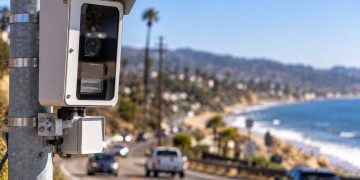
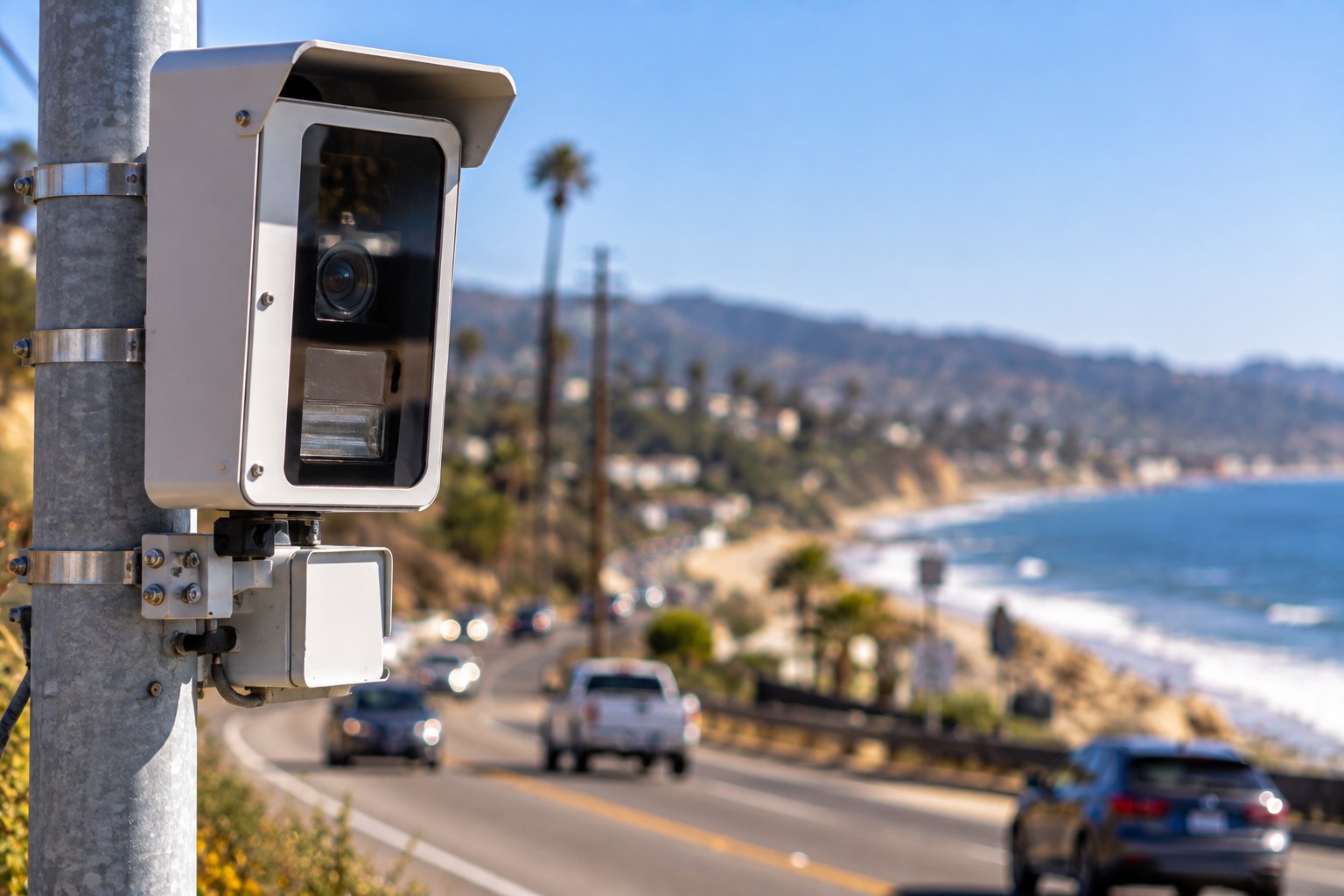
The city’s updated Speed Safety Cameras program says the cameras are currently being used for testing and data collection rather than issuing warnings or citations.
Installation changes push back Malibu camera rollout
The delay follows adjustments to the physical infrastructure supporting the cameras. City officials said some poles required changes before the system could move forward with its formal launch.
Malibu Public Safety Manager Luis Flores said the additional work is intended to make sure the system operates effectively once enforcement begins.
The city is also continuing a traffic study in Eastern Malibu that could affect the speed-camera locations in the Carbon Canyon and Tuna Canyon areas. According to the City of Malibu, the study is expected to conclude in November.
That work is taking place as Malibu prepares to introduce automated speed enforcement along one of the region’s most heavily traveled and historically dangerous stretches of roadway.
The city has described the program as a safety measure designed to encourage drivers to slow down rather than as a general surveillance system.
Nearly 100,000 speeding violations recorded during testing
The testing phase has already produced a significant amount of data.
Between Sept. 16 and Sept. 24, preliminary testing recorded approximately 100,000 speeding violations across four camera locations, according to the city’s latest update. About 86% of those recorded violations occurred in Eastern Malibu.
The figures are preliminary and were collected during a testing period. The cameras are not currently being used to issue warnings or citations, and the city says the system is not accessing driver information from the California Department of Motor Vehicles.
A camera may flash when a vehicle is detected traveling above the applicable threshold during testing, but that flash does not currently generate a warning or citation.
The city’s Pacific Coast Highway safety program says the automated system is designed to identify vehicles traveling at least 11 mph over the posted speed limit.
Malibu has also said the system is different from automated license plate reader technology. It is intended specifically to detect qualifying speeding violations rather than continuously track vehicles or their movements.
Warning period will last 60 days
Once the system enters its formal warning phase, motorists who exceed the enforcement threshold will initially receive warnings rather than civil penalties.
The city says the 60-day period is intended to give drivers time to understand how the system works and adjust their behavior before monetary penalties are imposed.
Malibu’s current program information says the warning period will begin in November, although the city has not yet provided a final enforcement date after the warning period.
Under the city’s adopted system, qualifying violations are subject to civil penalties rather than traditional moving violations. The City of Malibu’s program information states that citations will not result in points on a driver’s license or increases to insurance rates.
The listed penalties are $50 for driving 11 to 15 mph above the posted limit, $100 for 16 to 25 mph over the limit and $200 for 26 mph or more over the limit.
The system also includes privacy provisions. The city says non-violation data will be deleted immediately, while stored violation records will be destroyed within 60 days after a case is resolved.
PCH has been the focus of a long-running safety effort
The camera program is part of a broader effort to address speeding and serious crashes along Pacific Coast Highway.
According to the city’s PCH safety information, Malibu’s 21-mile section of PCH has experienced more than 60 traffic deaths since 2010. The city also reported 220 crashes on the roadway in 2023, resulting in 93 injuries and seven deaths.
A separate City of Malibu speed safety impact report found that 546 of 672 crashes recorded within Malibu between 2019 and 2023 occurred on PCH.
The city has identified several locations for speed-enforcement systems based on crash history and speeding patterns. The program was authorized after California enacted Senate Bill 1297, which allows Malibu to establish automated speed enforcement along the PCH corridor.
The legislation was signed by Gov. Gavin Newsom in September 2024 and provides the legal framework for Malibu’s speed safety program.
Four Pepperdine students were killed in 2023 PCH crash
The push for additional speed enforcement gained urgency after a deadly crash on Oct. 17, 2023, when four Pepperdine University students were killed along PCH.
Pepperdine University confirmed the deaths the following day and said the four victims were Seaver College students.
The crash became a major part of the subsequent discussion about roadway safety in Malibu and helped drive the legislative effort behind the city’s speed-camera program.
The criminal case stemming from the crash remains pending. The defendant’s trial is scheduled for December, according to the latest court scheduling information available for the case.
Program expected to become part of broader PCH safety strategy
Malibu officials are now using the additional time before the warning period to complete infrastructure work, continue the Eastern Malibu traffic study and evaluate information collected during testing.
The city has emphasized that the objective of the program is to reduce excessive speeds and improve safety for motorists, pedestrians and cyclists along PCH.
The City of Malibu says the speed safety system is one component of a broader approach that includes enforcement, public education and infrastructure improvements.
For drivers, the immediate change is straightforward: the cameras may already be visible and may flash during testing, but they are not yet issuing warnings or citations. The formal 60-day warning period is now expected to begin in November, with enforcement to follow after that period once the city establishes the final schedule.