













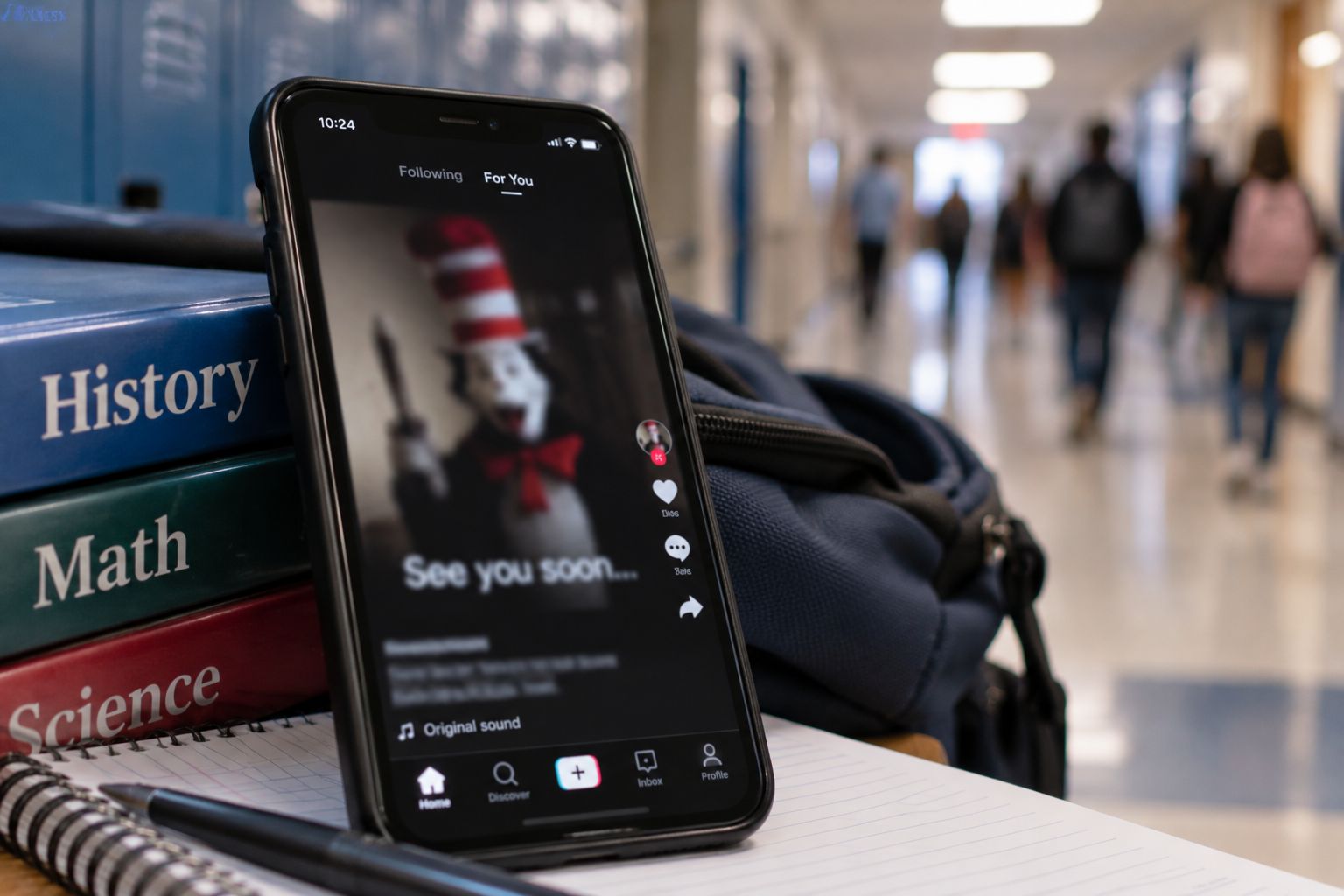
LOS ANGELES, CA – Police departments in Southern California are investigating a viral social media trend involving disturbing, AI-generated or digitally altered images and videos of the “Cat in the Hat” character that have been directed at schools, students and staff.
Authorities in several communities have issued warnings after posts connected to the trend began referencing specific schools and, in some cases, individual students or employees.
The Baldwin Park Police Department said it was reviewing posts connected to the trend because some content referenced schools in the city and specifically named students and staff members. Police said they would investigate any potential threats or criminal activity and emphasized that threats involving schools or members of the community would not be dismissed as jokes or pranks.
The department advised people who encounter posts connected to the trend not to engage with or repost them. Instead, users were encouraged to preserve evidence, including screenshots and information about the account that published the material, and provide it to authorities.
Trend spreads across Southern California
The social media trend involves altered or AI-generated depictions of the familiar Dr. Seuss character presented in threatening or unsettling settings.
Some posts place the character near schools, neighborhoods or other recognizable locations. Others include references to particular communities, schools or individuals.
The use of real locations and names has increased concern among law enforcement and school officials because recipients may have difficulty immediately determining whether a post is digitally fabricated, intended as a prank or connected to a genuine threat.
The Oxnard Police Department issued a Sept. 16 warning about the nationwide trend, saying investigators were reviewing posts involving threats directed toward Oxnard schools. Police said they had not identified a credible threat to any Oxnard school at the time of the announcement.
Oxnard police said the posts involved AI-generated or edited videos depicting a threatening version of the character and references to violence at schools. The department urged parents and guardians to speak with children about the consequences of creating, posting or sharing such material.
Ventura students arrested after threatening videos
The trend also resulted in arrests in Ventura County.
According to the Ventura Police Department, officers began investigating on the evening of Sept. 14 after receiving information about videos depicting the “Cat in the Hat” character making ominous threats toward students and schools.
Investigators identified a possible connection to Buena High School. Detectives and school resource officers then identified three Buena High School students as suspects in creating and distributing the videos.
The suspects were two 15-year-olds and one 14-year-old, all Ventura residents, police said.
All three were arrested on suspicion of making criminal threats and conspiracy to commit a crime. Two were also arrested on suspicion of destruction of evidence.
Despite the arrests, Ventura police said there was no belief at the time that there was an active threat to the school or the surrounding community.
The investigation remained ongoing.
Police urge families not to amplify posts
Law enforcement agencies responding to the trend have repeatedly advised the public not to share threatening posts, even when the material appears obviously fabricated.
Reposting or forwarding the material can increase its reach and make it more difficult for investigators to distinguish the original content from copies or altered versions.
Oxnard police specifically instructed people who encounter concerning posts to preserve the original post and account information and report the material to a school administrator, school resource officer or police department. The department said people should call 911 if they believe there is an immediate threat.
Baldwin Park police similarly asked residents not to engage with the accounts or repost the material while preserving evidence for investigators.
The guidance comes as schools and law enforcement agencies across the region respond to online content that can quickly spread beyond the community where it originated.
AI-generated content creates additional challenges
The trend has also highlighted the difficulty of assessing online material that has been digitally manipulated.
AI-generated images and videos can make fictional scenes appear more realistic, while edited photographs can combine real locations with fabricated characters or messages.
That distinction does not necessarily determine how authorities respond. When a post appears to threaten a school, student or employee, police may still investigate to determine whether the material represents an actual danger and who created or distributed it.
In Ventura, investigators traced threatening videos to suspected students even though police ultimately said they did not believe there was a current threat to the school or community.
Investigations remain active
The Southern California cases illustrate how a viral online trend can quickly become a local law-enforcement matter when specific schools or people are identified.
In Baldwin Park, police said the investigation into concerning posts was continuing. In Oxnard, authorities said they had not identified a credible threat to a local school while continuing to review posts. In Ventura, three students were arrested following an investigation into videos targeting Buena High School.
Authorities continue to encourage parents, students and school employees to report concerning content rather than circulate it.
For communities encountering posts connected to the “Cat in the Hat” trend, police departments have emphasized that preserving the original material and providing it directly to investigators is more useful than spreading it further online.