




LOS ANGELES, CA – A Los Angeles County Superior Court judge has rejected a legal challenge to Phase 1 of the Fountain Avenue Streetscape Project in West Hollywood, finding the project exempt from full environmental review under the California Environmental Quality Act, according to initial reports.
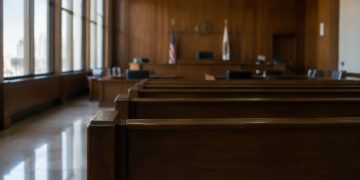
Judge Richard L. Fruin denied a petition for writ of mandate on Monday, Nov. 2, ruling in the City of West Hollywood’s favor. The petition, filed by property owner Michael J. Kilroy, challenged the city’s decision to move ahead with Phase 1 without a full review under the act, known as CEQA.
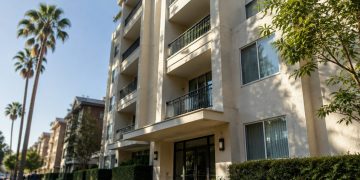
The court found the phase exempt under Public Resources Code section 21080.25(b)(1) and CEQA Guidelines sections 15301(c) and 15304(h). Kilroy owns an eight-unit apartment building on North Flores Street and filed the case on Oct. 29, 2025.
The city is to prepare a judgment for the judge’s signature by Nov. 10.
Judge finds Phase 1 exempt from CEQA
The ruling denies relief to Kilroy on the cause of action in his verified petition and complaint. The decision leaves in place the city’s determination that Phase 1 did not require a full environmental review.
The provisions the judge cited match those the city listed when it filed its exemption for the project. The state’s CEQAnet database holds the City of West Hollywood’s Notice of Exemption for the Fountain Ave Streetscape Project – Phase 1, received Nov. 5, 2025. The notice says the exemption rests on Public Resources Code section 21080.25 and on CEQA Guidelines sections 15301(c) and 15304(h).
An exemption allows a project to proceed without the full review, and whether this project qualified was the question the petition put before the court.
Kilroy’s petition argued the exemptions did not apply
Kilroy argued that the city improperly relied on CEQA exemptions for Phase 1, according to initial reports. He also argued that narrowing Fountain Avenue would push traffic onto residential streets and increase congestion and emissions.
Those arguments were allegations in the lawsuit. The judge did not grant the relief the petition sought.
Kilroy’s building sits near the intersection of Flores Street and Fountain Avenue, close to the corridor the project would reshape.
What Phase 1 would change on Fountain Avenue
The city is planning to reconfigure Fountain Avenue in two phases, according to the notice filed on CEQAnet. Phase 1, the notice says, eliminates a travel lane in each direction, adds protected bikeways and removes parking from the north side of the street to create space for protected bike lanes in each direction.
The city’s Fountain Avenue Streetscape Project page describes the same changes: protected bike lanes, a reduction from four travel lanes to two and the removal of on-street parking on the north side. The page says the project is being implemented in two phases and lists Chris Corrao, a senior transportation planner, as the project lead.
The project runs along Fountain Avenue between La Brea Avenue and La Cienega Boulevard. Phase 2, according to the notice, would widen sidewalks, rebuild curb ramps and add landscaping and street lighting. It would also put utility lines underground if feasible.
City Council approved Phase 1 by a 3-2 vote
The West Hollywood City Council approved Phase 1 on Sept. 15, 2025. The vote was 3-2, according to the staff report for that meeting, where the project was taken up as unfinished business.
Councilmembers Chelsea Byers, John Erickson and Danny Hang voted in favor. Mayor John Heilman and Councilmember Lauren Meister voted against.
Kilroy filed his petition about six weeks after that vote. The city’s exemption notice was received by the state on Nov. 5, 2025, a week after the case was filed.
Council rejected a modified version on Oct. 19
The project returned to the council on Oct. 19, 2026, two weeks before the court ruling. The staff report for that meeting covered a proposal from Meister to evaluate a modified project that would retain parking and omit the protected bikeways.
The council rejected the motion by another 3-2 vote. Meister said during the discussion that the loss of roughly 210 parking spaces is an accessibility issue.
The vote left Phase 1 as approved in 2025, with the lane reduction and protected bike lanes intact.
Grant funding tied to the project’s design
The October staff report also addressed the funding attached to the project. The California Air Resources Board STEP grant includes a $4,609,000 construction allocation for the Fountain Avenue project, the report says.
Removing the protected bike lanes could jeopardize that allocation unless the Air Resources Board approves the change. The report presented that risk as part of the council’s consideration of the modified version.
The court’s ruling does not address the grant. It concerned only whether Phase 1 was properly exempted from CEQA review.
City cites crash history on the corridor
The city has pointed to crash data on Fountain Avenue in its traffic-safety planning. The city’s Target Vision Zero Action Plan reports that from 2013 to 2024 there were 35 severe injury crashes and five fatalities on the West Hollywood segment of Fountain Avenue.
According to the plan, 36% of the city’s fatal crashes occurred on Fountain Avenue, which makes up 4% of the city’s roadway network. The City Council adopted the plan on Dec. 18, 2023.
The figures cover 2013 to 2024, as the city reports them. They do not measure the effect of the Phase 1 design, which has not been built.
Construction is anticipated this fall
The city’s project page describes Phase 1 construction as anticipated in fall 2026. The ruling and the council’s Oct. 19 vote leave the project as approved on Sept. 15, 2025.
The city had not released a statement about the ruling as of Monday, and no construction start date had been announced.
City to submit judgment by Nov. 10
The next procedural step is the city’s judgment. The city is to prepare it and submit it to Judge Fruin for signature by Nov. 10, 2026.