












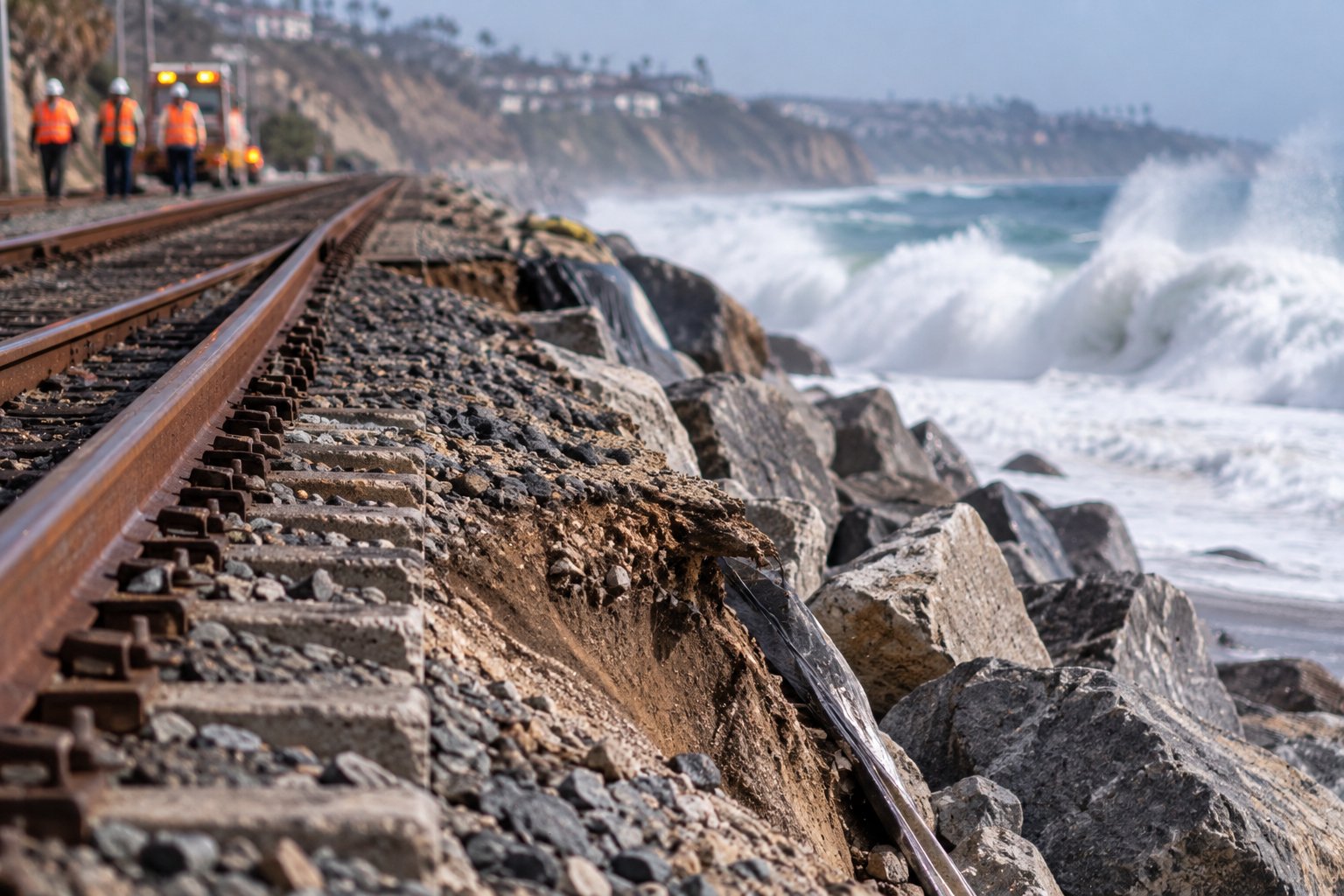
LOS ANGELES, CA — Passenger rail service through San Clemente remained closed through the weekend as crews continued emergency stabilization work along the coastal railroad following severe waves, high tides and additional erosion near the tracks.
The Orange County Transportation Authority said Friday that crews were continuing to monitor conditions and perform stabilization work whenever conditions allowed. The temporary closure was expected to continue through a previously scheduled work period running from late Friday through Sunday, giving crews additional time to work along the corridor.
The goal was to restore passenger rail service through San Clemente as soon as Monday morning, provided conditions remained safe. OCTA cautioned that service could potentially resume under speed restrictions depending on conditions along the rail corridor.
Coastal erosion damaged the rail corridor
The latest closure followed additional coastal damage observed earlier in the week.
According to OCTA, continued high tides and powerful wave activity caused additional erosion and slope damage near the tracks. Waves overtopped the rail line in the affected area, while some previously placed protective rock was also damaged.
The rail line was closed so crews could safely assess the area and carry out additional emergency stabilization work. The agency said workers would remain in the area to monitor the coastline as elevated tides and changing coastal conditions continued.
The incident was part of a broader series of challenges facing the rail corridor through San Clemente, where coastal erosion, bluff movement, landslides, high tides and powerful ocean swells have repeatedly affected rail operations.
Metrolink and Pacific Surfliner service affected
The San Clemente closure affected both Metrolink and Amtrak Pacific Surfliner passenger operations, as well as freight rail service through the area.
During the earlier closure, Metrolink service was operating as far south as the Laguna Niguel/Mission Viejo Station, while Pacific Surfliner service was operating as far south as San Juan Capistrano, with a bus bridge between Irvine and Oceanside. Passengers were advised to check the latest OCTA rider alerts and service information before traveling.
The affected tracks form part of the 351-mile LOSSAN Rail Corridor, which connects San Diego, Orange County, Los Angeles and communities farther north. The corridor carries passenger and freight trains and is an important transportation link along the Southern California coast.
Emergency repairs are part of a larger effort
The weekend work was not an isolated maintenance operation. OCTA has been carrying out a broader series of emergency projects intended to protect the railroad from ongoing erosion and slope instability.
The agency’s Coastal Rail Emergency Projects identify four areas in San Clemente where erosion, deteriorating protective rock and bluff instability have created risks to rail operations.
Planned and ongoing measures include repairing or replacing protective riprap, placing sand and constructing engineered protections in areas where the coastline has deteriorated. OCTA says the emergency projects are separate from its longer-term Coastal Rail Resiliency Study.
The agency’s broader study is examining approximately seven miles of the LOSSAN corridor between Dana Point and the Orange County-San Diego County line. OCTA says the objective is to identify ways to protect the existing rail line and maintain passenger and freight operations over the coming decades.
Long-term coastal rail vulnerability remains
OCTA has said that repeated erosion and slope failures have caused multiple interruptions to rail service in San Clemente in recent years.
The agency’s latest resiliency planning includes several possible approaches, including sand placement, restoration of existing riprap, engineered revetments and other protective structures. OCTA has emphasized that future projects would require additional engineering, environmental review, public engagement, regulatory approvals and funding before construction could move forward.
The agency has also been developing a large-scale sand placement effort, with plans calling for up to approximately 540,000 cubic yards of sand along portions of the San Clemente coastline as part of broader efforts to protect the rail corridor.
For the immediate weekend closure, however, the focus remained on monitoring coastal conditions and completing stabilization work along the affected section of track.
OCTA said passenger service could resume as soon as Monday morning if conditions were considered safe, with the possibility of temporary speed restrictions.
Update: OCTA later reported that Metrolink and Pacific Surfliner passenger service through San Clemente resumed Monday, Sept. 14, after crews completed stabilization work over the weekend.