






LOS ANGELES, CA – Mayor-elect Nithya Raman, who defeated Mayor Karen Bass in the Nov. 3 election, is set to take charge of the city’s transportation department, appoint new members to the Airport Commission and chair the Los Angeles County Metropolitan Transportation Authority board when she takes office Dec. 14.
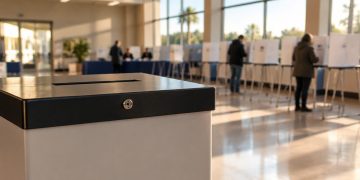
Raman, a Los Angeles councilmember who represents the 4th District, was ahead with about 53.9% of the vote in county results updated Nov. 6. Bass conceded Thursday, Nov. 5, after calling Raman to congratulate her.
Bass said, “While this is not the outcome we hoped for, the people of Los Angeles have spoken.” She promised to ensure a smooth and seamless transition.
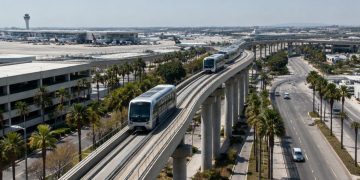
Public transit is expected to be a top priority for the incoming administration. Raman has advocated for expanding bus lanes and protected bike lanes, holds a graduate degree in urban planning from MIT and campaigned on getting the delayed Los Angeles International Airport people mover back on track.
In her first statement after the win, Raman said, “Los Angeles, I am deeply honored to be your next mayor.” She thanked volunteers, paid tribute to Bass and said she would work to earn the trust of those who voted for Bass and of those who did not vote, including by building affordable housing, parks and a transit system.
Raman to take over Metro board chair
As mayor, Raman will take over as chair of the Metro board, a seat Bass holds, according to Metro’s board roster. The board has 13 voting members. The roster lists Kathryn Barger as vice chair and Tim Sandoval as second vice chair.
The board includes the five county supervisors and regional appointees, along with a nonvoting Caltrans District 7 representative appointed by the governor. The mayor also has three appointees on the board, listed as Jacquelyn Dupont-Walker, Imelda Padilla and Katy Yaroslavsky. Raman can replace them, and according to initial reports all three backed Bass in the election.
Bass delivered a State of the Agency address as the board’s chair, according to a page on the mayor’s website.
Before the election, Raman said in written statements that she would prioritize Metro projects that “give the most benefits to the most riders and help make our network more useful.” She also said she would reinstate a project team in the mayor’s office to eliminate city delays on major capital projects.
SkyLink opening pushed into 2027
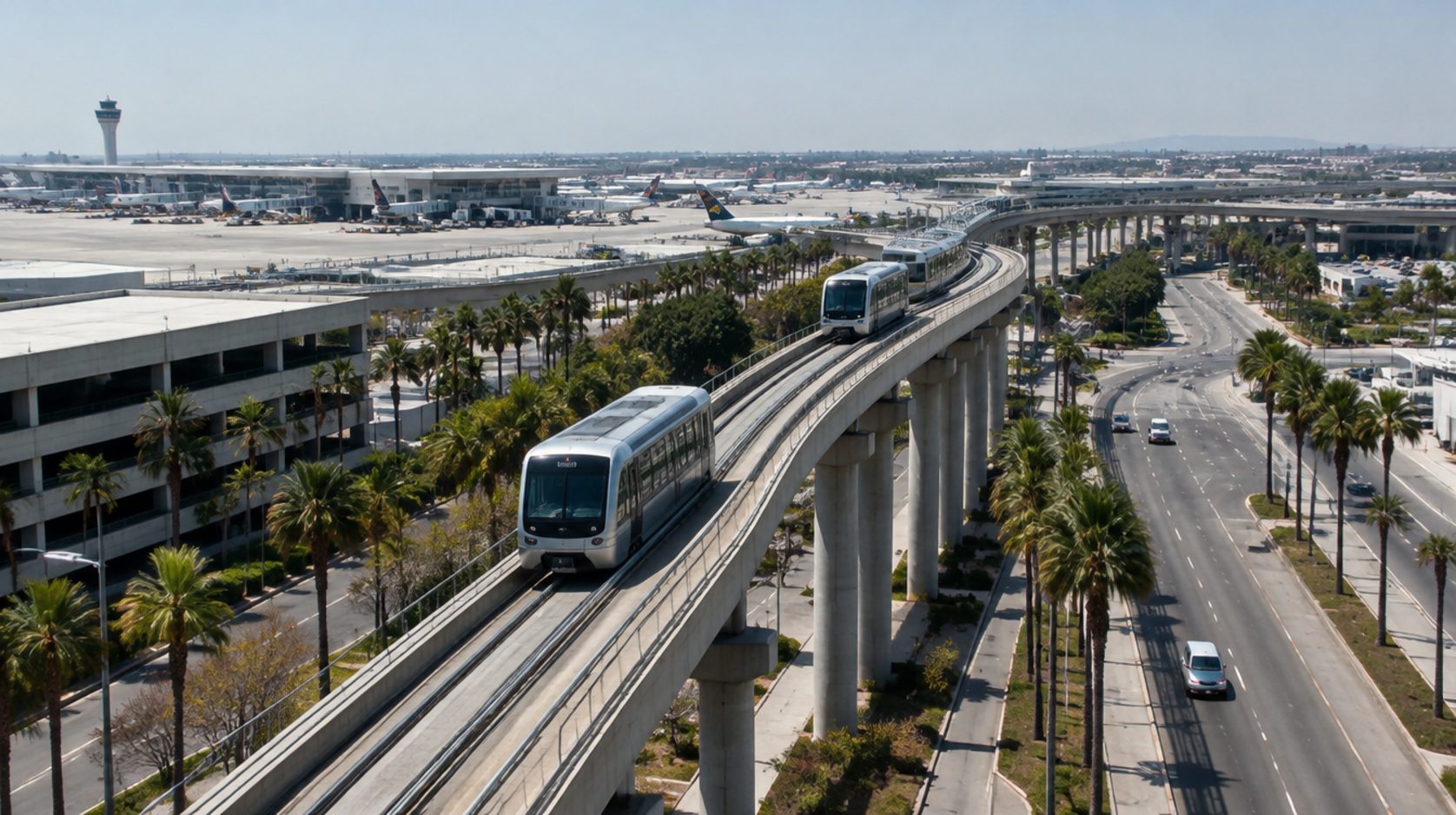
The LAX Automated People Mover, known as SkyLink, is a 2.25-mile train planned to connect LAX to six stations. In July 2024, Los Angeles World Airports said in a news release that the Board of Airport Commissioners had approved an agreement setting a Dec. 8, 2025, construction completion date. LAWA then projected full operations in January 2026.
That release said trains would run every two minutes at peak, with a 10-minute end-to-end trip at a top speed of 47 miles per hour. It said the train would be free for ticketed passengers, their guests and airport employees and would carry about 30 million passengers a year.
The $3.3 billion train is now projected to open no earlier than January or February 2027. Construction began in 2019, and the original target was 2023. The project is more than $1 billion over budget.
The contractor, LAX Integrated Express Solutions, has said SkyLink will not run before January 2027 at the earliest. It blamed the delay partly on unsigned agreements between LAWA and the Los Angeles Department of Water and Power over solar power for the train. The contractor said the delay will grow day for day until the agreements are signed.
Arc flashes during testing
Arc flash incidents occurred on the tracks Sept. 23 and 25 during testing. In a statement to reporters in October, LAWA said the incidents were “not uncommon for these projects, particularly in the testing phase,” and that the affected areas were repaired.
The train must pass 30 consecutive days of testing, or the process restarts. In July, LAWA said the contractor had missed a May 31 turnover date, and it gave no official opening date.
Raman and Bass on the delay
At a news conference in late October, Raman said, “The opening keeps getting moved back, and Angelenos have every right to doubt the next date they are given.” She blamed Bass and the airport board for poor management of the project.
Bass said during the campaign, “We obviously don’t want people on the people mover until we are guaranteed that it is safe.” She noted that the project was approved before her administration.
Airport Commission appointments and rideshare fees
The mayor’s power to appoint new members to the Airport Commission gives Raman a hand in the board that oversees LAWA. In March, the Board of Airport Commissioners approved increased rideshare fees, the first adjustment in more than 10 years, according to a LAWA news release.
The release said, “Implementation of the new fee structure will coincide with SkyLink’s activation.” It said the changes were meant to ease congestion at LAX and give guests quicker connections to Metro, LAX Flyaway buses, rental car facilities and the ITF-West transit station.
The same release said SkyLink would open in 2026 as a 100% electric train connecting terminals every two minutes. That date has since been pushed back.
Olympic bus network awaits federal money
Metro will be the primary mobility service provider for Games attendees and workers at the 2028 Summer Olympics, according to Metro’s page on the Games. It describes its Games Enhanced Transit Service as a temporary supplementary service to augment existing service for spectators and the workforce.
Metro expects the service to use zero-emission and compressed natural gas buses from its fleet and partner agencies, plus vehicles borrowed from other agencies. As of May, Metro had commitments from 28 transit agencies to lend or donate more than 1,000 buses and 300 or more personnel.
Metro needs about $1 billion in federal funds for the bus network and has set a year-end 2026 deadline for a funding guarantee. Metro says it will not provide the network without that guarantee, leaving the LA28 organizing committee to find another plan. Metro’s Michael Turner said, “We asked the White House to submit a funding request to Congress. We’re targeting something to happen in the lame duck session.”
According to initial reports, lawmakers later added $875 million for Olympic transportation in a spending bill that still faces an uphill fight. Raman has said she would push the city’s congressional delegation to make the funding a priority. She opposed the city’s reimbursement agreement with LA28 and supports Controller Kenneth Mejia’s subpoena of LA28 financial records.
Rail corridors on Raman’s list
Raman has cited the Sepulveda Transit Corridor, the East San Fernando Valley corridor extending the E Line from East Los Angeles to Whittier, K Line expansions connecting the South Bay, Inglewood, Mid-City and Hollywood, a D Line extension beneath Wilshire Boulevard and a rail link in southeast Los Angeles County. She has also cited the Vermont Transit Corridor.
On Jan. 22, the Metro Board selected an underground heavy rail option for Sepulveda, according to a Metro news release. The line would connect the Metrolink Van Nuys Station to the Metro E Line and integrate with the D, E, G and East San Fernando Valley lines. Metro expects it to cut travel between the San Fernando Valley and the Westside to under 20 minutes.
The board also identified an initial operating segment of approximately 8.4 miles between the Wilshire/Westwood Station and the G Line/Van Nuys Station, according to Metro’s project page. The page says, “The project is currently in the planning and environmental review phase.” Metro says it will share an updated construction timeline once one is available.
Vermont corridor and Measure HLA lawsuit
The Vermont Transit Corridor bus project runs 12.4 miles between Sunset Boulevard and 120th Street, with 26 upgraded stations and a cost of about $414 million. It received a $149.9 million federal Small Starts grant and broke ground in October.
A lawsuit under Measure HLA claims the project must include a designated bike lane. Raman said she supports compliance with the measure while backing shared bike and bus lanes along narrower stretches of the route.
As a councilmember, Raman introduced a motion to develop a plan to modify traffic signal timing citywide to prioritize the city’s buses and trains, according to her council office.
Charter amendment could reshape city projects
Voters also approved Charter Amendment LA, with about 62% yes in county results. A City Clerk document for Council File 26-1100 shows the measure lets the City Council eliminate or change the Board of Public Works and gives the Public Works director more power. It also moves the city from a one-year to a two-year budget cycle.
Juan Matute, deputy director of UCLA’s Institute of Transportation Studies, said he expects “a considerable amount of action on transit and multimodal transportation in the short run” in preparation for the summer of 2028. He said the charter change, combined with Raman’s election, will lead to “a shift in the foundation of transportation decision-making” and will help the city streamline infrastructure projects.
Raman is scheduled to take office Dec. 14
Raman takes office Dec. 14. Metro’s year-end deadline for an Olympic bus funding guarantee falls within weeks of her swearing-in, and SkyLink is not projected to open before January or February 2027.
A transition schedule for the incoming administration had not been published as of Saturday, Nov. 7.