


LOS ANGELES, CA – Jonathan Rinderknecht, the man accused by federal prosecutors of starting the fire that later developed into the devastating Palisades Fire, pleaded not guilty Wednesday to a revised indictment that narrows the government’s case ahead of a second trial.
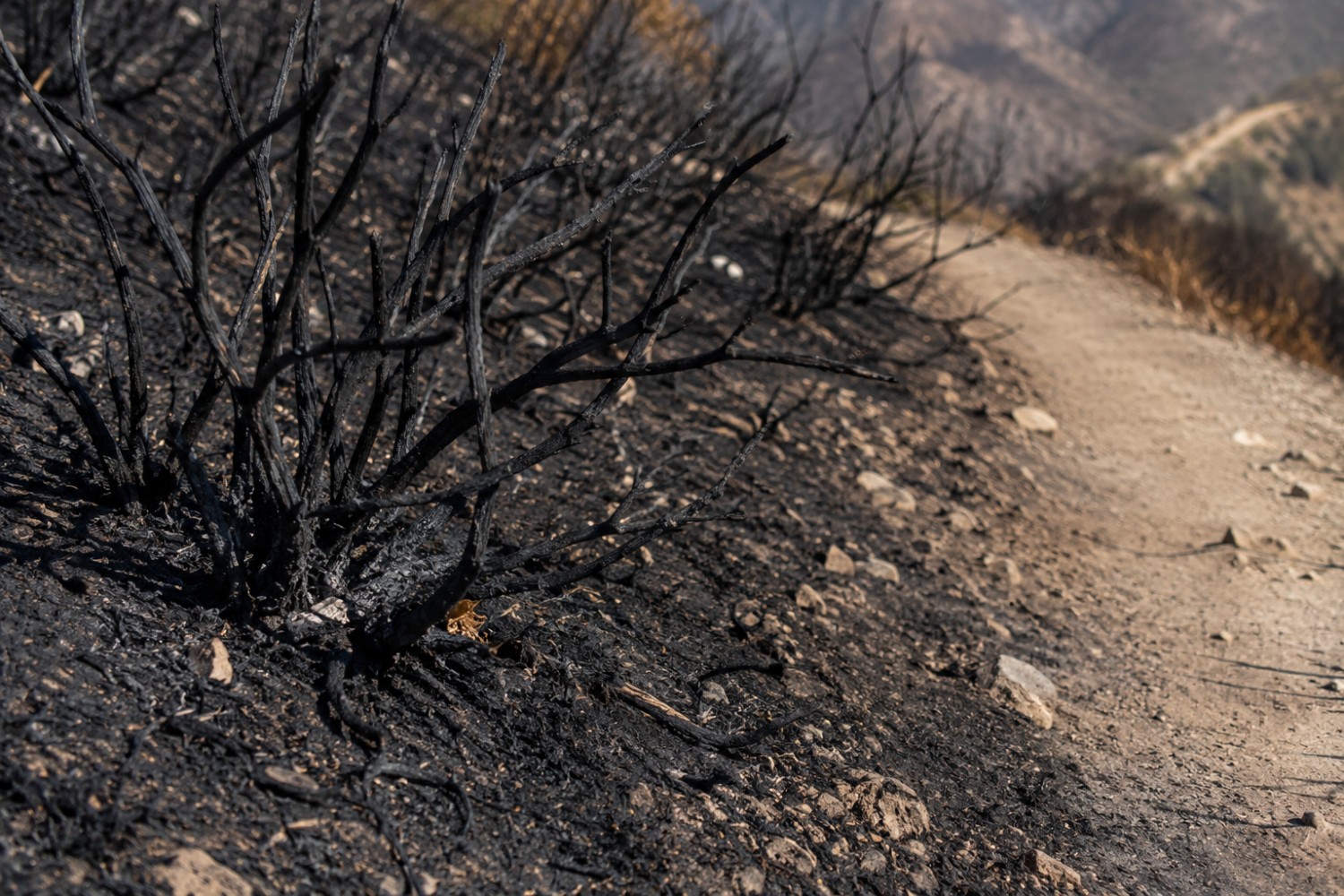
Rinderknecht, 30, is accused of deliberately starting the Lachman Fire shortly after midnight on Jan. 1, 2025, along a hiking trail above Pacific Palisades.
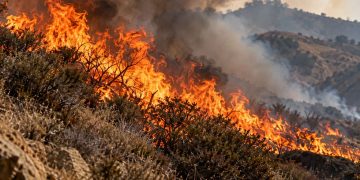
Federal investigators contend that although firefighters initially suppressed that blaze, it continued smoldering underground in vegetation and root systems before strong winds caused it to resurface on Jan. 7 as the Palisades Fire.
The U.S. Attorney’s Office for the Central District of California has described the Palisades Fire as a continuation, or “holdover,” of the earlier Lachman Fire.
The wildfire killed 12 people and destroyed thousands of homes, businesses and other structures across Pacific Palisades and surrounding areas.
Rinderknecht was arrested in Florida in October 2025, months after the Palisades Fire.
He has denied intentionally starting the blaze.
His first federal trial ended in a mistrial in June after jurors said they could not reach a unanimous verdict.
The jury was split 10-2 in favor of acquittal on the three felony counts then before it.
Federal prosecutors subsequently obtained a new indictment reducing the number of charges from three to two.
The revised indictment retains one count of destruction of property by means of fire and one count of arson affecting property used in interstate commerce.
Prosecutors dropped the separate charge of setting timber afire that had been included in the original indictment.
The original case charged Rinderknecht with all three offenses arising from the Lachman and Palisades fires. The Justice Department’s original indictment announcement said the charges included destruction of property by means of fire, arson affecting interstate commerce and timber set afire.
The new indictment also narrows how prosecutors are presenting the two fires.
One of the remaining counts references both the Jan. 1 Lachman Fire and the Jan. 7 Palisades Fire, while the other is focused on the initial Lachman Fire.
That change follows the first trial, where prosecutors faced difficulty persuading all 12 jurors that Rinderknecht was criminally responsible for the fire.
His defense has repeatedly argued that the government lacks direct evidence showing him physically igniting the Lachman Fire.
“I believe they still have the challenges to present to the jury that he’s somehow responsible for the Palisades Fire six days later when there’s no direct evidence, as most saw, including the jury at the first trial,” his legal team said.
The defense has also disputed the government’s case regarding the origin of the Jan. 1 blaze.
Federal prosecutors, however, have said the case is built on a combination of witness statements, surveillance footage, cellphone information and fire-pattern analysis.
According to the federal criminal complaint, investigators determined that Rinderknecht was near the trail where the Lachman Fire began and that cellphone geolocation data placed him close to the fire as it developed.
Prosecutors have also said Rinderknecht called 911 several times after the fire began.
Investigators allege he initially could not connect because his phone lacked service and later successfully reported the fire after reaching the bottom of the trail.
A nearby resident had already reported the blaze by that point, according to the Justice Department.
Federal authorities have further alleged that Rinderknecht gave investigators misleading information during an interview on Jan. 24, 2025, about where he was when he first observed the fire.
The government says cellphone location data placed him significantly closer to the ignition area than he initially claimed.
Prosecutors have also presented evidence concerning Rinderknecht’s state of mind before the fire.
According to court allegations summarized by the Justice Department, passengers Rinderknecht drove while working as an Uber driver on New Year’s Eve told investigators that he appeared agitated and angry.
Prosecutors have argued that he was frustrated with his circumstances and harbored resentment toward wealthier people.
The defense has rejected the government’s interpretation of that evidence and maintains that none of it directly establishes that Rinderknecht deliberately started the fire.
The first trial highlighted that dispute.
Despite the volume of circumstantial evidence presented by prosecutors, 10 jurors ultimately favored acquittal and two favored conviction, resulting in the mistrial.
The revised indictment means prosecutors will now make a second attempt with a somewhat more streamlined case.
Rinderknecht remains presumed innocent unless prosecutors prove the charges beyond a reasonable doubt.
The federal case is assigned to U.S. District Judge Anne Hwang in the Central District of California.
The Justice Department maintains a dedicated case information page for United States v. Jonathan Rinderknecht, including information for Palisades Fire victims and updates on court proceedings.
The public case page had previously listed an Oct. 19 jury trial date, but more recent reporting following Wednesday’s hearing indicates the retrial is now scheduled to begin Nov. 2.
The change has not yet been reflected on the Justice Department page reviewed by Street People, which was last updated before the latest hearing.
The revised charges do not amount to a finding that Rinderknecht caused either fire.
They remain allegations that prosecutors will have to prove at the second trial.
The retrial is scheduled to begin Nov. 2.