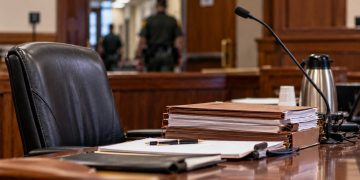



LOS ANGELES, CA – A six-year-old murder case in Modesto ended in a mistrial after the defendant’s defense attorney was arrested at the Stanislaus County courthouse during the jury trial and then failed to return to court, leaving a newly appointed lawyer without enough time to prepare the defense.
The case involves Kelley Marie Ball, who is accused of killing 12-year-old Yarely Jasso-Gomez in a 2020 crash in Modesto. Ball’s trial had been underway since August 25 when her attorney, Christopher Loethen, was arrested on September 16 following concerns about his condition in court.
Loethen was booked on suspicion of public intoxication, being under the influence of a controlled substance and possession of a controlled substance, according to the Stanislaus County Sheriff’s Office. Authorities had not determined what substance he allegedly possessed at the time of the arrest.
The arrest did not immediately end the trial.
The more serious disruption came afterward, when Loethen did not return to court and did not respond to repeated attempts by the court to contact him.
With the trial already in progress, Judge Valli Israels removed Loethen as Ball’s attorney and appointed Martin Baker to take over the defense.
Baker then told the court he could not adequately prepare for the complex murder case in the limited time available before jurors were expected to return.
The judge ultimately declared a mistrial without prejudice, meaning the prosecution can bring the case to trial again.
Defense attorney arrested during seventh day of trial
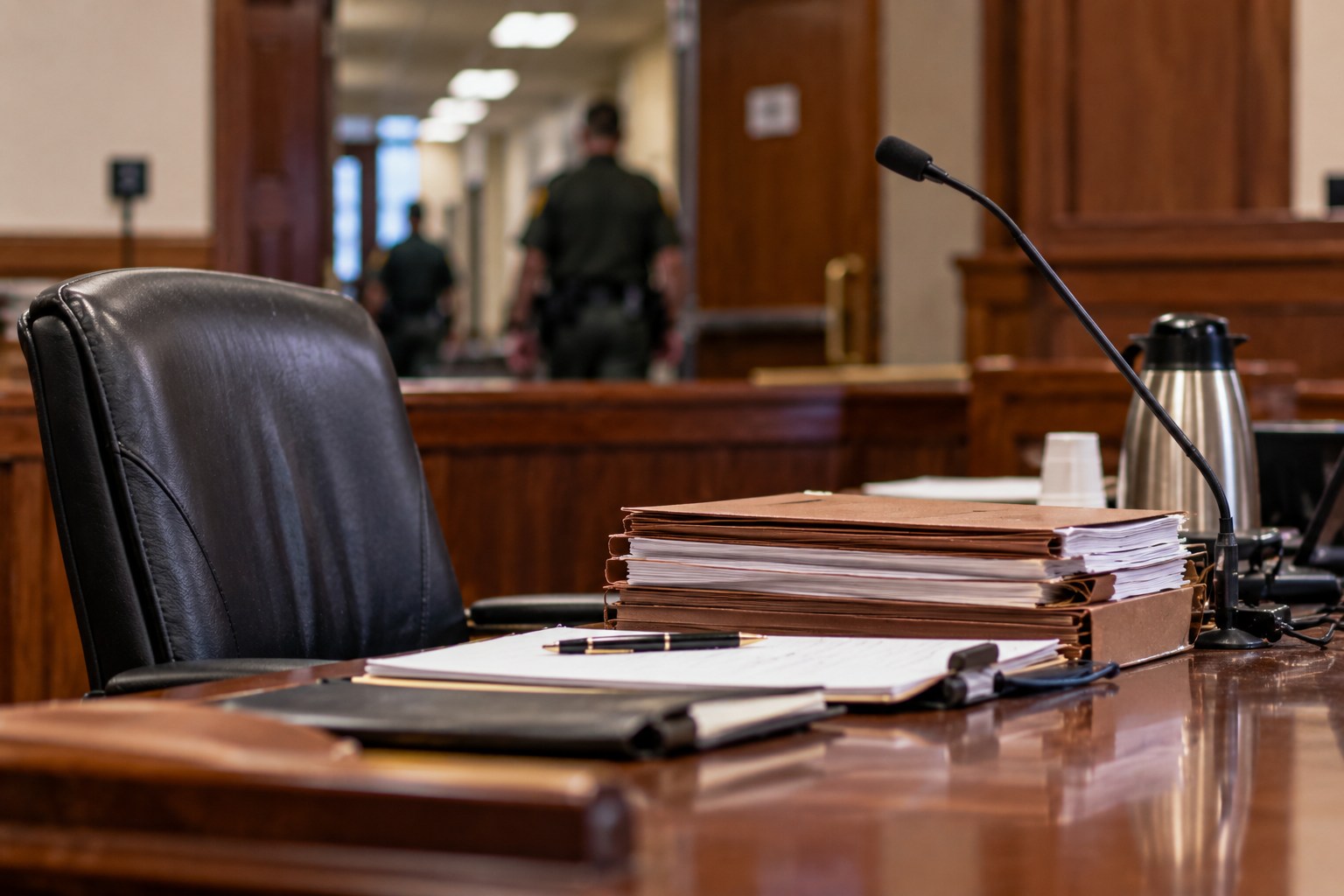
The unusual sequence began on Wednesday, September 16, when concerns were raised about Loethen’s condition while proceedings were underway at the Stanislaus County Superior Court.
According to accounts of the courtroom proceedings, supervising Deputy District Attorney Wendell Emerson alerted Judge Israels to concerns about Loethen. A sheriff’s sergeant subsequently described observations of the attorney in court.
At the prosecution’s request, the judge advised Loethen of his Miranda rights and ended the hearing so sheriff’s personnel could handle the matter.
Loethen, 50, was arrested at the courthouse around noon and taken to the Stanislaus County Public Safety Center.
He was released later that night, but his release did not allow the murder trial to resume normally.
The following morning, Loethen did not appear for court.
Court tried repeatedly to reach the attorney
Judge Israels said the court made what she described as extensive efforts to contact Loethen after his release.
Court personnel reportedly contacted multiple phone numbers and email addresses associated with him and his law office.
He still did not appear for the scheduled hearing Thursday.
A second hearing was then scheduled for Friday, and the judge directed Loethen to appear.
He again failed to show up.
The court had not received a response from him by the time Friday’s proceedings began.
That left Ball without the lawyer who had been representing her through the trial and through years of preparation leading up to the proceedings.
The Stanislaus County Superior Court’s criminal division handles felony and misdemeanor matters in the county, including murder cases. The court also maintains a public case-search portal through which available case information can be reviewed.
New attorney said he needed time to prepare
Once Loethen was removed from the case, Judge Israels appointed attorney Martin Baker to represent Ball.
Baker faced an immediate problem: the jury trial was already underway.
The trial had begun August 25, and the prosecution and defense had already spent days presenting evidence and questioning witnesses.
Baker told the judge that he needed additional time to review the case before he could effectively represent Ball.
Jurors were expected to return the following Tuesday.
Prosecutors opposed ending the trial and argued that alternatives should be considered.
But the judge determined that there was no realistic way for Baker to take over the complex case and adequately prepare in the time available.
The result was a mistrial.
The ruling was made without prejudice, preserving the prosecution’s ability to seek a new trial.
Ball faces murder charge in 2020 crash
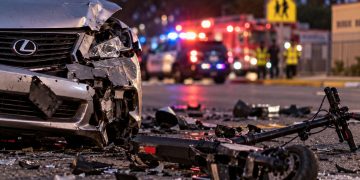
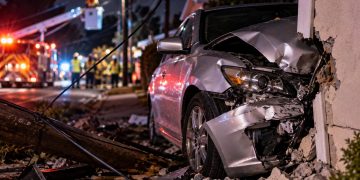
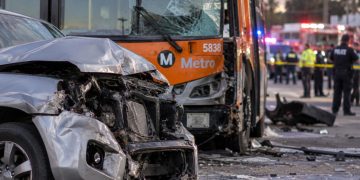
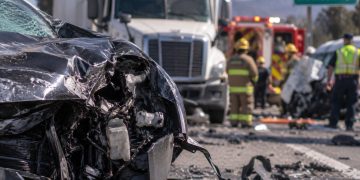
The underlying case dates to July 19, 2020, when a crash in west Modesto killed Yarely Jasso-Gomez.
According to the case allegations, Ball was driving a 2006 Jeep Laredo north on Sisk Road when she ran a red light at Plaza Parkway.
The Jeep struck a Nissan Altima carrying Yarely, her parents and her older brother.
Yarely died at the scene.
Her older brother suffered major injuries and was airlifted to a Bay Area hospital, while her father suffered serious injuries and her mother was also injured.
Ball has been charged with murder, gross vehicular manslaughter while intoxicated, driving under the influence of a drug causing injury and vandalism.
The murder charge is being pursued under what prosecutors describe as a Watson murder theory, which can apply in certain impaired-driving death cases when prosecutors allege the defendant had previously been warned about the dangers of impaired driving and subsequently acted with conscious disregard for human life.
Court filings have also alleged that Ball had five prior DUI convictions between 1997 and 2007. Those allegations form part of the prosecution’s case and have not resulted in a conviction in this particular case.
Ball remains in custody with bail set at $2.195 million, according to reporting on the case.
The mistrial does not resolve the murder case
A mistrial is not a verdict.
Because Judge Israels declared the mistrial without prejudice, the prosecution can seek to retry Ball on the pending charges.
That means the allegations against Ball remain unresolved.
The first trial had already required years of litigation and preparation before reaching a jury. The collapse of the proceedings therefore means prosecutors and the defense will have to prepare for another round of court proceedings if the case is retried.
The Stanislaus County Superior Court explains that its criminal division handles cases ranging from misdemeanors to serious felony matters, while its online services allow the public to search available case information.
Loethen’s arrest creates separate legal questions
The attorney’s arrest is separate from Ball’s criminal case.
Loethen was arrested on suspicion of three offenses connected to his condition and alleged possession of a controlled substance. The arrest itself does not establish that he committed those offenses.
Authorities had not publicly identified the substance allegedly involved at the time of the arrest, and the available information did not establish whether prosecutors had filed criminal charges against him arising from the courthouse incident.
His absence from court, however, directly affected Ball’s trial.
The judge’s decision to remove him from the case was based on the immediate problem that Ball no longer had available counsel capable of continuing the trial.
Attorney’s absence affected other clients
The consequences of Loethen’s arrest extended beyond Ball’s case.
Jennifer Jennison, who oversees the Stanislaus County Conflict Attorney Panel, said Loethen had 20 active appointed cases involving 13 individual clients at the time of the arrest.
The panel was reviewing those cases individually to ensure the affected clients continued to have legal representation.
That process illustrates why the situation was not limited to one interrupted jury trial.
When an attorney handling criminal cases becomes unavailable, courts and appointed-counsel administrators have to determine whether other defendants also need replacement representation or new court dates.
For Ball, that process happened immediately because her case was already before a jury.
State Bar history also documented
Publicly available information cited in coverage of the case also shows that Loethen’s professional history includes previous disciplinary action.
State Bar records identified his California law license as active. He was admitted to practice in California in 2007.
In 2024, the State Bar Court publicly reproved Loethen after he stipulated to six counts of misconduct involving two investigations. The findings included failures to appear as counsel in multiple matters and missed hearings.
According to the reported disciplinary record, Loethen completed the State Bar’s Alternative Discipline Program and Lawyer Assistance Program before the reproval was imposed.
That disciplinary history is separate from the September 2026 arrest and does not establish that he committed the offenses for which he was arrested.
Yarely’s family must wait for another trial
The mistrial also means Yarely Jasso-Gomez’s family will have to wait for the criminal case to move forward again if prosecutors pursue a retrial.
The prosecution had already presented evidence during the first trial, and members of Yarely’s family were witnesses in the case.
According to the Stanislaus County prosecutor’s office, one family member had already testified before the mistrial was declared. Prosecutors said the family was prepared to participate again if necessary.
Yarely would have turned 18 in 2026, according to comments attributed to Deputy District Attorney Harshan Samra.
The prosecutor’s office has indicated that it intends to pursue another trial.
What happens next
Ball is scheduled to return to court following the mistrial to address how the case will proceed.
A key issue is whether she will seek a retrial within the applicable time period or waive that deadline.
The prosecution is expected to continue pursuing the murder case, while Ball will have new representation following Loethen’s removal.
The Stanislaus County criminal court calendar and case-search system provide official channels for tracking publicly available developments in the proceedings.
For now, there has been no verdict in the murder case.
The mistrial ended the first jury proceeding, but it did not determine whether Ball is guilty or not guilty of the charges stemming from the 2020 crash.
The case remains pending as the court and attorneys prepare for the next stage.
Ball remains accused of killing Yarely Jasso-Gomez in the 2020 crash, while Christopher Loethen’s arrest and subsequent absence from court brought the first trial to an end. The mistrial was declared without prejudice, leaving prosecutors able to pursue a new trial with Ball represented by different counsel.