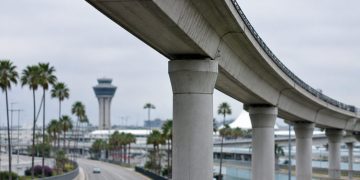





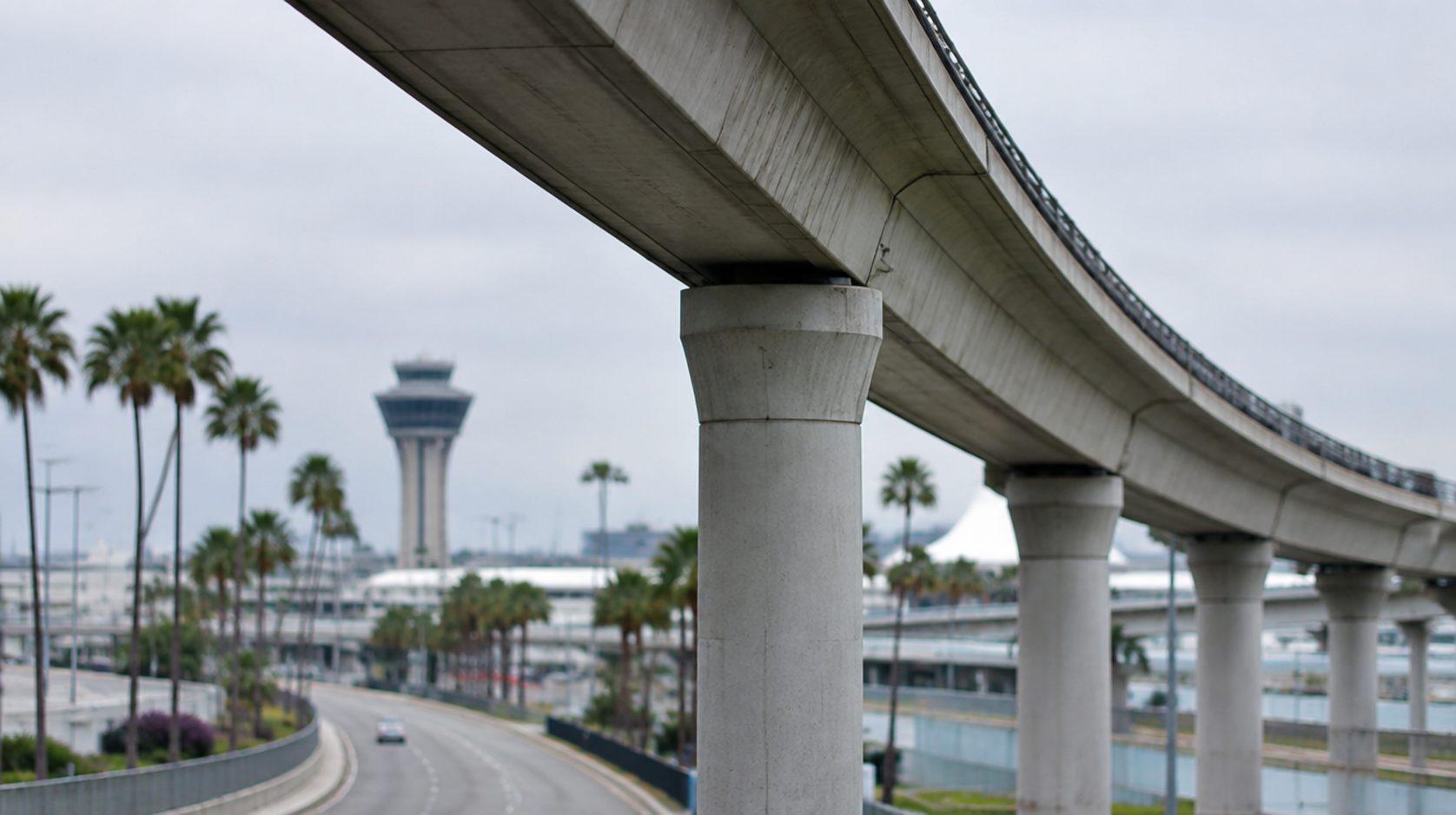
LOS ANGELES, CA – The Automated People Mover at Los Angeles International Airport, known as SkyLink, is now scheduled to be finished Dec. 8 and to carry passengers no earlier than early January 2027, according to the contractor’s Sept. 16 disclosure, as the project’s cost has grown from about $1.9 billion to about $3.3 billion.
The 2.25-mile elevated electric train has six stations at the airport. The Los Angeles City Council approved the design-build-finance-operate-maintain contract in April 2018, construction began in 2019 and operation was originally promised for 2023.
The opening has since slipped to 2024, 2025, 2026 and now early January 2027. The contractor, LAX Integrated Express Solutions, known as LINXS, sued the City of Los Angeles on July 9, 2026 over delays and payment disputes.
The Dec. 8, 2026 completion date falls one year after the Dec. 8, 2025 date that the Board of Airport Commissioners approved in 2024.
Contract approved unanimously in 2018
The City Council voted unanimously on April 11, 2018 to approve a contract with LINXS to design, build, finance, operate and maintain the system, Los Angeles World Airports said in a news release. LAWA is the city department that runs LAX.
The agency called it the largest contract ever awarded in the city’s history, worth roughly $4.9 billion over 30 years. It said the system would be operational in 2023.
LINXS includes Fluor, Balfour Beatty, ACS Infrastructure Development, Dragados USA, HOCHTIEF PPP Solutions, Flatiron, HDR and HNTB, with Bombardier Transportation providing the operating system and vehicles, according to the release. LAWA said the LINXS proposal had the highest technical score and the lowest cost among three competing teams.
Schedule reset in 2024 after added $550 million
On July 18, 2024, LAWA announced in a news release that the Board of Airport Commissioners had approved a construction completion date of Dec. 8, 2025 for the Automated People Mover. Full operations were then expected in January 2026.
The board’s action followed an increase of about $550 million tied to added work and a longer construction timeline. LAWA said at the time that the system would run around the clock, with trains every two minutes during peak hours from 9 a.m. to 11 p.m.
The project was expected to carry 30 million passengers a year and to cut an estimated 42 million vehicle miles annually. The 2.25 miles of elevated guideway were to connect the six stations.
Weeks later, the final four train cars arrived at the airport on Aug. 21, 2024, LAWA said in a news release, bringing the total on site to 44. The cars are INNOVIA 300 vehicles manufactured in Pittsburgh that had been arriving since summer 2022. LAWA still expected service in January 2026 when it issued that release.
Testing and reviews come before passengers
Under the contractor’s Sept. 16 disclosure, completion of the train is set for Dec. 8. After that, the train must pass 30 consecutive days of testing, an independent review and an assessment by LAWA, which points to passenger service in early January 2027.
The disclosure said system demonstration testing began April 21, 2026. It listed problems found along the way with guideway expansion joints, train positioning and door operation, and third rail and switch operation.
The filing also said the contractor could offer no assurances that the opening would not be delayed further.
LAWA said in a statement Sept. 24-25 that rigorous, exhaustive testing of all tracks, signaling systems and vehicles is standard industry practice. The agency said it will not compromise on safety protocols.
Grand jury report examined LAWA and LINXS relationship
The 2024-25 Los Angeles County Civil Grand Jury examined the project in its final report, released in June 2025. It found a strained relationship between LAWA and LINXS, an inadequate dispute resolution process and political pressure around high-profile events.
According to initial reports of its findings, the report put cost overruns at $880 million over the original $1.9 billion. It found that LINXS leveraged the change order process and said a neutral negotiator directed LAWA to pay $97 million to LINXS.
The project’s cost has since grown to about $3.3 billion, which includes the roughly $550 million increase the City Council approved in 2024.
LINXS lawsuit pending in Superior Court
LINXS filed its suit against the City of Los Angeles on July 9, 2026 in Los Angeles County Superior Court. According to initial reports, the suit alleges that LAWA breached the contract by refusing the contractor more time and compensation and by blaming LINXS for the delays.
The allegations are claims made in a civil complaint and have not been decided by a court.
Bass, Rodriguez and Raman weigh in
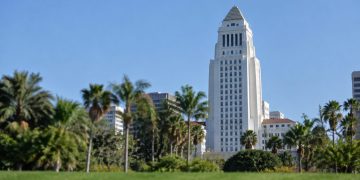
Mayor Karen Bass said in late September that she looks forward to the train being done so Angelenos and visitors can be moved safely and efficiently to the airport in the new year. She said the contractors need to get the project across the finish line.
Bass has also said the project and its problems began before she took office and that the city pushed for a settlement so there would be a firm finish line. She said she expects LAWA and the contractor to finish the job and get riders on board.
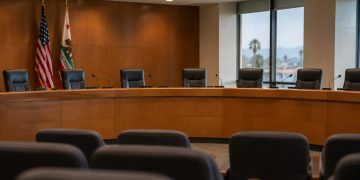
Councilmember Monica Rodriguez, seconded by Councilmember Traci Park, introduced a motion asking LAWA to explain why the train is still not carrying passengers. The motion was referred to the council’s Trade, Travel and Tourism Committee.
The delays have also become an issue in the Los Angeles mayor’s race. Candidate Nithya Raman has criticized the contractors and Bass’s oversight of the project, which are positions of a candidate rather than findings.
Completion date is Dec. 8
The next marker is the Dec. 8 completion date in the contractor’s disclosure, followed by 30 consecutive days of testing, an independent review and LAWA’s own assessment. LAWA says the system is still in testing and has not announced a firm public opening date.
Rodriguez’s motion remains before the Trade, Travel and Tourism Committee, and the LINXS lawsuit remains pending in Los Angeles County Superior Court.